Taking Prescription Medicine with Food vs. on an Empty Stomach: What You Need to Know
 Jan, 18 2026
Why It Matters Whether You Take Your Medicine With Food or On an Empty Stomach
It’s not just a suggestion on the label. Taking your prescription with food or on an empty stomach can make the difference between your medicine working properly and it doing nothing at all-or worse, making you sick. Many people ignore these instructions because they seem minor. But the science behind it is anything but. Around 40% of all prescription medications today have specific food-related rules, and that number is rising. The FDA now requires food-effect studies for nearly 80% of new drugs approved each year. This isn’t outdated advice. It’s modern pharmacology in action.
How Food Changes How Your Body Absorbs Medicine
When you eat, your body goes into digestion mode. Stomach acid increases. Bile flows. Your gut starts moving. All of this affects how drugs get into your bloodstream. For some medicines, food slows things down. That’s actually helpful if the drug irritates your stomach, like ibuprofen or naproxen. For others, food blocks absorption completely. Tetracycline, for example, binds to calcium in milk, yogurt, or even fortified orange juice. If you take it with food, up to half the dose never gets absorbed. That means your infection won’t clear. You might end up needing a stronger antibiotic-or worse, a longer illness.
On the flip side, some drugs need fat to work. The HIV drug saquinavir, for instance, can absorb up to 40% better when taken with a high-fat meal. Grapefruit juice does something similar by blocking enzymes that break down the drug. But here’s the catch: if you’re not supposed to take it with grapefruit, drinking it accidentally could push your drug levels into dangerous territory. It’s not just about what you eat. It’s about how much, when, and what kind.
Medicines That Must Be Taken With Food
- NSAIDs like ibuprofen, naproxen, and aspirin: These can cause stomach ulcers if taken on an empty stomach. Taking them with food reduces irritation by up to 30%, according to UK NHS guidelines. Some patients even report less upset stomach when they take them with a banana.
- Antibiotics like Augmentin (amoxicillin/clavulanate) and Macrobid: Food reduces nausea and vomiting. A 2021 study found that taking Augmentin with food cut nausea by 20%. The same goes for rifabutin and nitrofurantoin.
- HIV medications like ritonavir and zidovudine: These often cause nausea. A small, high-fat snack-like peanut butter on toast or a handful of nuts-can drop nausea rates from 45% to 18%, based on patient reports from HIV support forums.
- Some cholesterol drugs like atorvastatin: Food can slightly improve absorption, though it’s not always required. Always check your label.
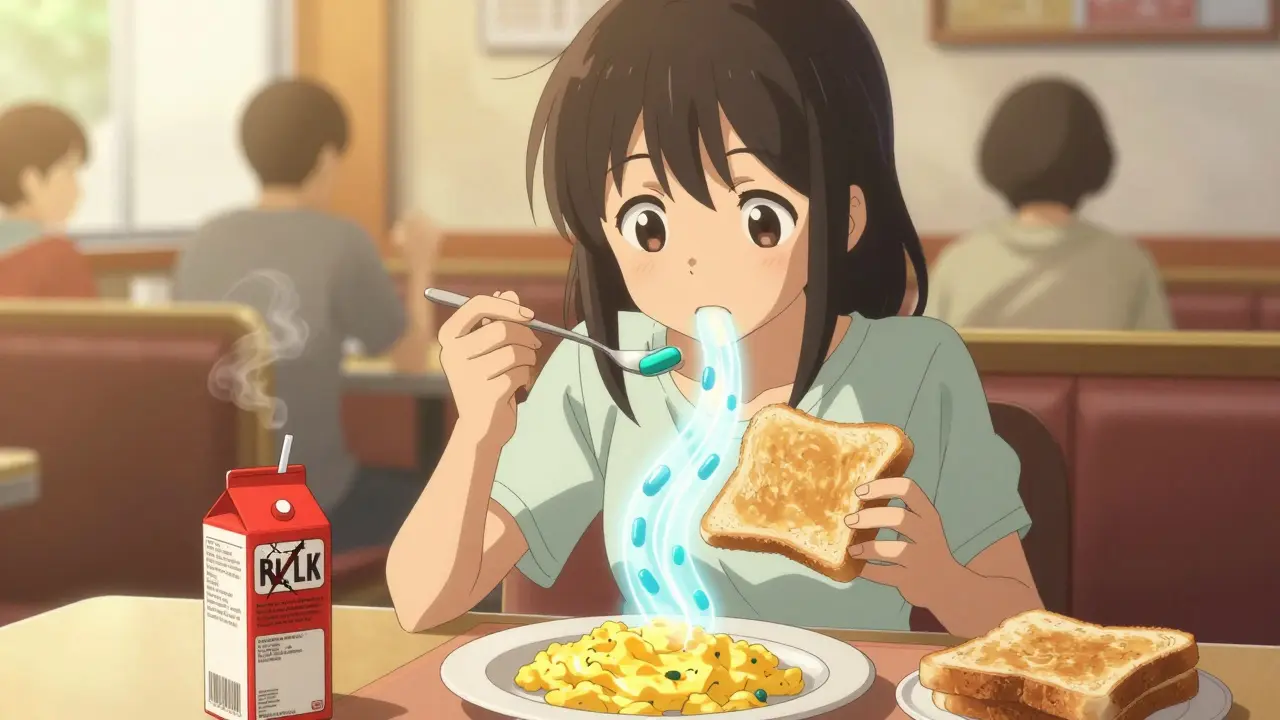
Medicines That Must Be Taken on an Empty Stomach
- Levothyroxine for hypothyroidism: This one is critical. Food can reduce absorption by 20% to 55%. That means your thyroid levels stay out of balance. The rule? Take it 30 to 60 minutes before breakfast. No coffee, no toast, no orange juice. Just water.
- Tetracycline and doxycycline: These antibiotics are easily blocked by calcium, iron, magnesium, and even antacids. Take them at least two hours before or after meals, dairy, or supplements.
- Didanosine (an older HIV drug): Stomach acid destroys it. That’s why it must be taken on an empty stomach-no exceptions.
- Bisphosphonates like alendronate (Fosamax): These osteoporosis drugs need to be taken with a full glass of water, 30 to 60 minutes before eating. If you eat too soon, the drug won’t reach your bones properly.
What About Timing? It’s Not Just Food-It’s When
Some labels say “take on an empty stomach.” That doesn’t mean “take right after brushing your teeth.” It means one hour before eating or two hours after. That’s the standard window used by the Mayo Clinic and other major health systems. If you eat breakfast at 7 a.m., you should take your medicine no later than 6 a.m. If you eat lunch at 1 p.m., you can’t take your empty-stomach drug until 3 p.m.
And hydration matters too. Many drugs need water to dissolve properly. A 2025 guide from University Hospitals Cleveland Medical Center recommends keeping a full water bottle handy when taking meds. It’s not just about swallowing pills-it’s about helping your body process them.
Why People Get It Wrong-And How to Fix It
A 2023 GoodRx survey found that 42% of people who take five or more medications have taken at least one incorrectly regarding food. Why? Too many rules. Too many labels. Too little clarity.
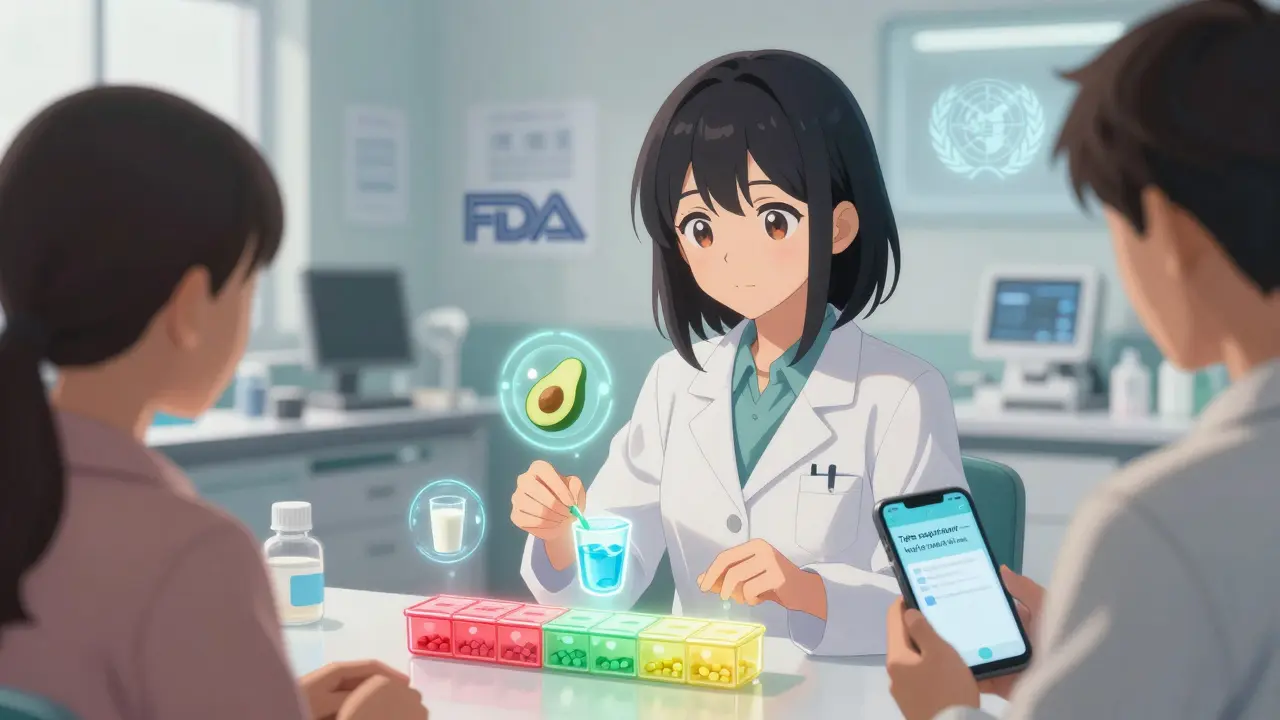
But there are real solutions. Express Scripts, a major pharmacy benefits manager, rolled out a color-coded labeling system in 2023: red for “empty stomach,” green for “with food,” and yellow for “with high-fat meal.” In a six-month pilot, adherence jumped 31%. Pharmacists who took five extra minutes to explain why a drug needed to be taken a certain way saw 44% higher compliance.
Technology helps too. People who set smartphone reminders for medication timing had a 68% success rate remembering food rules, according to Reddit users in a 2024 pharmacy thread. Apps that sync with your pill organizer and send alerts like “Take levothyroxine-wait 60 min before breakfast” make a huge difference.
What Experts Disagree On-and What You Should Do
Not all advice is clear-cut. A 2015 review by Rainsford & Bjarnason claimed there’s no real benefit to taking NSAIDs with food, arguing they work faster on an empty stomach. But that’s for pain relief. If you’re taking them daily for arthritis, the risk of stomach bleeding outweighs the speed of action. The NHS and German medical societies still recommend food for long-term use.
Dr. Alissa Keillor, a clinical pharmacist, puts it simply: “Food can change how your body responds to certain medications.” That’s why you can’t guess. You can’t assume. You have to follow your specific prescription label-even if it contradicts what someone else told you.
What’s Changing in 2026
The FDA’s April 2024 draft guidance is pushing for more precise labeling. Instead of “take with food,” labels will now say things like “take with a meal containing at least 500 calories and 30% fat.” Researchers at UCSF are even testing machine learning models that predict food-drug responses based on your gut bacteria. It’s early, but the future is personalized.
The WHO added specific food instructions to its 2023 Essential Medicines List. The European Medicines Agency now requires food-effect studies for all new cancer drugs starting in 2025. This isn’t going away. It’s becoming more detailed, more important, and more personalized.
What to Do Right Now
- Check every prescription label you have. Look for “take with food,” “take on empty stomach,” or “avoid dairy.”
- If you’re unsure, call your pharmacist. They’re trained to explain this stuff. Don’t wait until you feel sick.
- Use a pill organizer with time slots. Set phone alarms for 1 hour before meals or 2 hours after.
- Write down your food rules on a sticky note and put it on your bathroom mirror or fridge.
- If you take levothyroxine, coffee, calcium, or iron supplements, keep them at least 4 hours apart.
Medication isn’t just about the pill. It’s about the timing, the meal, the water, the wait. Getting it right isn’t optional. It’s how you stay healthy.

Arlene Mathison
January 20, 2026 AT 10:09Emily Leigh
January 22, 2026 AT 01:04Carolyn Rose Meszaros
January 22, 2026 AT 14:08Paul Barnes
January 23, 2026 AT 15:16clifford hoang
January 24, 2026 AT 13:47Art Gar
January 24, 2026 AT 18:15Greg Robertson
January 25, 2026 AT 09:48Nadia Watson
January 27, 2026 AT 04:31thomas wall
January 28, 2026 AT 01:13Shane McGriff
January 29, 2026 AT 15:19pragya mishra
January 30, 2026 AT 15:16Edith Brederode
January 31, 2026 AT 08:21