When to Give Fever Reducers After Childhood Vaccinations
 Jan, 20 2026
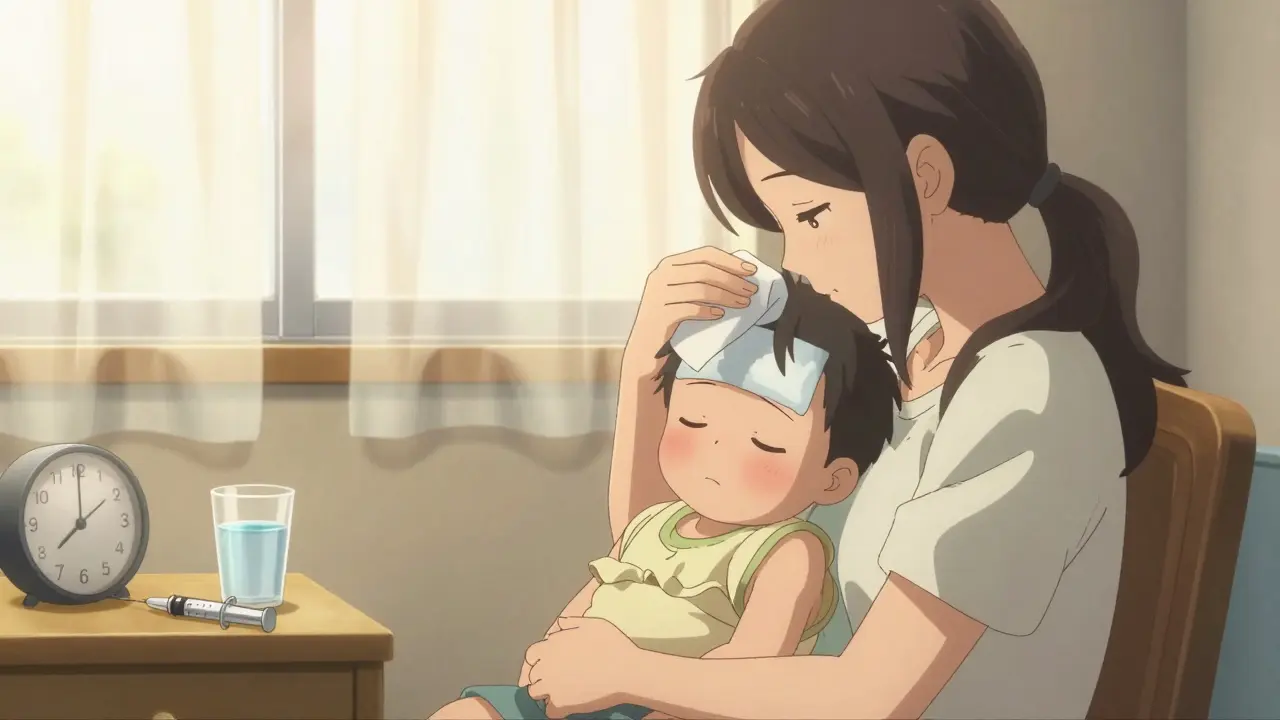
Parents often reach for fever reducers the moment their child gets a shot. It’s natural-you want to ease discomfort, prevent a spike in temperature, and make the whole experience less stressful. But giving fever medicine before or too soon after a vaccine might be doing more harm than good. The science is clear: timing matters. And getting it wrong could mean your child’s immune system doesn’t build the strongest possible defense against the disease the vaccine is meant to prevent.
Why Fever After Vaccines Is Normal
Fever isn’t a sign that something went wrong. It’s proof that the vaccine is working. When your child gets a shot, their immune system sees the weakened or dead parts of a virus or bacteria and starts building antibodies. This process creates a mild, temporary inflammation-fever is one of its side effects. It’s not an infection. It’s an immune response. According to the Children’s Hospital of Philadelphia, about 1 in 3 infants develop a fever after common vaccines like Prevnar 13 or Pediarix. With the MenB vaccine, that number jumps to nearly half of all babies. Fever usually shows up within 12 hours, peaks in 24 hours, and fades within 1 to 2 days. Most of the time, it’s low-grade-between 100°F and 102°F. That’s not dangerous. It’s normal.The Problem with Giving Medicine Too Early
In the early 2000s, many pediatricians recommended giving acetaminophen (Tylenol) right before or right after vaccines to prevent fever. It seemed like the smart, caring thing to do. But research changed everything. A landmark 2009 study in The Lancet found that children who received acetaminophen before their vaccines had lower antibody responses. Later studies confirmed it: giving fever reducers before or within the first few hours after vaccination can blunt the immune system’s reaction. This wasn’t a tiny drop-it was measurable across multiple vaccine components, including pneumococcus, tetanus, and hepatitis B. The Children’s Hospital of Philadelphia states plainly: “Studies of patients who got fever-reducing medication prior to vaccination had lower antibody responses compared with patients that did not receive medicine.” That’s not a minor concern. It’s a direct link between timing and protection.The 4-Hour Rule: When It’s Safe to Give Medicine
You don’t have to wait days. You don’t have to let your child suffer. There’s a clear window: wait at least 4 hours after the vaccine before giving any fever reducer. Multiple studies, including one published in 2018 in PMC, show that giving acetaminophen or ibuprofen after 4 hours doesn’t interfere with antibody development. That’s the sweet spot. The immune system has had enough time to kickstart its response. The fever hasn’t yet peaked, but you’re not blocking the process. Dr. Alanna Levine, a pediatrician and author of The Pediatrician Mom, says: “Wait and see how they do. And if you can, hold off on giving it until at least 4 hours after the dose.” That’s practical advice. Don’t rush. Watch. If your child is fussy but not running a high fever, give them cuddles, fluids, and time. If the fever climbs past 102°F, then it’s time to reach for the medicine.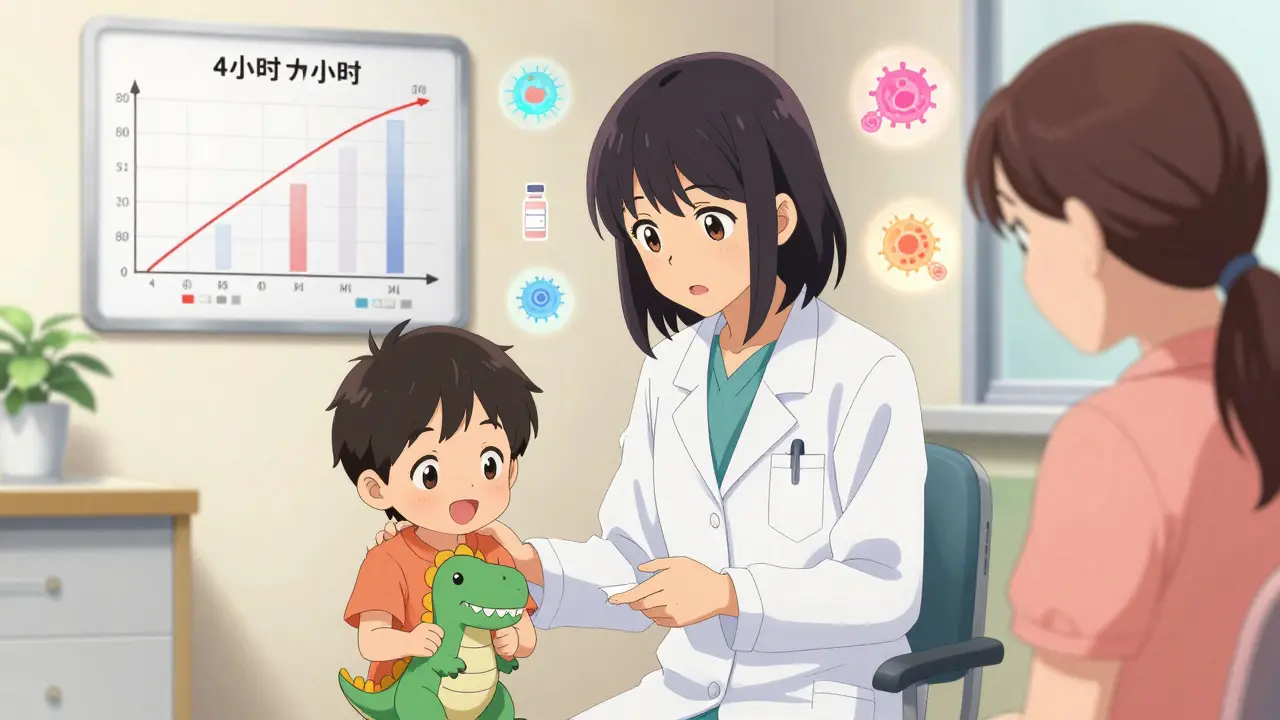
When to Actually Use Fever Reducers
Not every temperature needs medicine. Here’s what to look for:- Under 100°F: No medicine needed. This is just a normal response.
- 100°F-102°F: Monitor. Offer fluids. Dress lightly. No medication required.
- Over 102°F: Consider acetaminophen or ibuprofen. This is the threshold where discomfort becomes more than just a side effect-it’s a sign your child needs relief.
Dosing and Safety: What You Need to Know
If you decide to give medicine, do it right.- Acetaminophen (Tylenol): Can be given every 4 to 6 hours, no more than 4 doses in 24 hours. Do not use in infants under 12 weeks old without talking to a doctor.
- Ibuprofen (Advil, Motrin): Can be given every 6 to 8 hours, no more than 4 doses in 24 hours. Not recommended for babies under 6 months.
The One Big Exception: MenB Vaccine
The UK’s National Health Service (NHS) is the only major health body that recommends giving paracetamol (acetaminophen) after the MenB vaccine at 8 weeks and 16 weeks. Why? Because MenB causes fever in up to 50% of babies-and high fevers can trigger febrile seizures in young infants. The NHS advises giving 3 doses of liquid paracetamol: one right after the shot, then 6 and 12 hours later. This is a targeted, evidence-based exception. It’s not a blanket rule. It’s for one vaccine, in one age group, because the risk of high fever outweighs the small risk of reduced immunity. In the U.S., this isn’t standard practice. But if your child is getting MenB and you’re worried about high fever, talk to your pediatrician. They might suggest the same approach.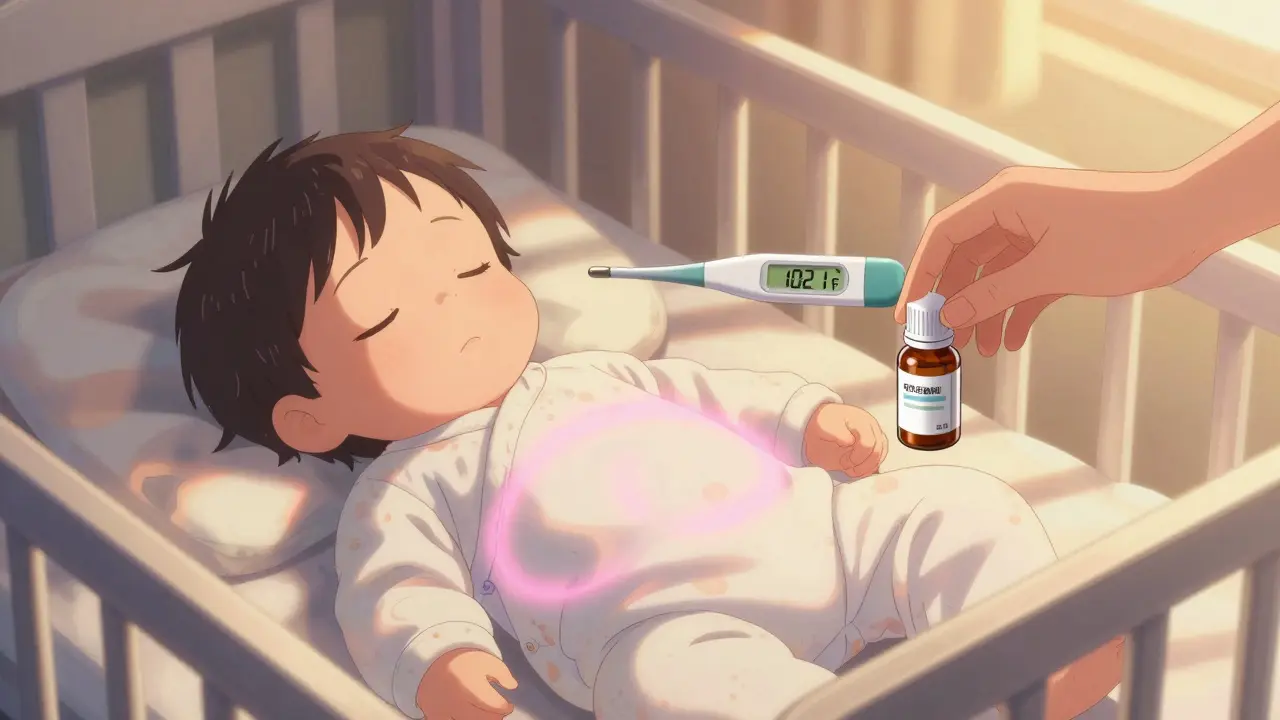
What to Do Instead of Reaching for Medicine
You don’t need drugs to comfort your child. Try these:- Keep them lightly dressed. Over-bundling traps heat and makes fever worse.
- Offer breast milk, formula, or water often. Hydration helps regulate temperature.
- Use a lukewarm sponge bath if they’re very hot-not cold water. Shivering raises body temperature.
- Hold them. Skin-to-skin contact calms stress, which can help reduce fever.
- Watch for signs of real trouble: lethargy, refusal to drink, rash, or difficulty breathing. Call your doctor if these happen.
What About Pre-Existing Fever?
If your child already has a low-grade fever (under 102°F) when they come in for shots, don’t cancel the appointment. The CDC says mild illness doesn’t interfere with vaccine effectiveness. A runny nose or slight temperature won’t stop their body from building immunity. Only delay vaccination if they have a moderate or high fever (over 102°F), are vomiting, or seem very unwell. In those cases, wait until they’re back to normal.Bottom Line: Wait, Watch, Then Act
The goal isn’t to avoid fever. It’s to protect your child from disease. Vaccines work best when the immune system is allowed to respond naturally. Fever reducers aren’t bad-they’re helpful tools. But they’re not meant to be given as a precaution. They’re meant to be used when needed. So next time your baby gets vaccinated:- Don’t give medicine before the shot.
- Wait at least 4 hours after.
- Only give it if the fever hits 102°F or higher.
- Use the right dose for their weight.
- Focus on comfort, not temperature numbers.
Should I give my child fever medicine before their vaccines?
No. Giving fever reducers like acetaminophen or ibuprofen before vaccination can reduce the child’s immune response to the vaccine. Studies show lower antibody levels when medicine is given before the shot. It’s better to wait and give medication only if a fever develops after 4 hours.
Is it safe to give Tylenol after vaccines?
Yes, but wait at least 4 hours after the vaccine. Studies show that giving acetaminophen after this window doesn’t interfere with immunity. Use it only if your child has a fever above 102°F or is clearly uncomfortable. Don’t give it just because the temperature is 100.5°F.
Can ibuprofen be used after vaccines?
Yes, but only for children 6 months and older. Ibuprofen can be given every 6 to 8 hours, no more than 4 times in 24 hours. Like acetaminophen, wait at least 4 hours after vaccination before giving it. Avoid ibuprofen in younger babies unless directed by a doctor.
What if my baby is under 12 weeks old and has a fever after a shot?
Call your pediatrician immediately. Infants under 12 weeks with a fever (even low-grade) need medical evaluation. Their immune systems are still developing, and fever can be a sign of serious infection. Do not give acetaminophen without talking to a doctor first.
Why does the NHS recommend paracetamol after the MenB vaccine?
The MenB vaccine causes fever in up to 50% of babies, and high fevers in infants can lead to febrile seizures. The NHS recommends giving three doses of liquid paracetamol after the 8-week and 16-week MenB shots to reduce this risk. This is a specific exception based on the vaccine’s high fever rate-not a general rule for all vaccines.
Does fever after vaccines mean the vaccine didn’t work?
No. Fever is a sign the immune system is responding. Even if your child doesn’t get a fever, the vaccine is still working. Many children build strong immunity without noticeable side effects. The absence of fever doesn’t mean the vaccine failed.
Can I give both acetaminophen and ibuprofen together?
Only if directed by a doctor. Alternating these medications can increase the risk of dosing errors and overdose. Stick to one at a time. If one isn’t working after an hour, talk to your pediatrician before switching.
Will reducing fever after vaccines make my child more likely to get sick later?
Not if you wait at least 4 hours. Even with some reduction in antibody levels, vaccines still provide strong protection. The goal is to avoid unnecessary interference, not to prevent all fever. The immune system still responds well enough to protect against disease. Skipping medicine when not needed is about optimizing protection, not guaranteeing perfection.

Stephen Rock
January 21, 2026 AT 01:31Amber Lane
January 21, 2026 AT 05:39Dee Monroe
January 22, 2026 AT 06:25Ben McKibbin
January 22, 2026 AT 11:55Melanie Pearson
January 23, 2026 AT 02:49lokesh prasanth
January 23, 2026 AT 07:43MAHENDRA MEGHWAL
January 25, 2026 AT 01:13Rod Wheatley
January 25, 2026 AT 16:29Andrew Rinaldi
January 26, 2026 AT 06:10Gerard Jordan
January 27, 2026 AT 22:54michelle Brownsea
January 29, 2026 AT 03:56Malvina Tomja
January 30, 2026 AT 13:42Samuel Mendoza
January 30, 2026 AT 20:56Glenda Marínez Granados
January 31, 2026 AT 11:43Yuri Hyuga
February 2, 2026 AT 05:48