FDA Authorization of Generics: Legal Basis and Approval Process
 Dec, 8 2025
The U.S. healthcare system relies on generic drugs to keep treatment affordable. In fact, 9 out of 10 prescriptions filled in America are for generics. But how does the FDA actually approve them? It’s not just a matter of copying a brand-name drug. There’s a strict legal framework, a detailed scientific process, and years of regulatory evolution behind every generic pill that hits the pharmacy shelf.
The Hatch-Waxman Act: The Legal Foundation
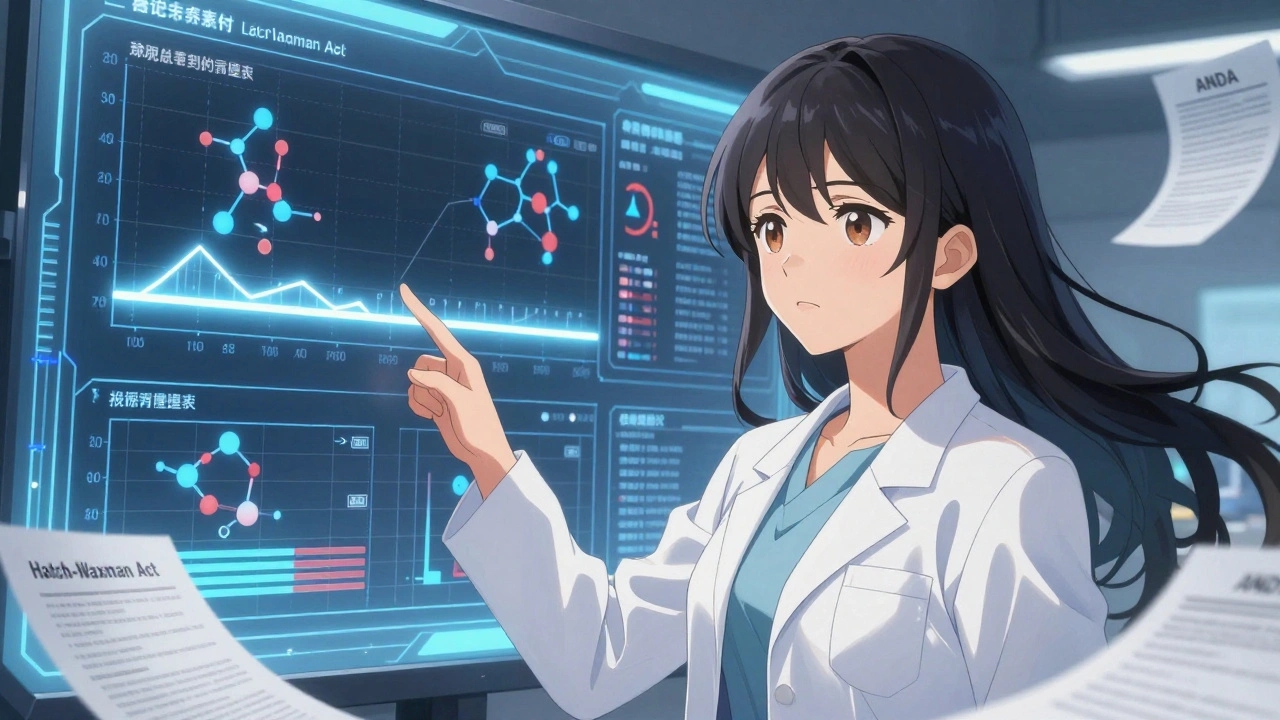
The entire system for approving generic drugs in the U.S. rests on one law: the Drug Price Competition and Patent Term Restoration Act of 1984. Better known as the Hatch-Waxman Act, this legislation was designed to balance two goals: letting generic companies enter the market faster, while still protecting the innovation of brand-name drug makers. Before Hatch-Waxman, generic manufacturers had to repeat every single clinical trial done by the original drug company. That meant spending hundreds of millions of dollars and waiting over a decade just to get a copy on the market. The law changed that by creating the Abbreviated New Drug Application, or ANDA. This pathway lets generic companies skip the expensive animal and human trials-because they can rely on the FDA’s previous approval of the brand-name drug, called the Reference Listed Drug (RLD). The law also introduced patent certifications. Generic companies must declare whether they believe the brand’s patents are invalid, unenforceable, or will expire soon. If they challenge a patent (a Paragraph IV certification), the brand company can sue, triggering a 30-month legal hold. This part of the law has led to years of litigation, but it also gave generic makers a legal hook to enter the market as soon as patents expire.What the FDA Actually Requires
The FDA doesn’t approve a generic drug just because it looks the same. It demands proof that the generic works the same way in the body. That’s where bioequivalence comes in. To be approved, a generic must:- Contain the exact same active ingredient as the brand-name drug
- Be identical in strength, dosage form (pill, injection, patch, etc.), and route of administration
- Have the same intended use or indications
- Meet the same strict quality standards for identity, strength, purity, and potency
- Be manufactured under the same Good Manufacturing Practices (GMP) as the brand
- Prove bioequivalence through pharmacokinetic studies in 24-36 healthy volunteers
The ANDA Submission and Review Process
Applying for FDA approval isn’t a simple form. It’s a 500- to 1,000-page document packed with chemistry, manufacturing, and controls (CMC) data. Every step of production-from sourcing raw materials to final packaging-must be documented. The FDA inspects every facility involved, whether it’s in the U.S., India, or China. If a factory fails inspection, the application is delayed or rejected. The process starts with a Filing Review. The FDA checks if the ANDA is complete. If it’s missing key data, the agency issues a Refuse-to-Receive letter. No review happens until the applicant resubmits and pays a new fee. Once filed, the application gets a Target Action Date. Under the Generic Drug User Fee Amendments (GDUFA), the FDA aims to review standard ANDAs within 10 months and priority applications-like first generics or drugs in short supply-within 8 months. That’s a big improvement from the 180-day timeline in the original Hatch-Waxman Act. The review team includes chemists, pharmacologists, statisticians, and manufacturing experts. They dig into every study, every batch record, every stability test. A single inconsistency can trigger a complete request for more data. First-time applicants often face multiple rounds of questions before approval. Experienced companies, like Teva or Sandoz, have streamlined their submissions and now achieve higher first-cycle approval rates.Complex Generics: The Harder Cases
Not all generics are created equal. Simple oral tablets are straightforward. But inhalers, topical creams, injectable suspensions, and extended-release formulations? Those are much harder. For these complex products, bioequivalence isn’t enough. The FDA requires additional data-like in vitro testing, clinical endpoint studies, or specialized pharmacokinetic models. Take the first generic version of Vivitrol, the extended-release naltrexone injection for opioid addiction. The FDA approved it in 2023 after reviewing detailed data on how the drug was released over time. That’s because a small difference in release rate could mean the difference between effective treatment and relapse. The FDA launched its Complex Generic Drug Product Development Resources initiative to help manufacturers navigate these challenges. But progress is slow. Many companies still avoid complex generics because the cost and risk are too high. That’s why some life-saving drugs still have no generic alternatives years after patent expiry.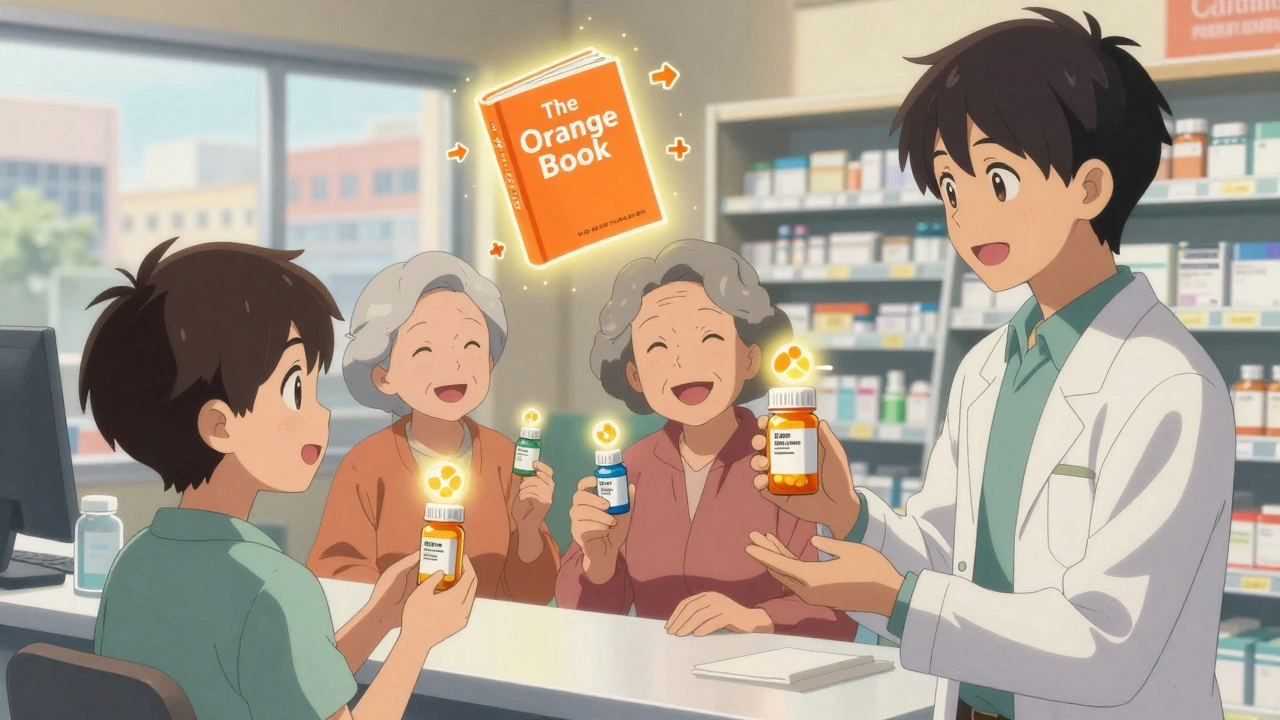
Market Impact and Real-World Benefits
The impact of generic approval is massive. In 2022, the U.S. generic drug market was worth $125 billion. Generic drugs cost, on average, 80-85% less than their brand-name equivalents. That’s billions in savings for patients, insurers, and Medicare. The FDA’s Drug Competition Action Plan targets drugs with little or no generic competition. In 2023, the agency approved 90 first-time generics-up from 107 in 2022. That’s not just a number. It’s a child who can now afford asthma inhalers. A senior who can refill their blood pressure pill without choosing between groceries and medicine. A patient with hepatitis C who can get cured without going into debt. The Orange Book, officially called “Approved Drug Products with Therapeutic Equivalence Evaluations,” is the public list that tells pharmacists which generics can be swapped for brand drugs. It’s updated daily and includes patent and exclusivity info. Pharmacists rely on it to make substitutions automatically-unless the doctor says “dispense as written.”Recent Changes and the Future
In October 2025, the FDA announced a new pilot program to fast-track ANDA reviews for companies that test and manufacture their generics in the U.S. This is part of a broader push to strengthen domestic drug supply chains after pandemic-era shortages. The agency is also working to reduce patent thickets-where brand companies file dozens of minor patents to delay generics. And while biosimilars (generic biologics) are growing fast, they follow a different pathway under the BPCIA. They’re not covered by the Hatch-Waxman Act. The future of generic approval hinges on two things: keeping the science rigorous and making the process faster for complex drugs. The FDA continues to say it’s in the public interest to get generics to market quickly-without compromising safety.Are generic drugs as safe as brand-name drugs?
Yes. The FDA requires that generic drugs meet the same strict standards for identity, strength, purity, and quality as brand-name drugs. Every generic is tested for bioequivalence and manufactured under the same Good Manufacturing Practices. The agency monitors adverse events for both brand and generic drugs equally. There is no evidence that generics are less safe.
Why do some generics look different from the brand?
The active ingredient is identical, but inactive ingredients like dyes, fillers, or coatings can differ. These affect color, shape, or taste-but not how the drug works. Federal law allows this difference to avoid trademark infringement. As long as bioequivalence is proven, the FDA approves the product.
How long does it take for a generic to be approved?
Under current FDA performance goals, standard ANDAs are reviewed within 10 months of submission. Priority applications, like first generics or drugs in shortage, are reviewed within 8 months. But this timeline starts only after the application is accepted for filing. If the application is incomplete, it gets rejected and must be resubmitted, resetting the clock.
Can a generic drug be pulled from the market after approval?
Yes. The FDA can withdraw approval if a manufacturer fails to maintain quality standards, if new safety data emerges, or if the product is found to be non-bioequivalent. The agency inspects manufacturing sites regularly and can shut down facilities that don’t meet GMP requirements. In 2023, the FDA issued multiple warning letters to generic manufacturers for quality control failures.
Why are some drugs still without generic versions years after patent expiry?
Several reasons: complex formulations that are hard to replicate, patent litigation delays, lack of financial incentive due to small patient populations, or the brand company holding exclusivity through data protection. The FDA has programs to encourage development of generics for these drugs, but progress is slow. Complex products like inhalers and injectables often take longer to develop and approve.

Olivia Portier
December 8, 2025 AT 19:06Tiffany Sowby
December 8, 2025 AT 22:22Asset Finance Komrade
December 10, 2025 AT 13:57Jennifer Blandford
December 10, 2025 AT 15:27Brianna Black
December 12, 2025 AT 06:49Andrea Petrov
December 12, 2025 AT 22:59Suzanne Johnston
December 13, 2025 AT 01:56Graham Abbas
December 14, 2025 AT 12:23Haley P Law
December 15, 2025 AT 20:40Carina M
December 16, 2025 AT 16:41William Umstattd
December 17, 2025 AT 10:57