Vaccine Generics: Why Global Production and Access Are Still Unequal
 Dec, 6 2025
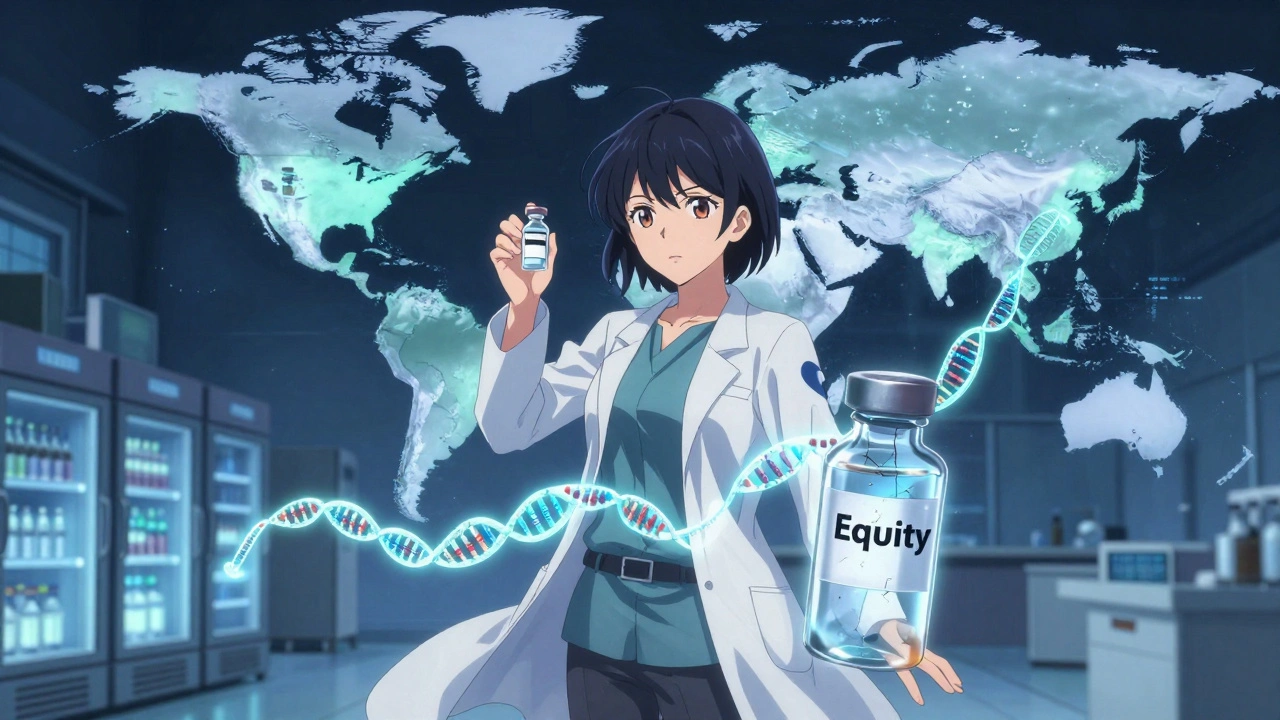
There’s no such thing as a vaccine generic in the way we think of generic pills. You can’t just copy a vaccine the way you copy a blood pressure tablet. Vaccines are living things made from viruses, bacteria, or mRNA - not chemicals you can chemically replicate. That’s why, even after a vaccine is approved, another company can’t just slap on a cheaper label and sell it as a copy. It has to build the whole thing from scratch: the cells, the machinery, the cold chain, the quality controls. And that’s where the real problem begins.
Why Vaccines Can’t Be Generic Like Pills
Generic drugs work because they’re small-molecule compounds. If you know the chemical formula, you can make the same molecule in a different lab. The FDA has a clear shortcut for that - the ANDA process. But vaccines? They’re biologics. Made in living cells. Each batch is a biological product, not a chemical one. Even tiny changes in temperature, pH, or raw materials can alter the final product. That’s why every new vaccine maker needs to run full clinical trials, not just prove it’s "similar" to the original. The Bill & Melinda Gates Foundation says it plainly: "There’s no generics vaccine market as there is for drugs." This isn’t a loophole. It’s biology. A Pfizer-BioNTech mRNA vaccine needs lipid nanoparticles to deliver its message into cells. Those nanoparticles? Made by only five to seven suppliers worldwide. If you don’t have access to them, you can’t make the vaccine - no matter how much you know about the science.The Global Production Map: Who Makes What
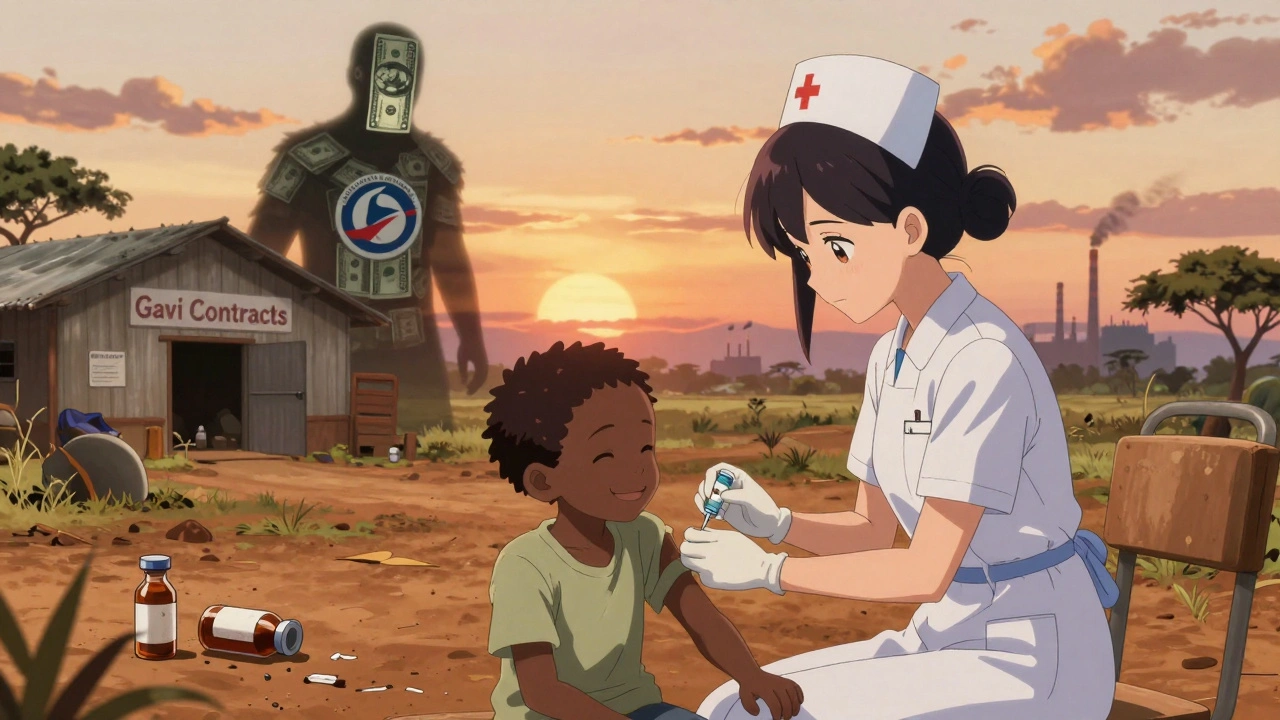
India is the unsung hero of global vaccine production. By volume, it makes 60% of all vaccines used worldwide. The Serum Institute of India alone produces 1.5 billion doses a year - more than any other company on earth. It makes the AstraZeneca COVID-19 vaccine for $3-$4 a dose, while Western manufacturers charged $15-$20. It also supplies 90% of the world’s measles vaccine and 70% of WHO’s DPT and BCG vaccines. But here’s the catch: India doesn’t make the raw materials. It imports 70% of its vaccine-related ingredients from China. When the U.S. restricted exports of critical lipids and cell culture media during India’s 2021 COVID wave, global vaccine production dropped by an estimated 50%. That’s not a supply chain. That’s a single point of failure.Meanwhile, the top five vaccine makers - GSK, Merck, Sanofi, Pfizer, and Johnson & Johnson - control 70% of the global market. They’re based in Europe and North America. Their factories are expensive. One production line can cost over $500 million. They don’t compete on price. They compete on contracts. Gavi, the Vaccine Alliance, pays high prices just to secure doses for low-income countries - sometimes over $10 per dose for pneumococcal vaccines, even after "differential pricing" promises.
Why Africa Can’t Make Its Own Vaccines
Africa imports 99% of its vaccines. It produces less than 2% of what it needs. That’s not because African countries lack talent or will. It’s because building a vaccine factory takes 5-7 years and $200-$500 million. No bank will lend that money without guaranteed buyers. No government can afford to risk billions on a factory that might sit empty if global demand shifts.The WHO set up a technology transfer hub in South Africa in 2021 to help local manufacturers copy mRNA vaccines. It got technical help from BioNTech. But it took 18 months just to get the first batch made - not because of science, but because they couldn’t source the right bioreactors, filters, or lipid nanoparticles. Even today, that hub can only make 100 million doses a year. The world needs 11 billion.
African health ministers put it bluntly: "We make nothing. We buy everything." The African Union wants to change that. Their plan: $4 billion in investment over 10 years to reach 60% self-sufficiency by 2040. But right now, most African countries can’t even reliably refrigerate the vaccines they get. In the Democratic Republic of Congo, health workers were handed doses that would expire in two weeks - with no cold storage to use them.
The Inequity of Access
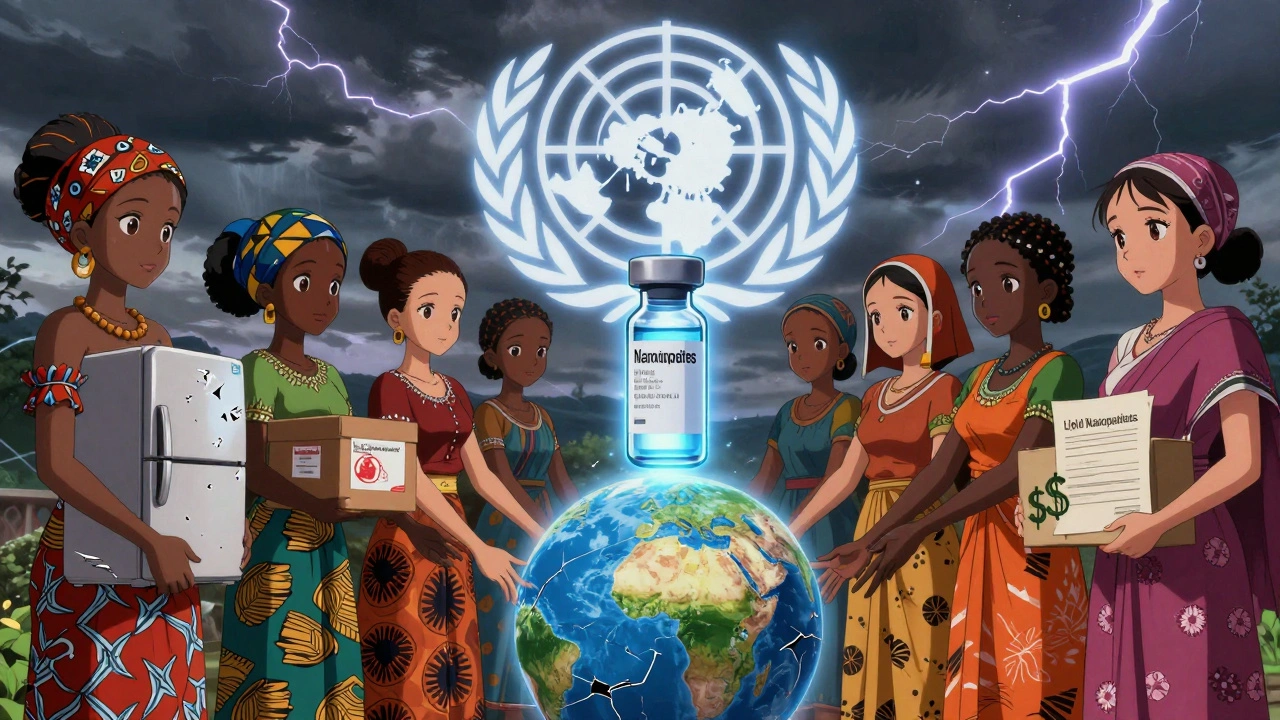
During the first year of the pandemic, high-income countries - just 16% of the world’s population - bought 86% of the first 1.2 billion COVID-19 vaccine doses. Low-income countries got less than 1%. Médecins Sans Frontières found that in April 2021, 83% of all COVID vaccines delivered to Africa went to just 10 countries. Twenty-three African nations had vaccinated fewer than 2% of their people.It’s not about supply. It’s about power. Companies sell to the highest bidder. Governments with strong negotiating power - like the U.S. and EU - signed advance purchase agreements before vaccines were even tested. Poorer nations waited. The COVAX system was supposed to fix this. But it was underfunded and dependent on donations from countries that didn’t always deliver on time.
Even when vaccines do arrive, they often come with strings attached. Some doses are donated with short expiration dates. Others require ultra-cold storage (-70°C) that most rural clinics don’t have. The problem isn’t just making vaccines. It’s getting them to the people who need them.
India’s Paradox: Producer, But Not Protector
India is the world’s pharmacy. It supplies 14% of all U.S. generic drugs and 70% of WHO’s vaccines. But when its own population faced a deadly second wave in 2021, it stopped exporting vaccines entirely. The Serum Institute paused shipments to COVAX. Global supply dropped by half. That’s not greed. It’s survival. When your own hospitals are overwhelmed, you protect your people first.That’s the reality of global health. No country will risk its own population to supply others - even if it’s the biggest producer. And when a country like India shuts down exports, the ripple effect hits everywhere. The U.S. FDA’s 2025 report admitted that overreliance on foreign manufacturing - especially in India and China - creates national security risks. But no one is willing to pay the price to build domestic capacity.
What’s Changing? What’s Not
There are glimmers of hope. The WHO’s mRNA hub in South Africa is producing. Brazil and Indonesia are starting small-scale vaccine plants. The U.S. FDA launched a pilot program in 2025 to fast-track generic drug approvals for manufacturers based in the U.S. - a move meant to reduce dependence on foreign suppliers.But these are drops in the ocean. The Gates Foundation says the only real solution is to expand manufacturing - but admits it’s "intensive capital requirements" that block progress. Dr. Gagandeep Kang from India says the problem isn’t knowledge. It’s access to materials, equipment, and financing. Dr. Jayaprakash Muliyil reminds us that India’s strength isn’t just in making vaccines - it’s in making the generics that treat HIV, TB, and malaria. But vaccines? They’re a different game.
Until we treat vaccine production like a public good - not a profit-driven product - equity will remain a slogan. Until we fund factories in Africa, Asia, and Latin America like we fund highways or power grids, the next pandemic will repeat the same mistakes.
Who’s Left Behind?
The people who pay the price aren’t CEOs or politicians. They’re mothers in rural Nigeria waiting for their child’s polio shot. They’re health workers in Haiti with expired doses in their fridges. They’re refugees in Bangladesh who get a vaccine only after the wealthy have been fully protected.The system isn’t broken. It’s working exactly as designed: for profit, not for people. The question isn’t whether we can make more vaccines. It’s whether we’re willing to make them for everyone - not just those who can pay.

Jackie Petersen
December 6, 2025 AT 18:26So let me get this straight - we’re supposed to trust Big Pharma and their ‘biological magic’ while ignoring how the same companies hoard patents and let people die? This isn’t biology, it’s corporate warfare. They don’t want generics because they’d lose billions. The ‘lipid nanoparticles’ excuse? Total BS. They could share the tech if they wanted to. But they won’t. Because profit > lives.
brenda olvera
December 7, 2025 AT 14:09India is literally the backbone of global vaccines and no one talks about it right?? Like they make 60% of everything and still get treated like a supplier not a partner?? And then when their own people are dying they stop exports?? Who wouldn’t?? That’s not betrayal that’s basic human instinct. We need to stop acting like global health is a charity and start treating it like infrastructure. We build roads why not vaccine factories??
Myles White
December 7, 2025 AT 17:00It’s not just about the science or the patents - it’s about the entire ecosystem. You can’t just build a vaccine plant and expect it to work. You need trained technicians who understand sterile environments, supply chains that don’t break when a single port gets shut down, regulatory bodies that aren’t corrupt or underfunded, and - most importantly - a government willing to invest billions without expecting immediate ROI. The U.S. spends $800 billion a year on defense but balks at $5 billion for vaccine sovereignty? That’s not a policy failure. That’s a moral failure.
Brooke Evers
December 9, 2025 AT 15:35I keep thinking about those moms in Nigeria waiting for polio shots. It’s not that they’re ‘left behind’ - it’s that the system was never designed to reach them. We build hospitals in cities but forget that 70% of people live in rural areas. We send vaccines with expiration dates in two weeks but no refrigerators. We call it ‘donation’ but it’s just dumping. Real equity means building cold chains, training local workers, paying fair wages, and letting countries own their production - not just receive scraps from the table.
Chris Park
December 11, 2025 AT 08:04Let’s be honest: the WHO hub in South Africa is a propaganda stunt. They got ‘tech transfer’ from BioNTech? Please. BioNTech didn’t give them the lipid nanoparticle recipes - they gave them a PowerPoint. The real bottleneck isn’t knowledge - it’s the fact that China and the U.S. control every single raw material. This isn’t capitalism. It’s a cartel. And the ‘differential pricing’? A joke. The same vaccines sold for $3 in India are sold for $12 in Africa because the buyers have no leverage. That’s not economics. That’s extortion.
Saketh Sai Rachapudi
December 11, 2025 AT 12:15India made 1.5 billion doses and still people act like we’re some poor country?? We feed the world with vaccines and get called out for stopping exports during our own crisis?? You think we didn’t try?? You think we wanted our hospitals to collapse?? We didn’t hoard - we survived. And now you want us to build factories for you while your own governments pay $20 per dose?? We’re not your vaccine factory - we’re your savior. Stop acting like we owe you
joanne humphreys
December 13, 2025 AT 08:26I wonder if the people who profit from this system ever sit down with a nurse in rural Haiti who has to throw out 30 doses because the fridge broke. Or with a mother in DRC who walks 12 miles to a clinic only to be told the vaccine expired last week. It’s easy to talk about supply chains and lipid nanoparticles when you’ve never held a vial that might save a child’s life. The science is complex - but the ethics are simple. We’re failing people because we treat medicine like a commodity, not a right.
Inna Borovik
December 13, 2025 AT 14:12Let’s not romanticize India. Yes, they produce a lot - but they also export substandard batches. Remember the 2019 hepatitis B vaccine scandal? The FDA flagged 40% of their exports for contamination. And China? They control 80% of API production. That’s not a supply chain - it’s a hostage situation. The real problem isn’t inequality - it’s systemic fragility. We’ve outsourced global health to two authoritarian regimes and now we’re surprised when it collapses?
Nigel ntini
December 15, 2025 AT 04:37There’s hope. Brazil’s Fiocruz is now making mRNA vaccines with WHO support. Indonesia’s Bio Farma is expanding. Ghana just opened its first vaccine plant with EU funding. It’s slow, yes - but it’s happening. The mistake we keep making is thinking this is a problem of ‘if’ - when it’s really a problem of ‘when’. We just need to fund it like we fund space programs or military drones. Not as charity. As survival.
Dan Cole
December 15, 2025 AT 22:01The entire global vaccine system is a monument to human hubris. We built a world where a child’s life depends on the geopolitical whims of a lipid nanoparticle supplier in China, the profit margins of a German biotech firm, and the diplomatic goodwill of a U.S. senator who got a campaign donation from Pfizer. We’ve turned medicine into a chess game - and the pawns are infants in refugee camps. This isn’t broken. It’s perfectly engineered for control. And until we dismantle the altar of corporate intellectual property, we’ll keep sacrificing children on its altar.
Billy Schimmel
December 17, 2025 AT 12:07So we’re saying the solution is… build more factories? Cool. Who’s gonna pay for them? Who’s gonna run them? Who’s gonna make sure the power doesn’t go out? You think Africa’s gonna magically have 24/7 electricity and trained engineers just because we say so? Nah. We’re not gonna fix this with idealism. We need to pay people to do the boring, hard work. And we need to stop pretending this is about justice. It’s about logistics. And logistics costs money. A lot of it.