Using Wearables to Track Side Effects: Heart Rate, Sleep, and Activity
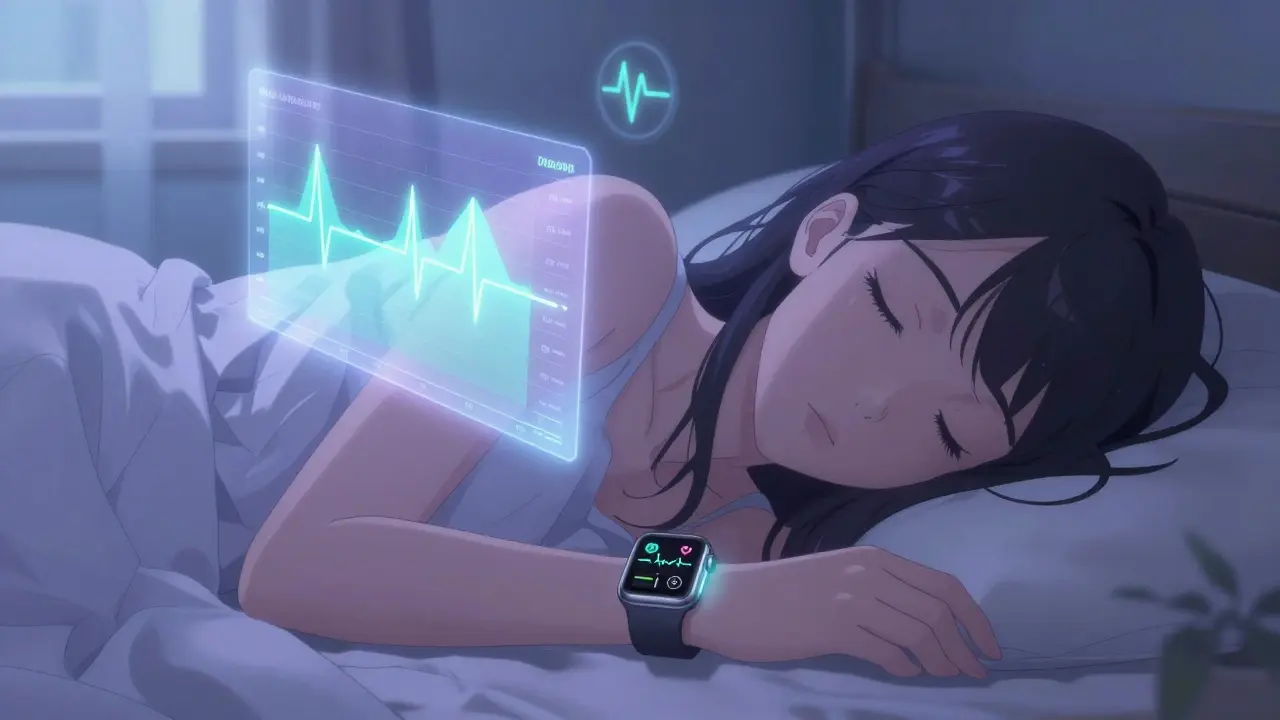 Jan, 9 2026
Side Effect Trend Calculator
How This Tool Works
Based on medical guidelines from the article, this calculator helps you determine if changes in your wearable data might indicate medication side effects. It focuses on significant, sustained changes rather than single readings.
Results
When you start a new medication, you’re told to watch for side effects-dizziness, fatigue, rapid heartbeat. But what if those symptoms creep in slowly, or only show up at night? What if you don’t notice them until they’ve already affected your daily life? That’s where wearables come in. Smartwatches and fitness trackers aren’t just for counting steps anymore. They’re becoming quiet, continuous observers of your body’s response to drugs-tracking heart rate, sleep, and movement in ways doctors never could during a 15-minute office visit.
How Wearables Detect Hidden Side Effects
Your body doesn’t wait for a doctor’s appointment to react to medication. Side effects often begin subtly: a slight rise in resting heart rate, fragmented sleep, or reduced daily steps. These changes might seem minor on their own, but together, they can signal something serious-like an interaction between your blood pressure pill and antidepressant, or early signs of dopamine imbalance from Parkinson’s medication. Modern wearables use three main sensors to catch these signals:- Photoplethysmography (PPG) sensors measure blood flow through your skin to track heart rate and variability. Devices like the Apple Watch Series 8 detect changes as small as 2-3 beats per minute, with 98% accuracy compared to clinical ECGs.
- Actigraphy and skin temperature sensors monitor sleep patterns by tracking movement and body heat. Fitbit and Oura Ring devices can tell if you’re spending less time in deep sleep after starting a new drug, which often happens with antidepressants or steroids.
- 9-axis motion sensors capture every shift in your movement-whether you’re walking slower, standing less, or fidgeting more at night. This is critical for spotting side effects like bradykinesia (slowed movement) from Parkinson’s drugs or tremors from antipsychotics.
These sensors don’t just collect data-they learn your baseline. One patient on Reddit shared how their Garmin noticed increased nighttime twitching after a levodopa dose increase. Their neurologist confirmed it was early dyskinesia, and they adjusted the timing before symptoms got worse. That’s the power of continuous monitoring: catching problems before they become emergencies.
Which Devices Work Best for Side Effect Tracking
Not all wearables are built the same. If you’re using one to monitor medication side effects, you need the right tool for the job.| Device | Best For | Accuracy (vs Clinical) | Limitations | Price (USD) |
|---|---|---|---|---|
| Apple Watch Series 9 | Heart rate changes, arrhythmias | 98.8% for atrial fibrillation | Less accurate for sleep staging; 87% vs polysomnography | $399 |
| Fitbit Charge 5 | Sleep quality, circadian rhythm | 92.4% for sleep stages | Heart rate errors up to 12.3% during exercise | $179 |
| Garmin Venu 2S | Activity patterns, movement changes | 94% for daily step consistency | Minimal sleep analysis; no skin temp sensor | $299 |
| BioIntelliSense BioSticker | Medical-grade monitoring | 97.3% for continuous vitals | Requires prescription; $1,200 per unit | $1,200 |
For most people, a consumer device like the Apple Watch or Fitbit is enough. But if you’re on high-risk meds-like chemotherapy, antipsychotics, or cardiac drugs-you might need something more precise. The BioSticker, cleared by the FDA in 2020, is used in clinical trials and hospital settings. It’s not for casual use, but for those who need to catch every anomaly.
One big caveat: accuracy drops for people with darker skin tones. PPG sensors, which rely on light absorption, are less reliable on Fitzpatrick skin types V and VI. Studies show accuracy can fall to 85% in these groups. If you’re a person of color, be aware this could mean missed signals-or false alarms.
Why Your Baseline Matters More Than the Numbers
A heart rate of 85 bpm might sound high. But if your normal is 60, it’s a red flag. If your normal is 90? Probably not.That’s why the most successful users of wearables for side effect tracking don’t just look at raw numbers-they build a personal baseline. This takes 2-4 weeks of consistent wear before starting a new medication. During this time, the device learns your typical sleep schedule, activity rhythm, and resting heart rate.
Without a baseline, you’re just guessing. One patient on PatientsLikeMe noticed their heart rate was consistently 10-15 bpm higher after taking their new antidepressant. They didn’t think much of it-until they compared it to their pre-medication data. That spike was the first sign of a dangerous interaction with their blood pressure pill. Their doctor changed the prescription before they had a cardiac event.
But here’s the catch: every body is different. A 2023 study found 81% variability in how patients respond to the same medication, based on movement patterns alone. What’s normal for one person might be alarming for another. That’s why generic alerts-like “your heart rate is high”-are often useless. The system needs to know you, not just the average.

The Dark Side: False Alarms and Anxiety
Wearables aren’t magic. They’re sensors. And sensors make mistakes.Consumer reports from March 2024 found that 63% of Fitbit users got false alerts for irregular heart rhythms-often triggered by caffeine, stress, or even holding your arm wrong. One user described checking their heart rate 20 times a day, convinced every spike meant a heart attack. They stopped wearing the device altogether.
This is called “notification anxiety.” And it’s real. A 2023 JAMA Internal Medicine study found that 78% of patients couldn’t tell the difference between a side effect and normal stress. They’d see a spike in heart rate after climbing stairs and panic, thinking it was the drug.
And then there’s the physical toll. The FDA’s MAUDE database recorded skin irritation in 28% of long-term wearers-especially with silicone bands worn 24/7. Some users developed rashes, blisters, or allergic reactions. If you’re wearing a device to monitor side effects, don’t make your skin one.
Doctors are starting to notice this too. Dr. Joseph Kvedar from Harvard found that in early pilot programs, patients received 12-15 alerts per week. Only 18% of them were actually related to medication side effects. The rest were noise. That’s not helpful-it’s exhausting.
How to Use Wearables Without Losing Your Mind
You don’t need to obsess over every number. Here’s how to use wearables wisely:- Start with a baseline. Wear the device for 3-4 weeks before starting a new medication. Note your sleep, activity, and resting heart rate patterns.
- Track trends, not spikes. One high heart rate doesn’t mean anything. But if your resting heart rate stays 10+ bpm higher for 3 days straight? That’s worth a call to your doctor.
- Link data to timing. Did your sleep worsen after you took your evening pill? Did your steps drop the day after a dosage increase? Use your phone’s medication reminder app to log when you take drugs. Then compare it to your wearable data.
- Share the right data. Don’t send your doctor 30 days of raw numbers. Export weekly summaries showing changes in sleep efficiency, daily steps, and resting heart rate. Most apps let you generate these reports.
- Take breaks. If you’re checking your heart rate 10 times a day, put the watch down. You’re not helping yourself-you’re training your brain to panic.
Some hospitals are already using this approach. Johns Hopkins integrated wearable data into their Epic EHR system. Nurses now get alerts only when a patient’s resting heart rate stays elevated for 48+ hours, or when sleep efficiency drops below 70% for three nights. That’s focused. That’s useful.

The Future: AI, Multimodal Sensing, and Real Clinical Impact
The next wave of wearables won’t just show you data-they’ll predict it.In 2025, researchers at Stanford and MIT began testing AI models that combine heart rate variability, skin conductance (sweat response), and even voice tone to predict neurological side effects. In early trials, these models detected early Parkinson’s tremors with 94% accuracy-before the patient even noticed them.
The FDA cleared Apple Watch Series 9’s new algorithm in September 2024 specifically to detect beta-blocker-induced bradycardia. It’s the first time a consumer device has been approved to flag a specific drug side effect.
But here’s the problem: even with better tech, we’re still stuck in a system that doesn’t know what to do with all this data. Only 27% of U.S. insurers cover wearable monitoring. Most doctors don’t have time to review it. And without clear guidelines, it’s easy to ignore-or overreact.
Still, the potential is huge. Pharmaceutical companies are now using wearables in 43% of Phase III cancer trials. That’s up from 7% in 2019. Why? Because they’re getting better data than ever before. Real-world evidence, not just clinic visits.
What You Can Do Today
You don’t need a clinical trial to use this tech. If you’re on medication and want to track side effects:- Choose a device that tracks heart rate, sleep, and movement-Apple Watch, Fitbit, or Garmin.
- Wear it consistently for 3 weeks before starting a new drug.
- Use the app to log when you take your meds.
- After 2-4 weeks, look for patterns: Is your sleep worse after dinner? Do your steps drop on days you take your pill?
- Bring those patterns to your doctor-not the raw numbers, but the story they tell.
Wearables won’t replace your doctor. But they can give you a voice between visits. They can turn vague feelings-“I just don’t feel right”-into concrete data. And that’s powerful.
Can wearables detect if a medication is causing my insomnia?
Yes. Devices like Fitbit and Oura Ring track sleep stages-light, deep, and REM sleep. If you notice your deep sleep drops by 30% or more after starting a new medication, especially stimulants, antidepressants, or steroids, it’s likely connected. Compare your sleep efficiency (time asleep vs. time in bed) before and after starting the drug. A drop below 80% for more than 3 nights is worth discussing with your doctor.
Are wearable heart rate readings accurate enough to spot dangerous side effects?
For most people, yes-especially for trends. The Apple Watch Series 8 and 9 have been validated to detect atrial fibrillation with 98.8% sensitivity. If your resting heart rate stays above 100 bpm for hours, or drops below 40 bpm (especially if you’re on beta-blockers), it’s a red flag. But don’t rely on single readings. Look for sustained changes over days, not minutes. False positives happen, but consistent patterns rarely lie.
Should I stop taking my medication if my wearable shows a problem?
Never stop a medication based on wearable data alone. Wearables can alert you to something unusual, but they can’t diagnose. If you see a pattern-like increased heart rate, poor sleep, or reduced activity-contact your doctor. Bring your wearable report. Let them decide if it’s a side effect, an interaction, or just stress. Stopping meds abruptly can be dangerous.
Do I need a medical-grade wearable to track side effects?
Not for most people. Consumer devices like the Apple Watch or Fitbit Charge 5 are accurate enough to catch meaningful changes in heart rate, sleep, and activity. Medical-grade wearables like the BioSticker are used in hospitals and clinical trials-they’re more precise but cost $1,200 and require a prescription. Unless you’re in a trial or on high-risk meds like chemotherapy, a consumer device is sufficient.
Why do some people get false alerts from their wearables?
Wearables detect motion and blood flow-not drugs. Things like caffeine, stress, exercise, or even holding your arm tightly can trigger false heart rate spikes or sleep disruptions. Skin tone also affects accuracy: PPG sensors are less reliable on darker skin. That’s why baselines matter. A one-time spike isn’t a side effect. A sustained change over days, especially when linked to medication timing, is.
If you’re using a wearable to monitor side effects, you’re not just tracking data-you’re taking control. You’re turning passive patients into active partners in your care. The technology isn’t perfect. But when used wisely, it gives you the quiet, continuous insight that no clinic visit ever could.

lisa Bajram
January 10, 2026 AT 08:31Okay but let’s be real-my Fitbit started screaming about my heart rate after I started my antidepressant, and I spent three days Googling ‘am I dying?’ only to realize I’d just drunk three espressos before bed. Wearables are cool, but they don’t know if you were running from your ex or just had a spicy taco. Baseline? YES. Obsession? NO.
Paul Bear
January 11, 2026 AT 23:02The notion that consumer-grade PPG sensors can reliably detect pharmacodynamic side effects is statistically dubious. With a mean absolute error of 5.2 bpm in dynamic conditions and significant chromatic attenuation in Fitzpatrick V-VI skin tones, the clinical validity of these metrics is compromised. The FDA’s clearance of Apple’s algorithm for beta-blocker-induced bradycardia is a regulatory artifact, not a validation of diagnostic utility. Data without context is noise-and noise is not evidence.
Jaqueline santos bau
January 12, 2026 AT 18:35I tried this for two weeks and my Garmin kept telling me I was having ‘anxiety spikes’-but I was just trying to sleep after my cat knocked over my entire bookshelf at 3 a.m. I cried. I deleted the app. I felt so judged. Like my body was betraying me. And then my mom said, ‘Maybe your watch is just extra.’ And I realized… maybe it is. 😭
Kunal Majumder
January 14, 2026 AT 17:06Bro, I’m from India and I use a Realme Watch 2 Pro-$40, no brand name, but it tracks sleep and HR like a champ. My doc was skeptical till I showed him the trend: my deep sleep dropped 40% after I started my epilepsy med. We adjusted timing. No hospital visit needed. Tech isn’t just for rich folks. You don’t need an Apple Watch to be smart about your health.
Aurora Memo
January 16, 2026 AT 04:16I appreciate how this post highlights the importance of baselines and context. But I also think we need to be gentle with people who start relying on these devices too heavily. The anxiety they can cause is real-and often overlooked in tech enthusiasm. Maybe the goal isn’t to track everything, but to track *enough*-and then let go.
Dwayne Dickson
January 17, 2026 AT 02:47Let me just say-this entire post reads like a Silicon Valley investor’s pitch deck dressed as medical advice. ‘Turn passive patients into active partners’? How quaint. You’re not a partner-you’re a data point in a wellness industrial complex that profits from your hypervigilance. And yes, I’m aware that my tone is overly formal. That’s the point.
Ted Conerly
January 17, 2026 AT 18:40Don’t overthink it. Wear the device. Build your baseline. Log your meds. Look for patterns over days, not minutes. If your steps drop for three straight days after a new pill? Call your doctor. If your heart rate spikes after coffee? That’s not a side effect-that’s caffeine. Simple. No drama. Just data.
chandra tan
January 18, 2026 AT 10:31Back home in Kerala, my uncle took his BP meds and started sleeping 14 hours a day. His Fitbit said ‘sleep efficiency: 68%’. He panicked. We called his doctor. Turns out, the med was too strong. He’s fine now. Point is: even in villages, these gadgets are saving lives. Not because they’re perfect-but because they make us pay attention.
Faith Edwards
January 18, 2026 AT 22:36It is, frankly, irresponsible to suggest that a $179 fitness tracker-manufactured in a factory with questionable labor practices and calibrated using datasets that exclude 80% of the global population-should be used to make clinical decisions. This is not innovation; it is neo-liberal healthcare outsourcing disguised as empowerment. The very notion that one’s ‘baseline’ can be quantified by a silicone band is an affront to the complexity of human physiology.
Jay Amparo
January 20, 2026 AT 22:07My sister’s on chemo and uses a BioSticker. She says it’s the only thing that makes her feel like someone’s watching out for her when she’s too tired to talk. I cried reading that part. You’re right-this tech isn’t perfect. But sometimes, in the quiet hours when you’re scared and alone, a little beep that says ‘hey, something’s off’? That’s not noise. That’s hope.