Travel Letters for Controlled Medications: Airport and Customs Tips
 Jul, 12 2026
International Medication Compliance Checker
Where are you traveling?
Select your destination country to view specific medication import rules.
Country Name
Risk LevelAllowed Supply
--
Key Requirement
--
Essential Documentation Checklist
Select a destination to see compliance details.
Ensure your travel letter and prescriptions are ready before you fly.
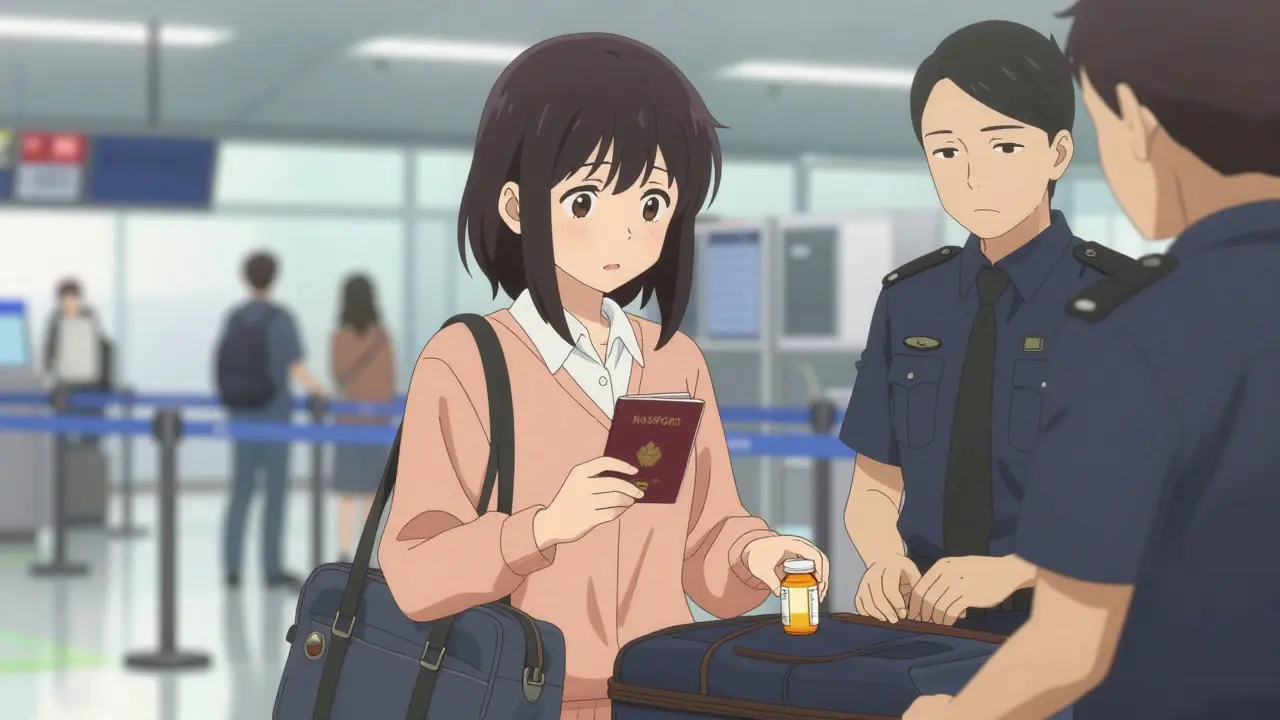
Imagine standing at customs, your heart racing as an officer pulls a bottle of pills from your bag. You have the prescription, but you forgot the doctor's letter. Suddenly, what should be a routine trip turns into a legal nightmare involving detention, confiscation, or even deportation. This isn't just a worst-case scenario; it is a reality for thousands of travelers every year.
If you take controlled medications, such as ADHD stimulants, strong painkillers, or sleeping aids, standard pharmacy labels are rarely enough to satisfy international border agents. The rules for crossing borders with these drugs are strict, complex, and vary wildly by country. Without the right paperwork, specifically a formal travel letter, you risk losing access to the medicine that keeps you healthy.
What exactly is a travel letter for medication?
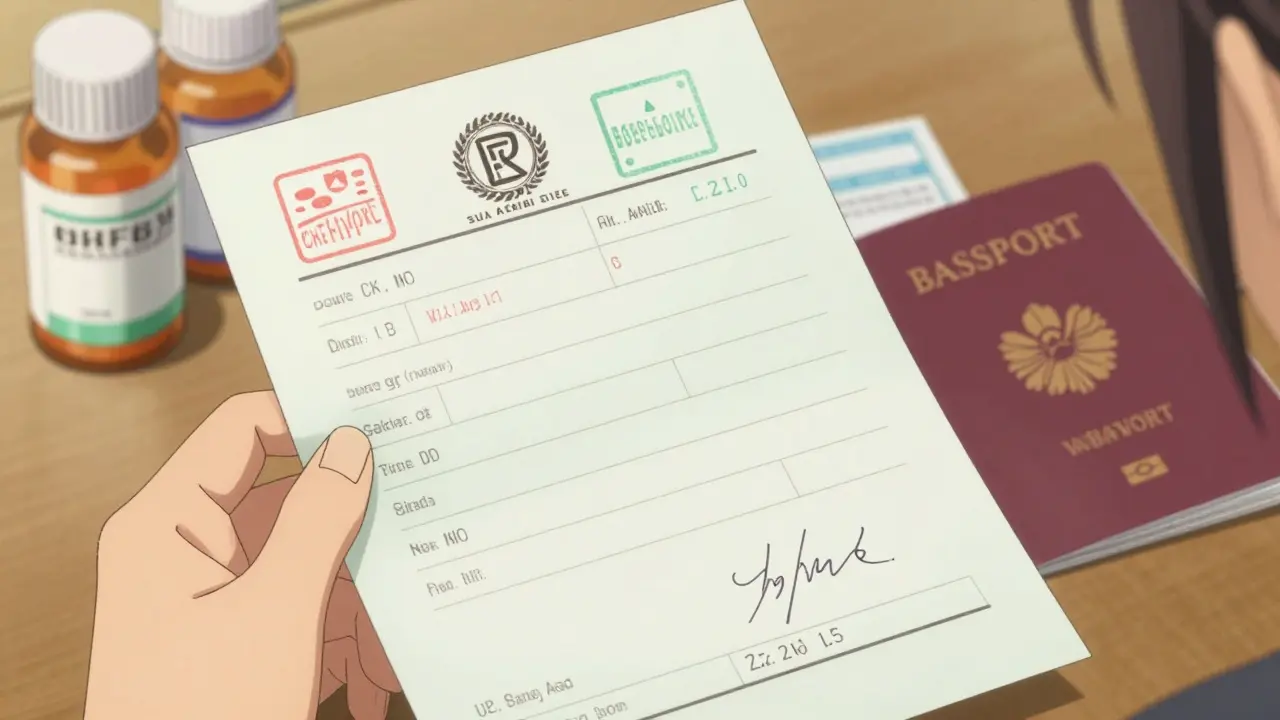
A travel letter is a formal document issued by your prescribing physician that verifies your medical need for specific controlled substances while traveling internationally. It acts as proof that the medication is for personal use and not for illegal distribution.
Why Your Prescription Isn't Enough
You might think your prescription bottle is sufficient proof. In many domestic situations, it is. But at international borders, the stakes are higher. Countries adhere to international drug control treaties, like the 1961 Single Convention on Narcotic Drugs, which give them broad powers to stop suspected trafficking.
Border agents are trained to look for red flags. A loose pill organizer, a repackaged blister strip, or a prescription in a language they don't read can trigger an alarm. According to data from the Centers for Disease Control and Prevention (CDC), travelers face a 23% confiscation rate when crossing borders with improperly documented controlled substances. That number drops to just 5% if you have complete documentation.
The difference between a smooth entry and a two-hour interrogation often comes down to one piece of paper: the travel letter. It bridges the gap between your medical necessity and the agent's legal obligation to enforce drug laws.
Essential Elements of a Valid Travel Letter
A casual note from your doctor won't cut it. To be effective, your travel letter must contain specific details that align with international standards set by bodies like the International Narcotics Control Board (INCB). Here is what must be included:
- Your Full Name: This must match the name on your passport exactly.
- Medication Names: List both the generic name (e.g., amphetamine/dextroamphetamine) and the brand name (e.g., Adderall). Generic names are crucial because brand names change by country.
- Dosage and Strength: Specify the exact milligram strength and how much you take daily.
- Medical Indication: Briefly state why you need the medication (e.g., "for the treatment of Attention Deficit Hyperactivity Disorder"). You do not need to overshare, but clarity helps.
- Physician Details: Include your doctor’s full name, license number, contact phone number, and email address. Agents may verify this information.
- Trip Duration: State the dates of your travel to justify the quantity of medication you are carrying.
Dr. Emily Carter, Chief Medical Officer at the CDC Travelers' Health Branch, notes that letters containing all these elements reduce border complications by 89%. If your prescription is in a language other than English, get it translated by a certified service. Roughly 41% of travelers need translation services, which cost between $25 and $75 per document.
Navigating Country-Specific Restrictions
This is where things get tricky. There is no universal rule for controlled substances. What is legal in the United States might be strictly prohibited in your destination. Before you book your flight, you must research the specific laws of the countries you are visiting and transiting through.
| Country | Allowed Supply | Special Requirements | Risk Level |
|---|---|---|---|
| United States | Up to 90 days | Prescription + Doctor's Letter + Passport Copy | Low (with docs) |
| Japan | Variable | Yakkan Shoumei (Import Certificate) required for most controlled drugs | High |
| United Kingdom | Up to 3 months | Controlled Drug Import Certificate needed for narcotics/sedatives | Medium | r>
| Australia | Variable | Prior approval via Therapeutic Goods Administration (TGA) | High |
| UAE | Strict Limits | Pre-approval mandatory; Zolpidem often banned | Very High |
For example, Japan strictly prohibits many Schedule I and II controlled substances, including Adderall. Bringing it without a Yakkan Shoumei import certificate can lead to arrest. The U.S. Embassy Tokyo reported that 42% of American travelers faced medication issues there in 2023 due to lack of this specific certificate. Similarly, Australia requires prior approval from the Therapeutic Goods Administration for Schedule 8 substances. Always check the official government health website of your destination, not just travel blogs.
Packing Smart: How to Carry Your Meds
Once you have your paperwork, how you pack matters. Never check your medication in your luggage. Checked bags can get lost, delayed, or exposed to extreme temperatures that degrade the drugs. Keep everything in your carry-on.
Keep medications in their original pharmacy containers. Repackaging pills into weekly organizers makes it impossible for customs officers to verify the dosage or the prescriber. Data from U.S. Customs and Border Protection shows that 53% of medication issues stem from repackaged drugs. If you need to transfer pills for convenience, ensure the new container has a label matching the original prescription, but only if local laws permit it.
Carry only the amount you need for the trip plus a few extra days for delays. Carrying a six-month supply of opioids for a one-week vacation looks suspicious and may be interpreted as intent to distribute. The FDA allows a 90-day supply for personal use in the U.S., but other countries may have stricter limits.
Timing Your Preparation
Do not wait until the day before your flight. Start the process 4 to 6 weeks in advance. You will need time to schedule a doctor's appointment, obtain the letter, and apply for any special permits like Japan's Yakkan Shoumei, which takes 7-10 business days and costs around $50.
Make multiple copies of your documents. Keep one set in your carry-on, another in your checked bag (just in case), and a digital copy in your cloud storage. If you lose your physical papers, having a digital backup can sometimes help expedite verification.
What to Do If You Are Stopped
If an agent questions your medication, stay calm and polite. Do not argue. Present your travel letter, prescription, and passport immediately. Explain that you have chronic condition requiring the medication and that you have followed all documentation requirements.
If the agent needs to verify the information, cooperate fully. They may call your doctor or embassy. Having your doctor’s direct line available speeds this up. Remember, the goal of the agent is to prevent illegal drug trafficking, not to punish patients. Clear, honest communication usually resolves the issue quickly. With proper documentation, the average resolution time is under 15 minutes. Without it, it can take hours.
Can I bring my medication in liquid form?
Yes, but you must declare it at security checkpoints. Liquid medications are exempt from the standard 100ml liquid rule, but you must inform the TSA or equivalent security agency before screening. Bring your doctor's letter to prove its medical necessity.
Is a notarized letter required?
Not always, but it adds credibility. Most countries accept a letter on official letterhead signed by the prescribing physician. However, some nations may require notarization. Check the specific embassy guidelines for your destination.
What if my medication is banned in my destination country?
If a medication is completely banned, you cannot bring it, even with a letter. Consult your doctor well in advance to find a legal alternative available in that country. Some countries allow temporary imports with special permits, but this is rare for strictly banned substances.
How long is a travel letter valid?
There is no universal expiration date, but it is best practice to get a new letter for each trip or at least once a year. An old letter may not reflect current dosages or medical conditions, raising suspicion.
Do I need separate letters for connecting flights?
Generally, no. One comprehensive letter covering your entire itinerary is sufficient. However, if you leave the airport during a layover in a different country, ensure that country's laws are also respected.
