Thyroid Medication Misuse: Risks of Excess and Deficiency
 May, 6 2026
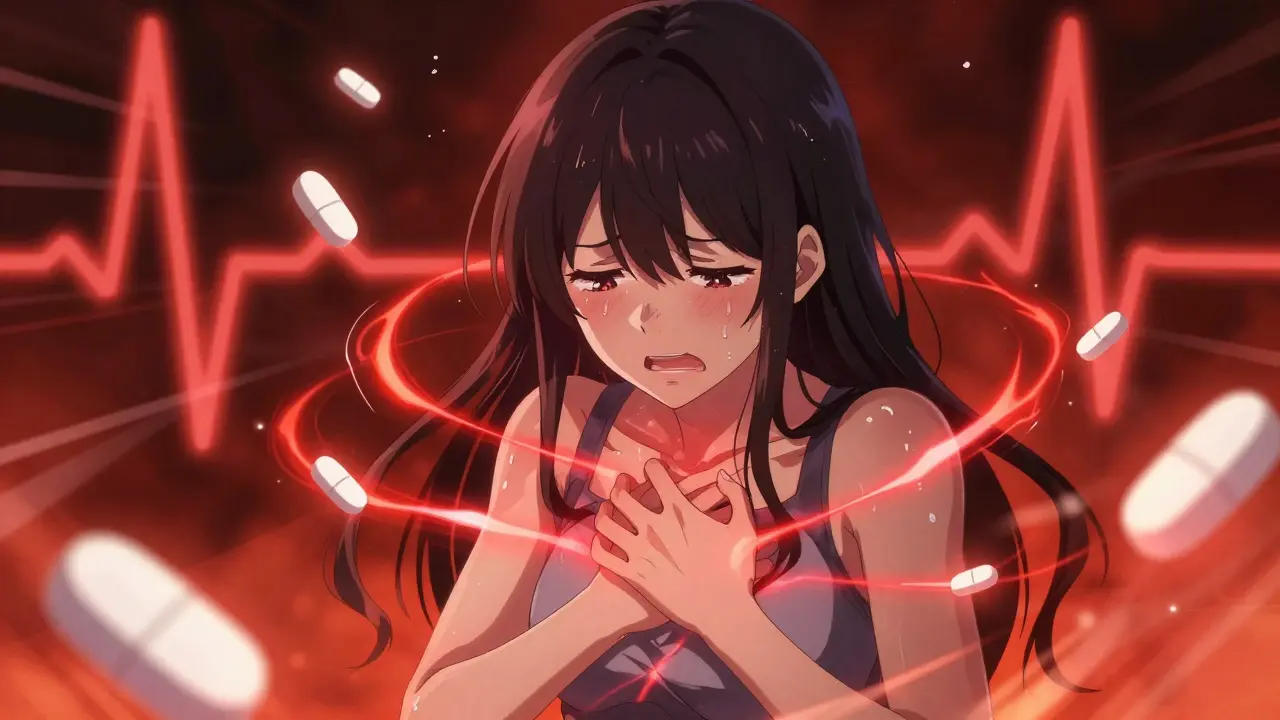
Your thyroid gland is small, but it runs your metabolism, energy levels, and heart rate. When you mess with the hormones it produces-either by taking too much medication or letting other drugs interfere-you can throw your entire body out of whack. We often think of thyroid issues as natural conditions like Graves' disease or Hashimoto's. But a huge chunk of thyroid problems come from how we use medications. Whether it's intentional abuse for weight loss or accidental overdoses from other prescriptions, medication misuse creates a dangerous rollercoaster of excess and deficiency.
This isn't just about forgetting a pill. It’s about the real, physical damage that happens when thyroid hormone levels spike or crash because of what you put in your system. Let’s look at what actually happens to your body when these balances break.
The Danger of Taking Too Much: Factitious Hyperthyroidism
When people talk about "too much thyroid," they usually mean hyperthyroidism. But there’s a specific type called factitious hyperthyroidism, which is a condition caused by ingesting excessive amounts of thyroid hormone medication, typically levothyroxine. This isn’t your thyroid gland going rogue; it’s you flooding your system with synthetic hormones.
Levothyroxine is the standard treatment for hypothyroidism. It’s safe when taken correctly. But some people take it to lose weight or boost performance. The American Thyroid Association notes that about 20% of hyperthyroidism cases are medication-induced. Here is why that is so risky:
- Rapid Onset: Unlike autoimmune hyperthyroidism (like Graves’ disease), which develops over months, symptoms from levothyroxine abuse can hit within 30 days.
- Cardiac Strain: Your heart starts beating faster and harder. In severe cases, patients end up in the ER with heart rates over 140 bpm and chest pain.
- Bone Loss: Chronic excess thyroid hormone accelerates bone breakdown. Untreated, you can lose 2-4% of bone mineral density every year, raising osteoporosis risk by 3.2 times.
You might feel jittery, sweaty, and irritable. You might lose weight, yes, but you also risk damaging your heart permanently. A 2021 review found that nearly 12% of patients presenting with hyperthyroid symptoms were actually misusing their meds, with women in their mid-30s being the most common group.
When Other Drugs Cause Thyroid Deficiency
It’s not just about taking too much thyroid medicine. Many common medications can suppress your thyroid function, leading to drug-induced hypothyroidism, which is insufficient thyroid hormone production caused by non-thyroid medications interfering with gland function.
If you’ve been feeling tired, gaining weight, or struggling with depression, it might not be stress-it could be your meds. According to a 2022 meta-analysis in Endocrine Reviews, fatigue affects 89% of people with hypothyroidism, and cold intolerance hits 76%. Several major drug classes are culprits:
| Medication Class | Mechanism | Risk Profile |
|---|---|---|
| Lithium | Inhibits hormone release | Causes hypothyroidism in 15-20% of long-term users |
| Amiodarone | High iodine content (37.3%) disrupts synthesis | Can cause both hyper- and hypothyroidism |
| Immune Checkpoint Inhibitors | Triggers immune attack on thyroid | Up to 8% incidence with combined PD-1/CTLA-4 therapy |
| Iodinated Contrast Agents | Jod-Basedow effect (iodine overload) | Thyrotoxicosis 2-12 weeks post-exposure |
The good news? Drug-induced hypothyroidism is often reversible. If you stop the offending medication, your thyroid function usually returns to normal within 3-6 months. This is different from Hashimoto’s thyroiditis, an autoimmune condition that is usually permanent.

How Doctors Spot the Difference
Here is where it gets tricky. Symptoms of medication-induced thyroid disorders look identical to natural ones. You feel hot, you sweat, you’re anxious. But the blood tests tell a different story.
In natural hyperthyroidism (like Graves’ disease), your thyroid gland is working overtime. It absorbs radioactive iodine during scans. In factitious hyperthyroidism (from pill abuse), your thyroid gland is actually suppressed because it senses enough hormone in your blood. So, radioactive iodine uptake is low, and thyroglobulin levels are low.
Doctors also watch for the "lag effect." If you miss doses and then take a bunch right before your appointment, your free T4 will look high, but your TSH won’t normalize immediately because it takes weeks to adjust. This leads to misdiagnosis in 15-20% of noncompliant patients. Proper testing requires consistency, not last-minute cramming.
The Hidden Costs of Misuse
Why do people misuse thyroid meds? Weight loss is the biggest driver. But the cost is high. Hospitalizations for thyroid medication complications have risen 18% since 2019, costing the US healthcare system an estimated $427 million annually.
There’s also the issue of unregulated supplements. The FDA documented 217 websites selling thyroid hormone products without prescriptions in 2022-a 43% jump from 2020. These compounded or online pills often have inconsistent dosing, leading to unpredictable spikes and crashes.
Even well-intentioned mistakes add up. Thirty-one percent of patients admit to taking medication inconsistently. Another 42% fail to recognize that calcium supplements, coffee, or food can reduce levothyroxine absorption by 35-50% if taken at the same time. This isn’t malice; it’s a lack of understanding that leads to deficiency despite "taking" the pill.
Safeguarding Your Thyroid Health
So, how do you stay safe? First, never self-prescribe. Levothyroxine is not a diet pill. Second, follow strict monitoring protocols. The American Thyroid Association recommends checking TSH and free T4 every 6-8 weeks when starting or adjusting doses.
If you suspect misuse or overdose, doctors often recommend a "washout period" of 2-3 weeks with cardiac monitoring. For mild cases, 87% resolve spontaneously once the excess hormone clears your system. Patient education is key-people who get comprehensive counseling are 63% less likely to be noncompliant.
Technology is helping too. The FDA approved the first digital pill version of levothyroxine in 2023, which includes an ingestible sensor to track adherence. Early studies show this reduces dosing errors by 52%. As telemedicine expands, better remote monitoring could cut misuse by 28% by 2026.
Can taking too much levothyroxine kill you?
While rare, severe levothyroxine overdose can lead to life-threatening cardiac events, including arrhythmias, chest pain, and hyperthermia (body temperature exceeding 104°F). It puts immense strain on the heart and requires immediate medical attention.
How long does it take for drug-induced hypothyroidism to go away?
In most cases, drug-induced hypothyroidism resolves within 3 to 6 months after discontinuing the offending medication. This is unlike autoimmune hypothyroidism, which is typically permanent.
What are the signs of levothyroxine abuse?
Signs include rapid weight loss, physical tremors, nausea, diarrhea, headache, nervousness, irritability, excessive sweating, insomnia, and increased heart rate. Blood tests will show high T3/T4 and low TSH with low radioactive iodine uptake.
Does amiodarone always cause thyroid problems?
No, but it carries a significant risk. Amiodarone contains 37.3% iodine by weight, which can trigger either hyperthyroidism (Type 1 or Type 2) or hypothyroidism. Regular monitoring is essential for patients on this drug.
Why shouldn't I buy thyroid meds online without a prescription?
Online sources often sell compounded or unregulated products with inconsistent dosing. The FDA has linked these to numerous cases of iatrogenic hyperthyroidism. Without proper medical supervision, you cannot ensure the dose is safe or effective.

Raymond Roberts
May 7, 2026 AT 07:56honestly this whole thing about factitious hyperthyroidism is wild because i always thought if you just took a little extra pill it wouldnt matter but clearly the heart strain part is real and scary stuff like bone loss happening in just a few years is not something anyone wants to deal with especially when you are trying to look good or feel energetic instead of ruining your skeleton permanently which seems like a terrible trade off for a few pounds lost that probably come back anyway once you stop taking the meds and your metabolism crashes down again
Nisha Koshti
May 7, 2026 AT 09:20they want us to believe its all about safety!! but really its just big pharma wanting more money!!! :(((( they say dont buy online but why??? because they cant control the supply chain!!! think about it!!! the FDA is in on it!!! :((((
Jannet Suen
May 7, 2026 AT 18:31I have to say, while I appreciate the detailed breakdown here, the tone feels a bit heavy-handed regarding online purchases. :/ It's true that unregulated sources are risky, but let's not demonize everyone who seeks alternative options due to cost or access issues. We should focus on better regulation rather than just fear-mongering about 'bad actors.' Everyone deserves safe healthcare, regardless of where they get their info from.
Claire A
May 8, 2026 AT 11:27This is such a helpful post! I never realized how many common drugs could affect thyroid function. Thanks for sharing!
andrew iregbayen
May 8, 2026 AT 21:15hey man i was wondering if the digital pill thing actually works well? seems kinda invasive but maybe its worth it if it stops people from messing up their doses?
Laura ciotoli
May 9, 2026 AT 22:51The data presented here is accurate and critical for public health awareness. Levothyroxine is not a recreational substance. The cardiac risks associated with misuse are severe and often irreversible. Patients must adhere strictly to prescribed dosages. Deviation leads to clinical complications that burden both the individual and the healthcare system. Compliance is mandatory for safety.
Sarah O'Donnell
May 10, 2026 AT 16:50ugh people need to take responsibility for their own bodies 🙄 its so dramatic to blame everything on meds or doctors when really its just lack of discipline 😒 why do we always need a tech solution for basic human behavior??
Amelia Vaughan
May 10, 2026 AT 18:13Stop buying fake meds. You are stupid if you do. Read the label. Take what is told. Do not be an idiot.
Kevin S
May 11, 2026 AT 05:34Great info! 💪 Always listen to your doctor! Stay healthy everyone! 🌟
Madison Jones
May 11, 2026 AT 18:38I had no idea that calcium supplements could interfere with absorption! This is super important information!! Thank you for highlighting this!! Many people might not realize this interaction!!
Sarah Grenberg
May 12, 2026 AT 05:22The distinction between natural hyperthyroidism and factitious cases is clinically significant. Radioactive iodine uptake tests provide clear diagnostic evidence. Medical professionals must remain vigilant in identifying medication-induced disorders to prevent misdiagnosis and ensure appropriate treatment protocols are followed without delay.
Brian Lee
May 12, 2026 AT 13:10i think the part about bone loss is really sad because nobody talks about that enough and it makes me worried about my mom who has been on lithium for years so maybe she should check her thyroid levels too even though she feels fine most of the time
Jake Williams
May 12, 2026 AT 20:21Typical American problem. Can't follow simple instructions. If you can't manage a pill schedule, maybe you shouldn't be on medication at all. The healthcare system is broken because people like you exist. Sarcasm aside, read the leaflet.