Tetracyclines and Tooth Discoloration in Children: What Parents and Doctors Need to Know Today
 Mar, 22 2026
For decades, parents and doctors were told the same thing: never give tetracycline to a child under 8. The warning was clear, loud, and rooted in real damage-yellow, gray, or brown stains on kids’ teeth that never went away. But today, that rule doesn’t apply to one key drug: doxycycline. The science has changed. The guidelines have changed. And if you’re still avoiding it out of fear, you might be putting your child at greater risk than the antibiotic itself.
Why Tetracycline Stains Teeth
Tetracycline doesn’t just kill bacteria. It also binds to calcium. And when it does that during tooth development, it gets locked into the enamel and dentin. The result? Teeth that turn yellow when they first come in, then darken to gray, brown, or even red-brown over time. This isn’t surface staining. It’s internal. Sunlight makes it worse, which is why front teeth-more exposed-often look darker than back molars. The worst time for exposure? When teeth are forming. Primary teeth (baby teeth) are most at risk between 10 and 14 months. Permanent front teeth are vulnerable from six months to six years. Back teeth? They’re still developing until about age eight. That’s why the old rule said: no tetracycline under 8. But here’s the catch: not all tetracyclines are the same. The original drugs-like tetracycline hydrochloride and oxytetracycline-bind calcium tightly. Studies show they bind at nearly 40%. That’s why kids who got them in the 1950s and 60s ended up with stained teeth. One study from 1962 found that doses over 35 mg per kg per day caused both staining and enamel defects. Animal studies confirmed it: high doses = weak, discolored teeth.The Doxycycline Revolution
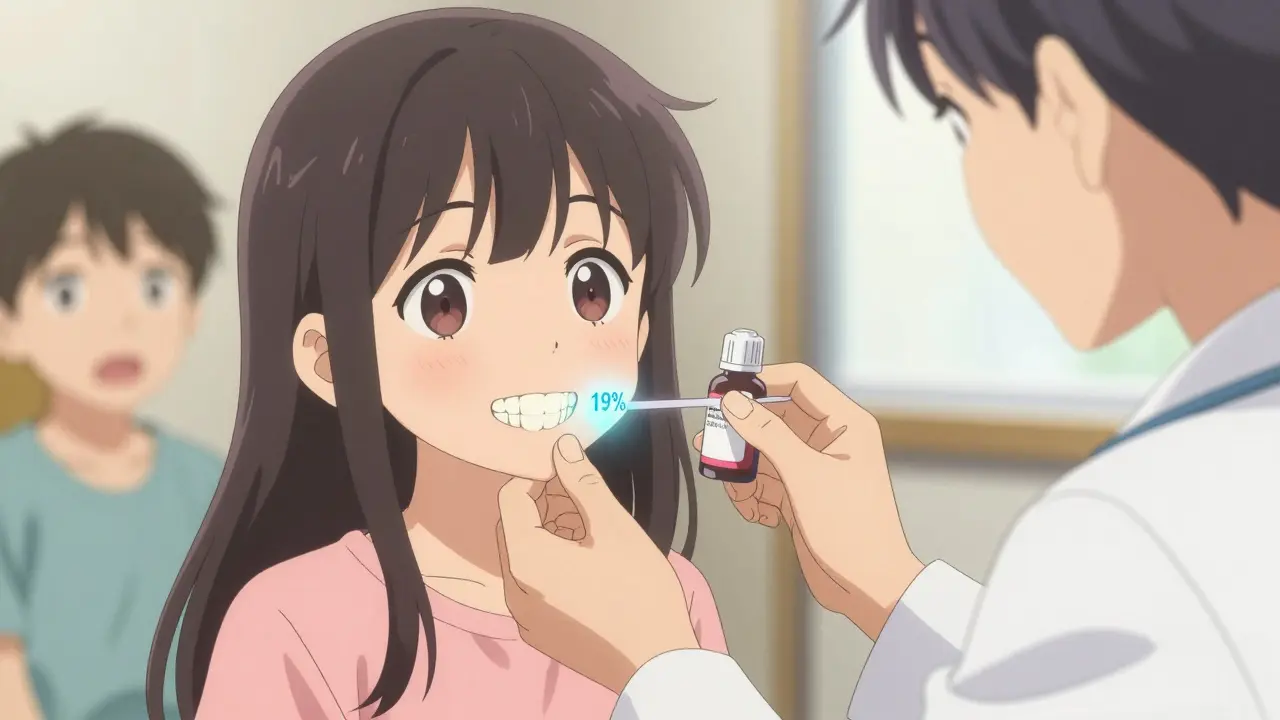
Enter doxycycline. It’s a cousin of tetracycline, but it’s not the same. It binds calcium at only about 19%. That small difference matters a lot. And when given in short courses-like 7 to 14 days-it doesn’t leave stains. The evidence is overwhelming now. A 2025 review in Frontiers in Pharmacology looked at 162 children under age 8 who got doxycycline. Only one child-a premature infant under 2 months-showed any discoloration. And even that was minor. Another study followed 137 children who got doxycycline before age 8. When they were examined years later, at an average age of 13.5, none had stained teeth. The CDC didn’t just review the data-they tested it. They compared the teeth of kids who got doxycycline for Rocky Mountain spotted fever (RMSF) with kids who never took it. Blind dentists couldn’t tell the difference. No staining. No enamel weakness. No difference at all. This isn’t theory. It’s real-world proof. And it’s why the American Academy of Pediatrics and the CDC now say: doxycycline is the first-choice antibiotic for RMSF and other rickettsial infections in children of any age. Delaying it because of old fears? That’s dangerous. RMSF kills 4% to 21% of people if treatment is delayed. Doxycycline saves lives. And now we know it doesn’t ruin teeth.What About Other Tetracyclines?
Don’t get confused. This safety update applies only to doxycycline. Other tetracyclines? Still off-limits under age 8. Tetracycline. Oxytetracycline. Demeclocycline. All of them still carry the same risk. A 2014 case study showed a 7-year-old with moderate yellow staining on his back baby teeth after a course of tetracycline. No hypoplasia. Just deep, permanent discoloration. Even tigecycline-a newer tetracycline derivative-is still not recommended under age 8. It may work differently, but we don’t have enough long-term dental data to say it’s safe. So stick to the rule: if it’s not doxycycline, avoid it in young kids.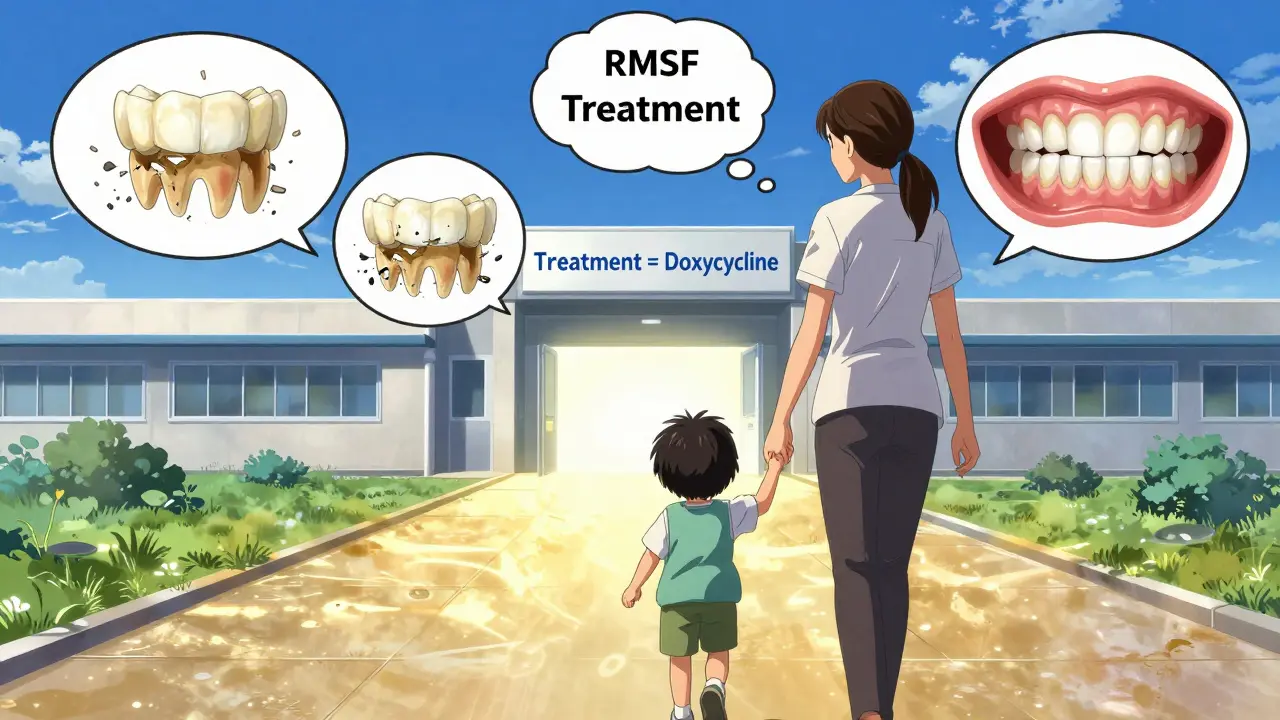
When Is Doxycycline Safe? The Rules
You don’t need to be a doctor to understand the key limits:- Only doxycycline is safe for short courses in children under 8.
- Short course means 7 to 14 days. Up to 21 days is acceptable for serious infections like RMSF.
- Dose matters. Typical pediatric doses are 2 to 5 mg per kg per day, split into one or two doses. Never exceed the recommended dose.
- Indication matters. This is for rickettsial diseases-RMSF, ehrlichiosis, anaplasmosis-not ear infections or strep throat.
Why Are Doctors Still Hesitant?
Even with clear guidelines, many clinicians still hesitate. Why? Because the old warnings are deeply embedded. Pharmacies still flag doxycycline prescriptions for kids. Parents Google “tetracycline teeth” and see horrifying photos from the 1960s. They panic. A 2018 study found Tennessee doctors were still avoiding doxycycline in kids with suspected RMSF, even though it was the right call. The CDC says clearer drug labels could help. But until then, it’s up to you to ask: “Is this doxycycline? Is it for a tick-borne disease? Is it just a short course?” If you’re a parent and your child needs antibiotics for a suspected tick bite, don’t let fear stop you. Ask: “Could this be RMSF? Is doxycycline the right choice?” If the answer is yes, push for it. The risk of death from delayed treatment far outweighs the tiny, unproven risk of tooth staining.
What Should Parents Do?
If your child is under 8 and needs antibiotics:- Ask: “Is this doxycycline?” If yes, ask why. Is it for a tick-borne illness? If yes, you’re likely safe.
- Ask: “Is this a different tetracycline?” If yes, ask if there’s an alternative. Avoid it.
- Ask: “How long will they be on it?” If more than 21 days, ask for evidence. Long-term use isn’t studied for dental safety in kids.
- Keep records. Write down the drug name, dose, duration, and reason. This helps future dentists and doctors.
The Bigger Picture
This isn’t just about teeth. It’s about how medicine evolves. For 60 years, we avoided doxycycline in kids because of what we learned from older drugs. Then science caught up. Studies got bigger. Follow-ups got longer. Dentists looked closer. And the truth changed. We’re seeing this pattern again with other antibiotics. The same logic might soon apply to other conditions-like Lyme disease or acne-where doxycycline is used. But right now, the evidence is strongest for rickettsial infections. That’s where the guidelines are clear. And remember: the old rule wasn’t wrong. It was based on real harm. But it didn’t account for differences between drugs. That’s not a flaw in the science-it’s how science works. We learn. We update. We do better.Final Takeaway
Tetracycline? Still dangerous for young kids. Doxycycline? Safe for short courses. The evidence isn’t just strong-it’s conclusive. Your child’s teeth are not at risk from a 10-day course of doxycycline for a life-threatening infection. But delaying treatment? That’s where the real danger lies. Don’t let outdated warnings stop you from doing the right thing. Ask questions. Know the difference. And trust the science-not the fear.Can doxycycline really be safe for kids under 8?
Yes, for short courses (7-21 days) used to treat rickettsial diseases like Rocky Mountain spotted fever. Multiple studies, including one by the CDC with over 100 children, found no tooth discoloration in kids who received doxycycline before age 8. The risk is negligible compared to the danger of untreated infection.
Why was tetracycline banned for children in the past?
In the 1950s and 60s, children given tetracycline during tooth development developed permanent yellow, gray, or brown stains. Studies showed the drug binds tightly to calcium in developing teeth, especially at doses over 35 mg/kg/day. This led to a decades-long ban on all tetracyclines under age 8.
Is doxycycline safe during pregnancy?
No. Tetracyclines, including doxycycline, are still contraindicated during pregnancy after the fourth month. The developing baby’s teeth are forming during this time, and the drug can cross the placenta, potentially causing permanent discoloration of the child’s primary teeth.
What’s the difference between tetracycline and doxycycline?
Both are tetracycline antibiotics, but doxycycline binds to calcium at about half the rate of older tetracyclines (19% vs. 39.5%). It’s also more potent, requires less frequent dosing, and has better tissue penetration. These differences make it safer for short-term pediatric use.
Should I avoid all antibiotics if my child is under 8?
No. Only avoid tetracycline, oxytetracycline, and other older tetracyclines. Doxycycline is safe for specific infections like tick-borne diseases. Amoxicillin, azithromycin, and cefdinir are still first-line for ear infections, strep throat, and other common pediatric conditions.

Jacob Hessler
March 23, 2026 AT 05:02Danielle Arnold
March 23, 2026 AT 09:07Zola Parker
March 24, 2026 AT 16:22florence matthews
March 25, 2026 AT 18:14Kenneth Jones
March 26, 2026 AT 22:43Mihir Patel
March 28, 2026 AT 11:50Marissa Staples
March 30, 2026 AT 12:09Rachele Tycksen
March 31, 2026 AT 03:12Grace Kusta Nasralla
April 1, 2026 AT 22:10Stephen Alabi
April 1, 2026 AT 23:44peter vencken
April 3, 2026 AT 13:29Donna Fogelsong
April 4, 2026 AT 02:33Alex Arcilla
April 5, 2026 AT 13:05