SGLT2 Inhibitors: Real Benefits and Risks for Type 2 Diabetes
 Jul, 29 2026
Imagine a pill that doesn't just lower your blood sugar but also protects your heart and kidneys. For years, treating Type 2 Diabetes was mostly about chasing down glucose numbers. But the game changed with the arrival of a class of drugs called SGLT2 inhibitors.
These medications, often ending in "-gliflozin," have moved from being an afterthought to a cornerstone of treatment. They aren't magic bullets, though. Like any powerful tool, they come with specific benefits you need to know and real risks you can't ignore. If you or a loved one is considering this path, understanding how these drugs work-and what they might do to your body-is the first step toward making a safe choice.
How SGLT2 Inhibitors Actually Work
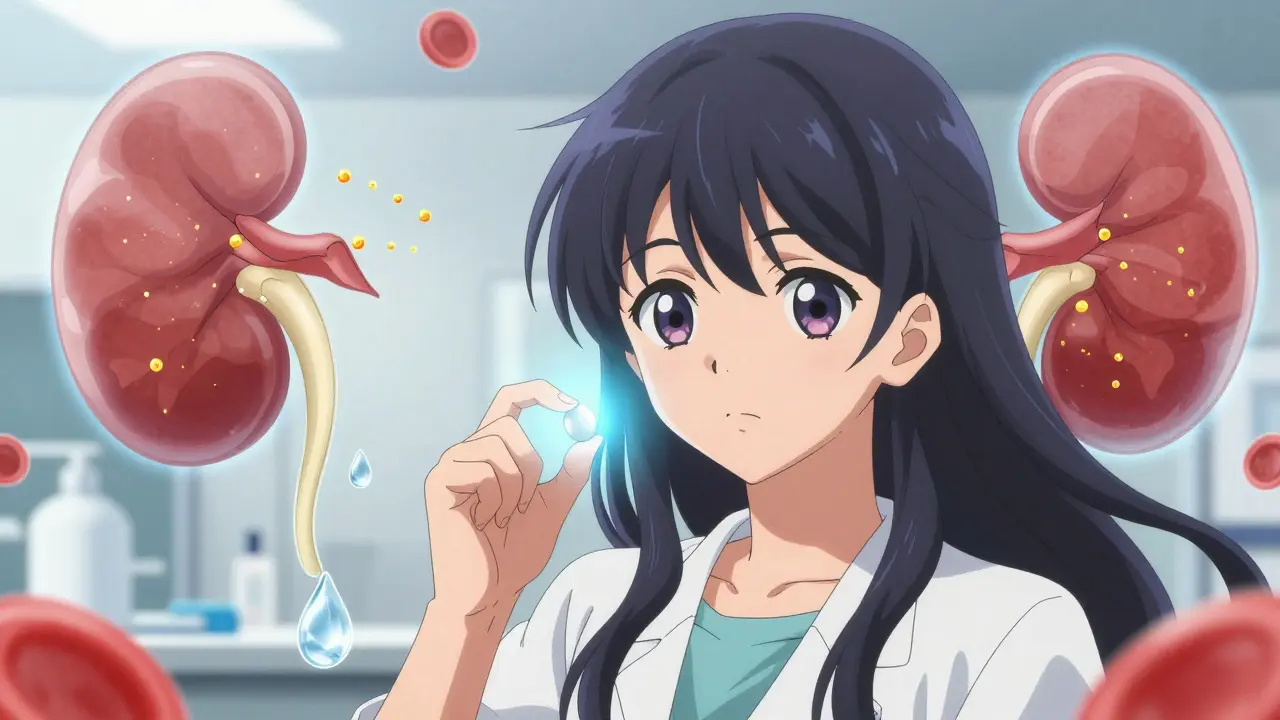
To understand why these drugs are different, you have to look at your kidneys. Normally, your kidneys filter waste from your blood, but they also reabsorb good stuff, like glucose (sugar), back into your bloodstream so you don't lose energy. Think of it like a sieve that catches the gold while letting the dirt pass through.
SGLT2 inhibitors, such as empagliflozin (Jardiance), dapagliflozin (Farxiga), canagliflozin (Invokana), and ertugliflozin (Steglatro), block a specific transporter in the kidney called SGLT2. By blocking this transporter, the drug stops your kidneys from reabsorbing all that glucose. Instead, the excess sugar gets flushed out of your body through urine.
This process does three things simultaneously:
- Lowers Blood Sugar: You excrete about 40 to 100 grams of glucose per day, which directly lowers your HbA1c levels by roughly 0.5% to 1.0%.
- Reduces Weight: Losing those calories in urine translates to a weight loss of about 2 to 3 kilograms (4-6 lbs) on average.
- Lowers Blood Pressure: The fluid loss associated with urinating more frequently helps drop systolic blood pressure by 3 to 5 mmHg.
The beauty here is that because the drug works outside the pancreas, it rarely causes hypoglycemia (dangerously low blood sugar) when used alone. It’s a mechanical fix for a metabolic problem.
The Heart and Kidney Bonus
If lowering blood sugar were the only benefit, SGLT2 inhibitors would be just another option in a crowded field. But clinical trials told a different story. Large-scale studies involving tens of thousands of patients revealed that these drugs protect organs beyond the pancreas.
The EMPA-REG OUTCOME trial was a turning point. It showed that empagliflozin reduced the risk of cardiovascular death, nonfatal heart attack, or stroke by 14% in patients with established heart disease. Similarly, the CANVAS Program found a 14% reduction in major adverse cardiovascular events with canagliflozin.
But the biggest surprise came from heart failure data. People with diabetes are at high risk for heart failure, and SGLT2 inhibitors dramatically cut hospitalizations for this condition. The DAPA-HF trial showed a 26% reduction in worsening heart failure or cardiovascular death. This benefit holds true even if your ejection fraction (the percentage of blood leaving your heart each time it contracts) is normal or reduced. This is why guidelines now recommend these drugs for almost anyone with Type 2 Diabetes who has heart or kidney issues, regardless of their current A1c level.
| Drug Name | Brand Name | Dosage Forms | Key Trial Highlight |
|---|---|---|---|
| Empagliflozin | Jardiance | 10 mg, 25 mg | EMPA-REG: Reduced CV death by 14% |
| Dapagliflozin | Farxiga | 5 mg, 10 mg | DAPA-HF: Strong heart failure protection |
| Canagliflozin | Invokana | 100 mg, 300 mg | CREDENCE: Significant kidney protection |
| Ertugliflozin | Steglatro | 5 mg, 15 mg | VERTIS CV: Non-inferior safety profile |
Risks You Can't Ignore
No medication is free of side effects. While SGLT2 inhibitors are generally well-tolerated, their mechanism of action introduces specific risks that require vigilance.
Genital Yeast Infections
Because you are dumping sugar into your urine, you are creating a feast for yeast and bacteria. This leads to a higher rate of genital mycotic infections. Studies show rates between 5.7% and 10.9% compared to 1.3% to 2.3% with placebo. For women, this often means recurrent vaginal yeast infections. For men, it can manifest as balanitis (inflammation of the head of the penis). Good hygiene and staying dry can help mitigate this, but it remains the most common reason people stop taking the drug.
Urinary Tract Infections (UTIs)
Similar to yeast infections, the sugary environment in the urinary tract can promote bacterial growth. The risk of UTIs increases slightly, ranging from 5.5% to 8.8% versus 3.7% to 5.3% with placebo. If you develop burning during urination or fever, seek medical attention quickly.
Euglycemic Diabetic Ketoacidosis (euDKA)
This is the rarest but most dangerous risk. Standard diabetic ketoacidosis (DKA) presents with very high blood sugar. Euglycemic DKA happens when blood sugar is normal or only slightly elevated, masking the danger. Your body starts breaking down fat for fuel because it thinks it's starving, producing acidic ketones. This can happen during illness, surgery, or extreme dieting. Symptoms include nausea, vomiting, abdominal pain, and unusual tiredness. If you feel flu-like symptoms while on an SGLT2 inhibitor, check your ketone levels immediately, not just your blood sugar.
Volume Depletion and Kidney Stress
Since these drugs make you pee more, you can get dehydrated. This can lead to low blood pressure, dizziness, and fainting, especially in older adults or those on diuretics. In severe cases, dehydration can strain the kidneys, leading to acute kidney injury. The FDA requires a warning about this risk. Staying hydrated is crucial, particularly in hot weather or during exercise.

Who Should Take Them? And Who Shouldn't?
The decision to use an SGLT2 inhibitor isn't one-size-fits-all. Current guidelines from the American Diabetes Association (ADA) and the European Association for the Study of Diabetes (EASD) prioritize these drugs for specific groups.
Ideal Candidates:
- Patients with established cardiovascular disease (prior heart attack or stroke).
- Individuals with heart failure, whether their heart pumps weakly (HFrEF) or normally (HFpEF).
- People with chronic kidney disease (CKD), specifically those with an estimated glomerular filtration rate (eGFR) above 30 mL/min/1.73m².
- Those who struggle with weight management alongside diabetes.
Caution Required:
- Low eGFR: If your eGFR is below 30, these drugs are less effective for lowering sugar and may not provide additional renal benefit, though recent approvals allow some use in CKD regardless of diabetes status. Always consult your nephrologist.
- Type 1 Diabetes: These drugs are generally contraindicated due to a significantly higher risk of euglycemic DKA.
- History of Genital Infections: If you suffer from frequent yeast infections, this class might be frustrating.
- Amputation Risk: Early data suggested a link between canagliflozin and lower limb amputations. While later studies clarified this risk is likely related to pre-existing vascular disease rather than the drug itself, caution is advised for patients with poor circulation or prior amputations.
Cost and Access Reality Check
Even if a drug is medically perfect, it’s useless if you can’t afford it. SGLT2 inhibitors are branded medications, meaning they are expensive. As of early 2024, the average retail price for a 30-day supply hovers around $600 to $650 depending on the brand. Jardiance averages $642.50, Farxiga $628.75, and Invokana $598.25.
However, most insurance plans cover these drugs, especially if you meet the criteria for heart or kidney protection. Patient assistance programs offered by manufacturers can reduce out-of-pocket costs to $10-$25 per month for eligible individuals. Without insurance, the cost is a significant barrier, leading many to discontinue therapy despite its benefits. Generic versions are not expected until 2027-2029 due to patent protections.

Living with SGLT2 Inhibitors: Practical Tips
If you start this medication, here is how to stay safe and get the most out of it:
- Hydrate Aggressively: Drink water throughout the day. Don't wait until you're thirsty. This helps prevent dehydration and reduces UTI risk.
- Practice Hygiene: Keep the genital area clean and dry. Wipe front to back. Consider wearing breathable cotton underwear.
- Sick Day Rules: If you get sick, have surgery, or stop eating for more than 24 hours, talk to your doctor about pausing the medication. This prevents euglycemic DKA.
- Monitor Ketones: If you feel nauseous, vomit, or are unusually tired, test your urine or blood for ketones. Do not assume you are fine just because your blood sugar looks okay.
- Watch Your Feet: Inspect your feet daily for cuts, blisters, or redness. Report any changes to your doctor immediately, especially if you have neuropathy or poor circulation.
FAQ
Do SGLT2 inhibitors cause weight loss?
Yes. Because the drug causes you to excrete glucose (calories) in your urine, most users experience a modest weight loss of 2 to 3 kilograms (4-6 pounds) over several months. This effect is additive to lifestyle changes.
Can I take SGLT2 inhibitors if I have kidney disease?
Often, yes. In fact, they are recommended to slow the progression of chronic kidney disease. However, efficacy depends on your eGFR. If your eGFR is below 30 mL/min/1.73m², the drug may be less effective for lowering blood sugar, but recent guidelines support its use for kidney protection in certain contexts. Always consult your specialist.
What is euglycemic diabetic ketoacidosis (euDKA)?
EuDKA is a serious condition where your body produces high levels of acid (ketones) without having high blood sugar. It is a rare but life-threatening side effect of SGLT2 inhibitors, often triggered by illness, surgery, or starvation diets. Symptoms include nausea, vomiting, and fatigue.
Will I need to change my diet?
While no specific diet is required, maintaining a balanced diet helps maximize benefits. Avoid extreme low-carb or ketogenic diets unless supervised by a doctor, as these increase the risk of euDKA when combined with SGLT2 inhibitors.
Are generic versions available yet?
As of 2026, generic versions of major SGLT2 inhibitors like Jardiance and Farxiga are not widely available due to patent protections. Generics are expected to enter the market between 2027 and 2029, which should significantly lower costs.

Alli Crumley
July 31, 2026 AT 11:42The epistemological shift in managing Type 2 Diabetes via SGLT2 inhibition is nothing short of paradigmatic, yet the layperson’s understanding remains woefully inadequate. :/ One must scrutinize the pharmacokinetics with a discerning eye, for the mere act of glucosuria does not absolve the patient of metabolic responsibility. The reduction in HbA1c is merely a superficial metric in the grand tapestry of homeostasis. We are witnessing a mechanistic intervention that bypasses pancreatic beta-cell exhaustion, which is theoretically elegant but practically fraught with nuance. The so-called 'bonus' effects on cardiovascular outcomes are often overstated by pharmaceutical marketing masquerading as clinical consensus. It is imperative to recognize that the euglycemic DKA risk is not an anomaly but a logical consequence of forcing lipolysis in a glucose-depleted state. The body’s compensatory mechanisms are being hijacked, and we treat this as a victory rather than a precarious balance. Furthermore, the genital mycotic infections are a direct result of creating a hyperglycemic microenvironment in the urogenital tract, a trivialization of which is offensive to basic biology. We must question whether the convenience of oral administration outweighs the physiological toll of chronic osmotic diuresis. The narrative of 'protection' is seductive, but it obscures the underlying dysregulation that these drugs merely mask. True health requires more than just flushing sugar; it demands a holistic recalibration of metabolic pathways. Until then, we are merely playing whack-a-mole with biomarkers while ignoring the root causes of insulin resistance.
Marc H
August 1, 2026 AT 18:03Oh, brilliant! Another pill that makes you pee out your life savings and your dignity! :D Seriously though, who thought dumping 40 grams of sugar into the toilet was a good idea? It’s like trying to fix a leaky roof by just mopping up the floor faster. And don’t get me started on the yeast infections-because clearly, what every diabetic needs is a fungal party down there. I mean, sure, maybe you lose a couple of kilos, but at what cost? Your sanity? Your underwear budget? The whole 'heart protection' thing sounds great until you realize you’re basically dehydrating yourself on purpose. It’s dramatic, it’s chaotic, and honestly, it feels like a side quest in a video game nobody asked for. But hey, if you want to turn your kidneys into a sugar sieve, go ahead! Just don’t come crying to me when you’re dizzy from low blood pressure. It’s a wild ride, folks!
Chris McQuaid
August 2, 2026 AT 04:44Let’s cut through the noise here because most people have no idea how this actually works. It’s not magic, it’s physics. You block the SGLT2 transporter, glucose stays in the urine, calories leave the body. Simple thermodynamics. The weight loss isn’t some mystical fat-burning miracle; it’s literally caloric deficit via excretion. People think they can eat whatever they want because the drug handles it, but that’s stupid. If you overeat, you’ll just pee more sugar and stay dehydrated. The heart benefits are real, yes, but they’re secondary to the hemodynamic changes. Lower blood volume means less strain on the heart. That’s it. Don’t let the fancy trial names fool you into thinking it’s a cure-all. It’s a tool, and like any tool, it can break or hurt you if you misuse it. The euDKA risk is tiny but deadly, so respect the mechanism. Stop treating it like a lifestyle hack and start treating it like a serious medical intervention. Knowledge is power, ignorance is death.
sam howard
August 2, 2026 AT 06:13yea look its just another way to flush sugar out. simple really. dont overthink it. you pee sugar you lose weight. easy. the heart stuff is cool i guess but mostly its about the numbers going down. doctors love these drugs because they work without injections. smart move. just drink water and keep clean. thats all you need to know. rest is fluff.
Samuel Hershberger
August 3, 2026 AT 15:12I’m so glad someone wrote this comprehensive guide because there is so much confusion out there! 😊 It’s really important to remember that while these drugs are powerful, they aren’t for everyone. For those with heart failure or kidney issues, the benefits are truly life-changing, as seen in trials like DAPA-HF. But please, listen to your body and your doctor. Hydration is key! Dehydration is the most common issue I see, so please drink plenty of water throughout the day. Also, don’t ignore the hygiene tips-keeping dry and clean can prevent so many uncomfortable infections. If you ever feel sick, especially with nausea, check your ketones! It’s better to be safe than sorry. You’ve got this, and with the right support, managing diabetes can be much easier. Keep asking questions and stay informed! 💪
Mathew Stuckey
August 5, 2026 AT 02:37This is such a helpful post! 🌟 Thanks for breaking it down. I think the part about sick day rules is super important. So many people forget to pause their meds when they’re under the weather. Stay safe everyone! 💧
John Divers
August 5, 2026 AT 08:04Indeed, the practical application of these guidelines requires diligence. The sick day rules are particularly prudent. Consistency is key.
Ambria St louis
August 5, 2026 AT 19:59Absolutely! And let us not forget the importance of community support! 🙌 Sharing experiences helps us all navigate these challenges together. Remember, you are not alone in this journey! ❤️
Dennis Leeftink
August 6, 2026 AT 10:29its all bs. big pharma wants your money. the drug is expensive for no reason. generics will come eventually but until then you pay for privilege. the risks are hidden in small print. read between the lines. they dont care about your heart they care about stock prices. stop buying into the hype. its just chemistry not medicine. wake up sheeple.