Questions to Ask Your Pharmacist About Prescription Medications
 Jan, 14 2026
Don’t Just Take It-Ask About It
You pick up your prescription, scan the label, and swallow the pill. But do you really know what you’re taking? Most people don’t. And that’s where your pharmacist comes in-not just to fill the bottle, but to make sure you understand it.
Pharmacists are the most accessible healthcare professionals in the U.S. With over 66,000 community pharmacies, 94% of Americans live within five miles of one. Yet, most people treat them like a vending machine for pills. That’s a missed opportunity. A 2021 study in the Journal of the American Pharmacists Association found that pharmacist-led consultations reduce hospital visits by 33%. That’s not small. That’s life-changing.
What Is This Medication For?
It sounds simple, but 30% of medication errors happen because patients don’t know why they’re taking a drug. Don’t assume the label tells you everything. Ask: “What is this medication for?”
Maybe it’s for high blood pressure. Or maybe it’s for a condition you didn’t even know you had. One patient at Brown University Health was given a new pill for “fatigue.” Turns out, it was for an underactive thyroid-something their doctor had diagnosed months earlier, but they’d forgotten. Without asking, they might have kept taking it indefinitely, thinking it was just a general energy booster.
Understanding the purpose helps you recognize if it’s working. If you’re taking a cholesterol drug and your energy doesn’t improve, that’s normal. But if you’re taking it for heart protection and still feel chest pain? That’s a red flag.
How and When Do I Take It?
“Take one by mouth twice daily.” Sounds clear. But what does that really mean?
Ask: “Should I take this with food or on an empty stomach?” Some drugs need food to be absorbed. Others irritate your stomach if taken with food. One common mistake? Taking antibiotics like doxycycline with dairy. Calcium blocks absorption-making the drug useless.
Also ask: “What time of day is best?” Blood pressure meds often work better taken at night. Sleep aids should be taken right before bed-not 30 minutes before, when you’re still scrolling on your phone. Timing matters. A 2022 Gundersen Health study found 45% of patients misinterpret dosing instructions, leading to poor results or side effects.
And don’t forget: “Should I avoid anything while taking this?” Some meds make you dizzy. Others make you sun-sensitive. One patient in Florida developed a severe burn after taking a common antibiotic and spending a day at the beach-because no one told her it made her skin react like a mirror to UV rays.
What Are the Side Effects?
Every drug has side effects. But not all are equal. Ask: “What are the most common ones?” and “Which ones mean I need to call my doctor right away?”
Common side effects? Nausea, drowsiness, dry mouth. These might be annoying, but they’re usually harmless and fade after a few days.
Dangerous ones? Swelling of the face or throat, trouble breathing, chest pain, sudden confusion, or unexplained bruising. These are emergencies. Don’t wait. Call 911 or go to the ER.
Also ask: “How can I manage the side effects?” If a drug makes you constipated, ask about fiber or stool softeners. If it causes dry mouth, ask about sugar-free gum or special mouth rinses. Pharmacists know tricks that doctors often don’t have time to share.
Does This Interact With Anything Else I’m Taking?
This is the #1 question you need to ask-and most people skip it.
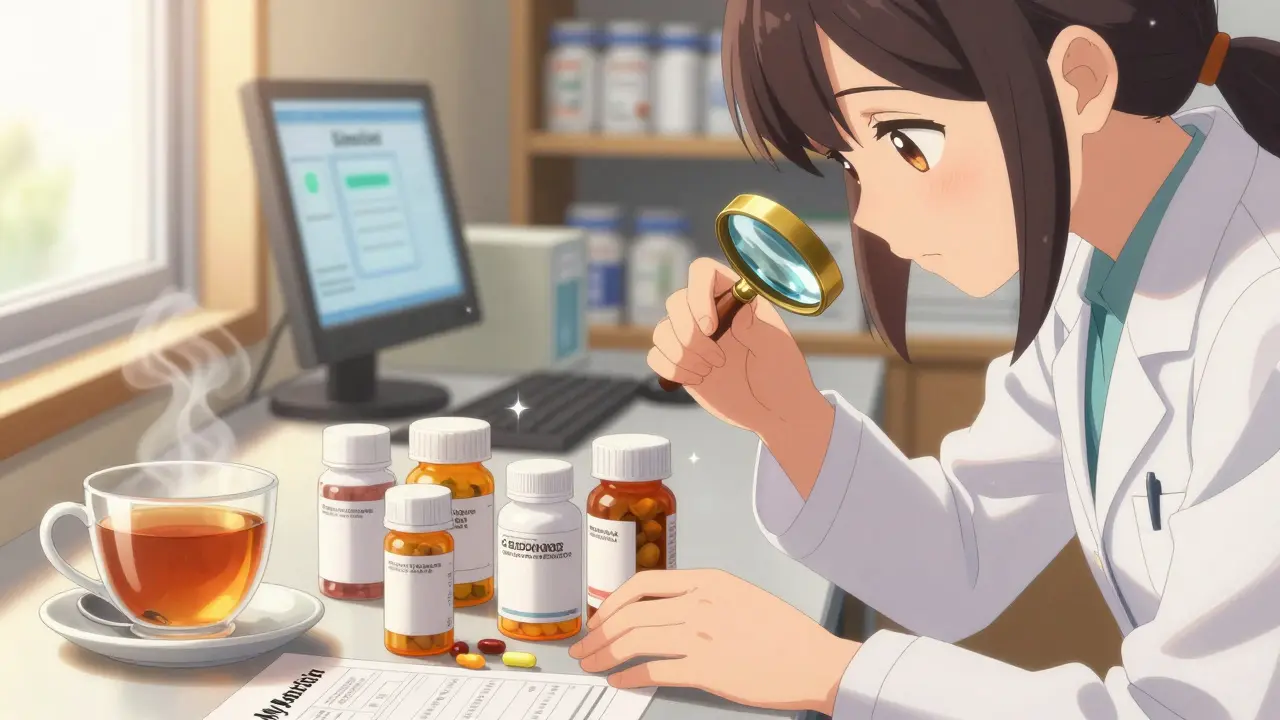
Pharmacists see this daily. A patient takes a blood pressure pill, a daily aspirin, a sleep aid, and a herbal supplement called hawthorn berry. The pharmacist spots it: hawthorn berry can dangerously lower blood pressure when mixed with prescription meds. That interaction could cause fainting, falls, even heart failure.
According to the FDA, 15% of hospital admissions are caused by drug interactions that could’ve been avoided. And it’s not just other pills. Foods matter too. Grapefruit juice can make cholesterol drugs like atorvastatin too strong-leading to muscle damage. Dairy can block antibiotics. Alcohol can turn painkillers into liver bombs.
Bring your complete list: prescriptions, over-the-counter meds, vitamins, and supplements. Even “natural” ones. Pharmacists aren’t judgmental. They’ve seen it all. And they’re trained to catch what doctors miss.
What If I Miss a Dose?
Life happens. You forget. You’re traveling. You’re sick. You’re in a rush.
Don’t guess. Ask: “What should I do if I miss a dose?”
Some drugs: Take it as soon as you remember. Others: Skip it. Don’t double up. Doubling a blood thinner like warfarin can cause internal bleeding. Doubling a painkiller like acetaminophen can fry your liver.
One patient in Ohio doubled his diabetes pill after forgetting it in the morning. He ended up in the ER with dangerously low blood sugar. His pharmacist later said, “He didn’t ask because he thought it was obvious. It’s not.”
Also ask: “Are there reminders or tools that help?” Apps, pill organizers, alarms-pharmacists can recommend what works best. Some even offer free blister packs with time labels.
When Will I Feel Better?
How long until this drug starts working?
Antibiotics? Usually 2-3 days. Antidepressants? 4-6 weeks. Blood pressure meds? Days to weeks. But most patients don’t know this.
A My HealtheVet study found 68% of patients can’t tell when their meds should start working. So they stop taking them. That’s why half of people on chronic meds quit within the first year.
Ask: “When should I expect to see results?” and “Will I need tests to check if it’s working?”
For example, statins need a cholesterol panel after 6-8 weeks. Thyroid meds need a TSH blood test. If you don’t know what to watch for, you might think the drug isn’t working-and quit too soon.
Is There a Cheaper or Better Option?
Brand-name drugs cost 80-85% more than generics. And they work the same. The FDA requires generics to match brand-name drugs in strength, safety, and effectiveness.
Ask: “Is there a generic version?”
Even if your doctor wrote the brand name, pharmacists can often switch it legally. And if there’s no generic? Ask: “Are there other medications that do the same thing but cost less?”
Also ask: “Are there cost-saving programs?” Many drugmakers offer coupons or patient assistance programs. Some pharmacies have $4 generic lists. A 2023 University of Michigan study found patients who asked about cost saved an average of $300 per year.
And don’t be afraid to ask: “Are there non-drug options?” For mild pain, physical therapy might work better than opioids. For early-stage high blood pressure, diet and exercise can be just as effective as pills.
How Do I Know If This Is Working?
Medication isn’t magic. It’s a tool. And tools need feedback.
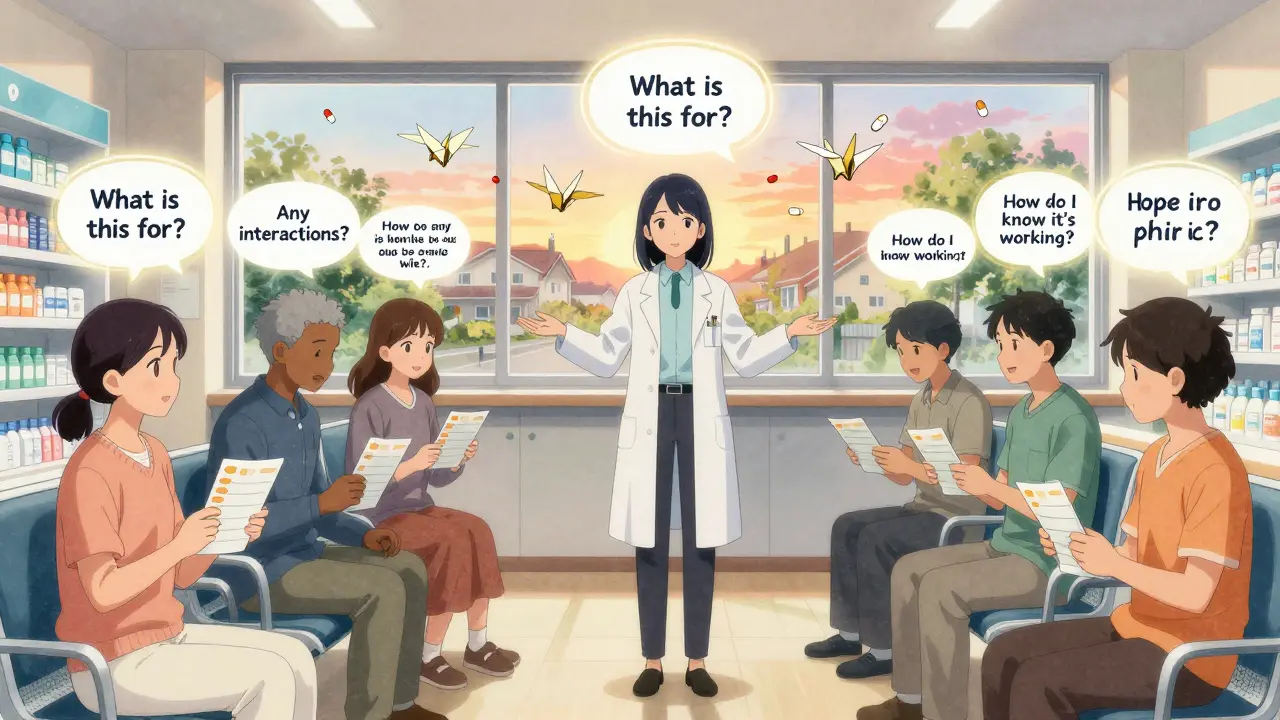
Ask: “How will we know if this is working?”
For depression: Are you sleeping better? Less crying? For diabetes: Are your blood sugar readings falling? For asthma: Are you using your inhaler less?
Pharmacists track this stuff. They’ll ask you follow-up questions at refill time. But you need to be ready. Write down changes: “I used to wake up 4 times a night. Now it’s once.” That’s progress.
And if it’s not working? Don’t wait. Go back to your pharmacist. They can talk to your doctor about switching or adjusting.
How Do I Prepare for My Visit?
Pharmacists are busy. The average consultation lasts just 2.7 minutes. You need to make it count.
Bring this:
- A list of everything you take: prescriptions, OTC drugs, vitamins, herbs, supplements
- The actual bottles or photos of labels
- Your questions written down (use the ones above)
Use the FDA’s free “My Medicine Record” form (available at fda.gov). It asks for 17 key details-dosage, reason, doctor’s name. Fill it out before you go.
And use the “teach-back” method. After they explain something, say: “So if I understand right, I take this after breakfast, and if I miss it, I skip it. Is that correct?” Studies show this increases adherence by 40%.
What’s Changed Recently?
Pharmacists aren’t just pill dispensers anymore. In 45 states, they can now prescribe certain meds-like naloxone for overdoses, or nicotine patches for quitting smoking. Some offer blood pressure checks, flu shots, and even diabetes screenings.
Telepharmacy is growing too. If you’re in a rural area with few pharmacists, you can now talk to one via video call. 62% of rural hospitals now offer this service.
And starting in January 2025, all prescription drug guides will follow a new FDA format-clearer language, bigger fonts, better warnings. This is a big deal. It means you won’t have to decode tiny print anymore.
Final Thought: You’re the Boss of Your Meds
Your pharmacist is your safety net. But they can’t help if you don’t speak up. A 2023 study of 2,400 patients found those who asked at least three specific questions had 65% fewer medication-related problems.
That’s not luck. That’s control.
Next time you pick up a prescription, don’t just say thanks and leave. Ask your three questions. Write them down. Bring them with you. The bottle doesn’t tell you everything. But your pharmacist does.
Can pharmacists change my prescription?
Pharmacists can’t change your prescription without talking to your doctor. But they can suggest alternatives-like switching from a brand-name drug to a cheaper generic, or recommending a different medication that works better with your other pills. They’ll call your doctor on your behalf if they see a problem. In 45 states, they can also prescribe certain medications directly, like naloxone or nicotine patches, without needing a doctor’s script first.
Do I need to tell my pharmacist about herbal supplements?
Yes. Herbal supplements aren’t harmless. Hawthorn berry can lower blood pressure too much when mixed with prescription meds. St. John’s Wort can interfere with antidepressants, birth control, and even blood thinners. One patient developed serotonin syndrome after taking tramadol and St. John’s Wort together-no one knew because they didn’t mention the supplement. Pharmacists see these interactions every day. Don’t assume they’re “natural” so they’re safe.
Why do I have to wait so long at the pharmacy?
Chain pharmacies fill an average of 327 prescriptions per pharmacist each day. That’s one every 2-3 minutes. Add in insurance issues, refill requests, and questions from other patients, and time runs out fast. If you need more than a quick check, ask to speak with the pharmacist during a quieter time-like early morning or mid-afternoon. Some pharmacies offer private consultation rooms. If you’re on Medicare, you may qualify for a free Medication Therapy Management session, which lasts 30 minutes or more.
Can I ask about side effects I saw online?
Absolutely. But be careful. Websites can exaggerate risks. A symptom listed as “rare” might be listed as “common” on a patient forum. Pharmacists know which side effects are real, which are rare, and which are myths. Bring the info you found, and ask: “Is this something I should worry about?” They’ll help you sort fact from fear.
What if I can’t afford my medication?
Ask the pharmacist directly. Many drug companies offer free or low-cost programs for people with low income. Some pharmacies have $4 generic lists for common meds like metformin or lisinopril. You can also ask about mail-order options, which sometimes cost less than in-store. And if you’re on Medicare Part D, you may qualify for extra help paying for prescriptions. Pharmacists know these programs better than anyone.
Should I bring my meds to every visit?
Yes. Especially when starting a new drug or after a hospital stay. Pills get mixed up. Labels get lost. Your doctor might not know everything you’re taking. Bringing your actual bottles helps the pharmacist spot duplicates, wrong doses, or dangerous combinations. One patient was taking two different pills for acid reflux-both were the same drug. The pharmacist caught it and prevented potential kidney damage.
Can pharmacists help with over-the-counter meds?
Yes. OTC drugs can be just as risky as prescriptions. Mixing ibuprofen with blood thinners can cause bleeding. Taking cold meds with antidepressants can lead to serotonin syndrome. Even common pain relievers like acetaminophen can damage your liver if taken too often. Pharmacists can help you choose the safest OTC option based on your health history and other meds.

Annie Choi
January 14, 2026 AT 23:35Dan Mack
January 15, 2026 AT 08:54Sarah Mailloux
January 15, 2026 AT 21:25Jami Reynolds
January 16, 2026 AT 06:29Amy Ehinger
January 17, 2026 AT 12:28Frank Geurts
January 18, 2026 AT 16:55Amy Vickberg
January 20, 2026 AT 10:33Nicholas Urmaza
January 20, 2026 AT 20:55Nilesh Khedekar
January 22, 2026 AT 20:03Crystel Ann
January 23, 2026 AT 21:06Nat Young
January 25, 2026 AT 02:21Niki Van den Bossche
January 25, 2026 AT 05:55RUTH DE OLIVEIRA ALVES
January 27, 2026 AT 05:34