Prescriber Override Guide: When Doctors Can Mandate Brand-Name Drugs
 Aug, 15 2026
Imagine you’ve been taking a specific brand of medication for years. Your levels are stable. You feel good. Then, your pharmacy hands you a different box-a generic version with the same active ingredient but different fillers. Suddenly, you don’t feel right. This is where the concept of prescriber override, also known as Dispense as Written (DAW), becomes critical. It is the legal mechanism that allows physicians to bypass standard generic substitution protocols and mandate that a specific brand-name drug be dispensed.
This isn't just about preference; it’s about clinical necessity. While generics save the healthcare system billions-approximately $2.2 trillion between 2010 and 2019 according to the Congressional Budget Office-they aren't always interchangeable for every patient. Understanding when and how to force brand dispensing can prevent adverse events, hospitalizations, and therapeutic failure.
The Legal Framework: Mandatory vs. Permissive Substitution
To understand prescriber overrides, you first need to understand the default rules they break. The foundation of modern generic substitution lies in the 1984 Hatch-Waxman Act. This legislation created the pathway for generic approval while allowing states to regulate how pharmacists handle multi-source drugs.
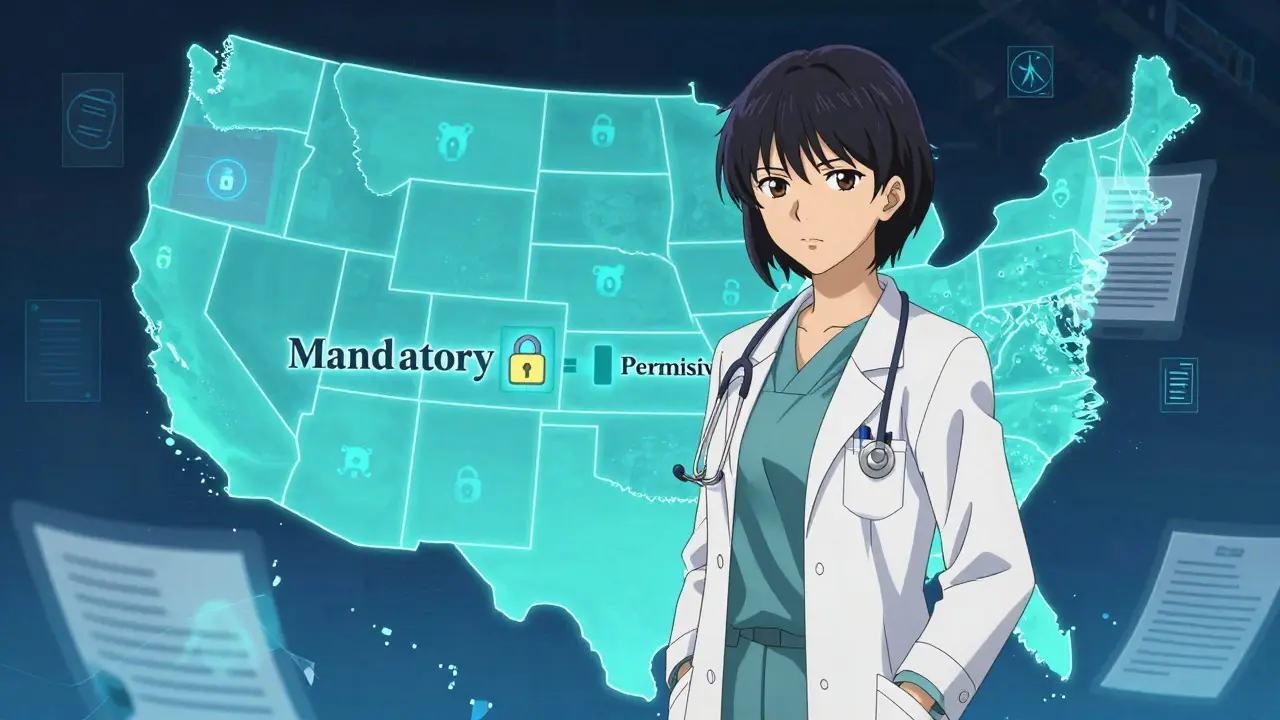
Today, all 50 U.S. states have generic substitution laws, but they operate under two distinct frameworks:
- Mandatory Substitution (35 States): Pharmacists must automatically substitute a generic equivalent unless the prescriber explicitly forbids it. In these states, the default is generic. If you want the brand, the doctor must act.
- Permissive Substitution (15 States): Pharmacists have the discretion to substitute or not. Here, the pharmacist may consult with the patient or follow formulary guidelines without a strict mandate to switch.
In mandatory states, the burden falls heavily on the physician. If they fail to document the override correctly, the law requires the pharmacist to swap the drug. This creates a high-stakes environment where documentation errors can lead to real-world health consequences.
Understanding DAW Codes: The Language of Overrides
Pharmacies and insurance companies speak a specific language defined by the National Council for Prescription Drug Programs (NCPDP). These are called Dispense as Written (DAW) codes. For a prescriber override to work, the correct code must be transmitted electronically or written clearly on the prescription.
| Code | Meaning | Who Initiates? |
|---|---|---|
| DAW-1 | Substitution Not Allowed by Prescriber | Physician |
| DAW-2 | Patient Requested Brand Name | Patient |
| DAW-3 | Generic Selected by Pharmacist | Pharmacist |
| DAW-7 | Brand Medically Necessary (Law Mandated) | State Law/Regulation |
DAW-1 is the gold standard for prescriber overrides. It signals to the pharmacy system: "Do not touch this. Give me exactly what I wrote." However, using DAW-1 incorrectly triggers prior authorizations from insurers and increases costs. Research shows DAW-1 prescriptions cost an average of 32.7% more than substituted generics. Therefore, precision matters.
Clinical Justifications: When Is an Override Medically Necessary?
You shouldn’t use a prescriber override just because you prefer a certain logo. Insurers and Pharmacy Benefit Managers (PBMs) scrutinize DAW-1 requests closely. To justify the higher cost, there must be a documented medical reason. Here are the most common valid scenarios:
- Narrow Therapeutic Index (NTI) Drugs: These medications have a tiny margin between a therapeutic dose and a toxic one. Small variations in bioavailability between brands and generics can cause serious issues. Common NTI drugs include warfarin, phenytoin, levothyroxine, and lithium. A study published in PMC noted that inappropriate substitution of these drugs led to 27 adverse events between 2018 and 2022.
- Allergies to Inactive Ingredients: Generics must have the same active ingredient, but manufacturers can use different fillers, dyes, or binders. If a patient has a documented allergy to lactose or a specific dye found in a generic formulation, a brand override is necessary.
- Documented Therapeutic Failure: If a patient was stable on a brand, switched to a generic, and experienced side effects or loss of efficacy, the prescriber should override back to the brand. This requires clear notes in the Electronic Health Record (EHR).
- Biosimilar Interchangeability Issues: As biologics become more common, the FDA’s Orange Book now includes biosimilar interchangeability designations. Until a biosimilar is deemed fully interchangeable, a prescriber may need to override to ensure the reference product is dispensed.
State-Specific Documentation Requirements
This is where things get tricky. There is no single federal rule for *how* you write the override. Each state has its own statutes, and failing to follow them renders the override invalid. A handwritten note might work in one state but be ignored by the electronic system in another.
Here is how requirements vary across key jurisdictions:
- Illinois: Under Section 225 ILCS 85/25, prescribers must check a designated 'May Not Substitute' box on the prescription form.
- Kentucky: Requires the phrase 'Brand Medically Necessary' to be handwritten directly on the prescription.
- Massachusetts: Accepts 'No Substitution' notation.
- Michigan: Requires 'DAW' or 'Dispense as Written' handwritten by the prescriber.
- Oregon: Allows written, telephonic, or electronic communication specifying no substitution, but prohibits default values in e-prescribing systems.
- California: Business and Professions Code Section 4050-4070 requires 'Brand Medically Necessary' notation along with the prescriber's signature.
A 2019 survey revealed that only 58.3% of physicians correctly understood their state's specific override requirements. Another 22.7% reported unintentionally allowing substitutions due to documentation errors. If you practice across state lines, this patchwork of regulations creates significant administrative burden and risk.
The Role of the FDA Orange Book
When deciding whether an override is needed, pharmacists and doctors often look to the FDA’s Orange Book, officially titled Approved Drug Products with Therapeutic Equivalence Evaluations. This database assigns therapeutic equivalence codes to drug products.
An 'A' rating means the products are considered therapeutically equivalent and substitutable. A 'B' rating indicates they are not deemed therapeutically equivalent. While the FDA doesn't legally mandate the use of the Orange Book for substitution decisions, 42 states reference it in their pharmacy regulations. If a generic lacks an 'A' rating relative to the brand, a prescriber has stronger grounds for a DAW-1 override. Always check the current status before prescribing.

Implementation Challenges and Solutions
Even with the best intentions, overrides fail. Why? Usually, it comes down to technology gaps. Electronic Health Records (EHRs) often default to generic substitution templates. A 2022 AMA survey found that 52% of physicians struggle with EHR templates that don't match state-specific requirements.
Furthermore, pharmacies frequently reject claims if the documentation is ambiguous. On physician forums like Sermo, 63% of surveyed doctors reported difficulties with state-specific override requirements. Common complaints include inconsistent EHR templates and pharmacies incorrectly processing override requests.
To mitigate these risks, consider these practical steps:
- Customize Your EHR: Work with your IT department to create standardized override templates that comply with your state’s specific wording (e.g., auto-populating 'Brand Medically Necessary' in California).
- Use State Resources: The National Association of Boards of Pharmacy provides an interactive map of state requirements. Check it quarterly as laws change.
- Document Clinical Reasoning: Don’t just check the box. Add a brief note in the chart explaining *why* the brand is needed (e.g., "Patient had rash with generic excipient"). This protects you during insurance audits.
- Educate Patients: In informed consent states, patients can refuse generics themselves (triggering DAW-2). Ensure they understand that choosing a brand may result in higher copays.
Cost Implications and Payer Scrutiny
Let’s talk money. PBMs and insurers are watching DAW-1 usage closely. Express Scripts reported that inappropriate DAW-1 designations accounted for 18.4% of avoidable brand-drug spending in their 2021 report. With 87% of Medicare Part D plans using DAW-1 as a trigger for prior authorization, an unnecessary override can delay treatment and frustrate patients.
Dr. William Shrank, Chief Scientific Officer at UnitedHealth Group, noted that physicians often overestimate the clinical significance of minor formulation differences between brands and generics. While clinical precision is vital, excessive override usage undermines formulary management strategies. Aim for accuracy: use overrides only when clinically justified, and ensure your documentation withstands payer review.
Future Trends: Standardization on the Horizon?
The landscape is shifting. The 2023 introduction of the Standardized Prescriber Override Protocol Act in Congress aims to create uniform federal requirements for brand-name dispensing requests. Additionally, NCPDP plans to integrate override requirements directly into the SCRIPT 201905 e-prescribing standard by late 2024. These changes promise to reduce administrative friction and error rates.
However, until federal standardization takes hold, clinicians must remain vigilant. The gap between state laws, EHR capabilities, and payer policies remains wide. Mastering prescriber override mechanics is not just about billing-it’s about ensuring patient safety in a complex regulatory environment.
What is the difference between DAW-1 and DAW-2?
DAW-1 means the prescriber mandated the brand name ('Substitution Not Allowed by Prescriber'). DAW-2 means the patient requested the brand name. Both result in the brand being dispensed, but DAW-1 carries more weight regarding medical necessity and may face less scrutiny from insurers if properly documented.
Can a pharmacist ignore a prescriber override?
Generally, no. If the prescriber follows state-specific documentation requirements (like checking the correct box or writing the required phrase), the pharmacist is legally bound to dispense the brand. However, if the documentation is non-compliant with state law, the pharmacist may substitute, especially in mandatory substitution states.
Which drugs most commonly require prescriber overrides?
Drugs with a Narrow Therapeutic Index (NTI) are the most common candidates. These include anticonvulsants like phenytoin, thyroid hormones like levothyroxine, blood thinners like warfarin, and immunosuppressants like cyclosporine. Psychiatric medications also see high override rates due to sensitivity to formulation changes.
Does insurance cover brand-name drugs when overridden?
It depends on the plan. Many insurers will require a Prior Authorization (PA) for DAW-1 prescriptions to verify medical necessity. If approved, they cover it, but the patient may pay a higher copay compared to the generic tier. Without PA, the claim may be denied.
How do I know my state's specific override requirements?
You can check the National Conference of State Legislatures (NCSL) or the National Association of Boards of Pharmacy (NABP) for updated state laws. Additionally, your pharmacy benefit manager (PBM) or local pharmacy associations often provide cheat sheets for prescribers.
