Noise Exposure Limits: Protecting Hearing at Work and Concerts
 May, 17 2026
You might think you can hear just fine today, but that doesn't mean your ears are safe. Noise-induced hearing loss (NIHL) is the silent thief of our senses. It creeps in slowly, often without pain, until one day you realize you're asking people to repeat themselves constantly. The good news? It is entirely preventable. The bad news? Most of us ignore the noise exposure limits designed to keep our hearing intact.
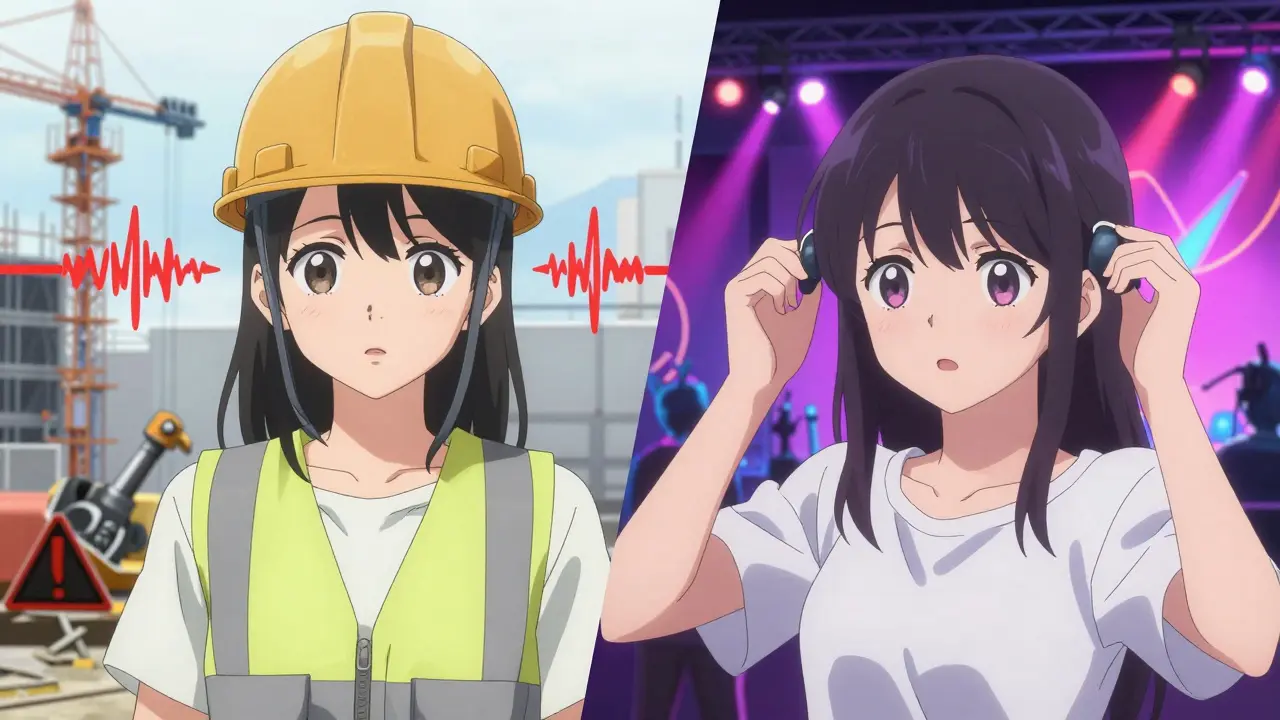
Whether you are a construction worker dealing with jackhammers or a music lover front-row at a rock concert, understanding these limits is crucial. We aren't just talking about 'loud' noise; we are talking about specific decibel thresholds that scientifically correlate with permanent damage. Let's break down exactly what those numbers mean for your daily life.
Understanding Decibels and Time
Decibels (dB) measure sound intensity, but they don't work like a linear scale. A 10-decibel increase represents a tenfold increase in sound energy. This means 90 dB isn't just slightly louder than 80 dB; it is significantly more powerful and damaging. However, volume alone doesn't tell the whole story. Duration matters just as much.
Think of it like sunburn. You can stand in the sun for an hour at 10 AM and be fine, but stay out for six hours at noon, and you'll burn. Noise works similarly. The National Institute for Occupational Safety and Health (NIOSH) uses a concept called the time-weighted average (TWA). If the noise level goes up, the amount of time you can safely stay in that environment goes down exponentially.
- 85 dBA: Safe for 8 hours. This is the baseline threshold for occupational safety.
- 88 dBA: Safe for only 4 hours.
- 91 dBA: Safe for just 2 hours.
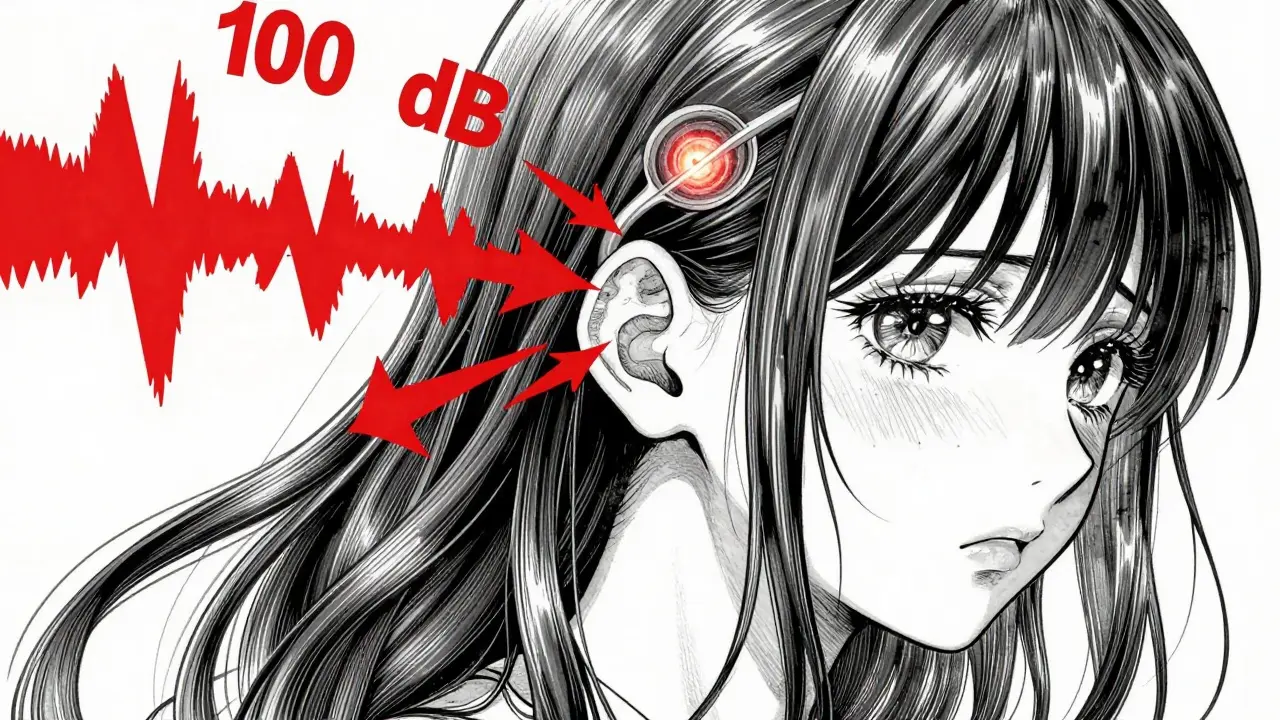
- 100 dBA: Safe for only 15 minutes. This is typical of loud concerts or chainsaws.
If you exceed these times, you are accumulating 'noise dose' that contributes to permanent hair cell death in your inner ear. Once those cells die, they do not grow back.
Workplace Regulations: NIOSH vs. OSHA
In the United States, there is a confusing split between recommended guidelines and legal requirements. This gap leaves many workers vulnerable because the law allows more noise than scientists say is safe.
NIOSH, which sets the Recommended Exposure Limit (REL), argues that 85 dBA over an 8-hour period is the maximum safe limit. They use a strict 3-dB exchange rate. This means every time the noise increases by 3 decibels, your safe exposure time is cut in half. NIOSH aims to keep the lifetime risk of hearing loss below 8% for workers.
On the other hand, OSHA, the Occupational Safety and Health Administration, enforces the Permissible Exposure Limit (PEL) at 90 dBA over 8 hours. Crucially, OSHA uses a 5-dB exchange rate. This is less protective. Under OSHA rules, if noise rises from 90 dB to 95 dB, you still have double the allowed time compared to the NIOSH standard. Experts argue this underestimates risk at higher noise levels by up to 700%. While OSHA mandates hearing conservation programs when exposures reach 85 dBA, the legal penalty triggers only after 90 dBA.
| Standard | Action Level / Limit | Exchange Rate | Risk Philosophy |
|---|---|---|---|
| NIOSH REL | 85 dBA | 3 dB | Preventive (<8% risk) |
| OSHA PEL | 90 dBA | 5 dB | Permissive (~25% risk) |
| EU Directive | 85 dBA (Lower Action) | 3 dB | Protective |
International standards tend to align closer with NIOSH. The European Union’s Directive 2003/10/EC sets lower action values at 80 dB and 85 dB, recognizing that early intervention saves hearing. If you travel or work globally, expect stricter enforcement in Europe and Australia than in the US.
The Hidden Danger: Concerts and Recreational Noise
Workplace laws don't cover your weekend fun, but your ears don't care about the difference. Concert venues, nightclubs, and even personal audio devices pose significant risks. A typical rock concert can hit 100-110 dBA. At 105 dBA, you have only about 5 minutes of safe listening before damage begins to accumulate.
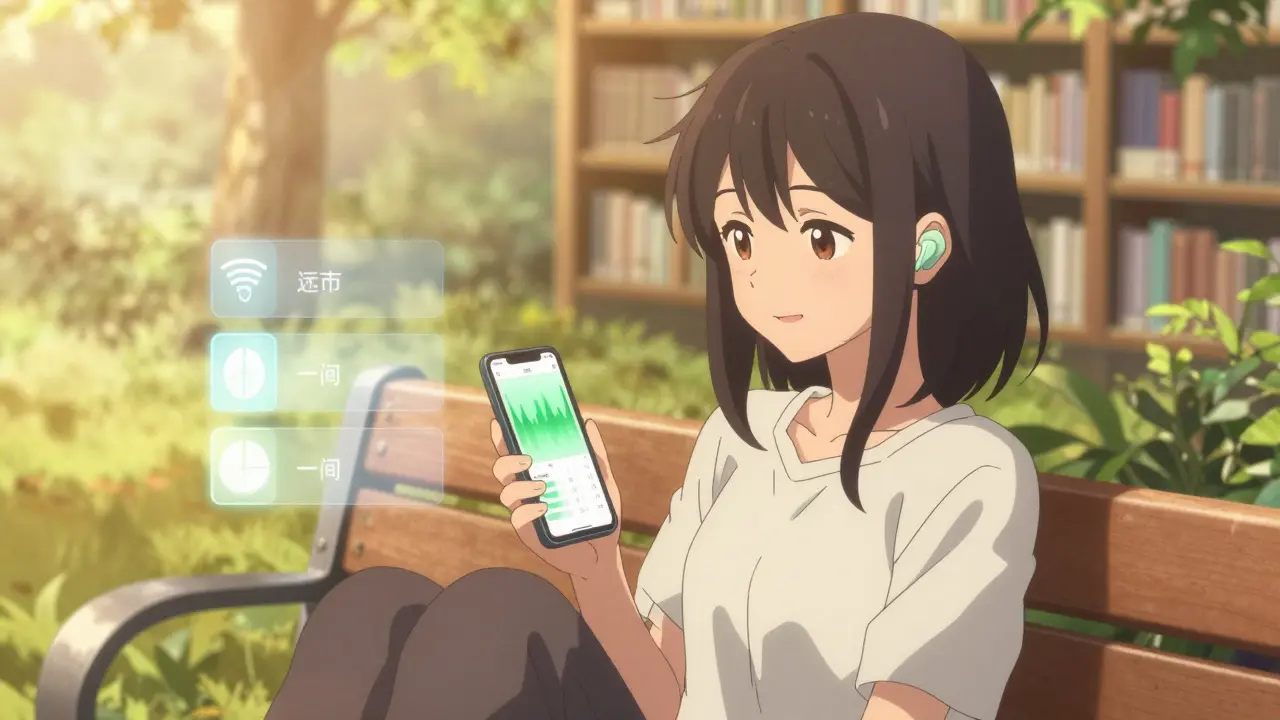
The World Health Organization (WHO) recommends limiting personal audio device use to 40 hours per week at 80 dBA. But most people listen louder. Smartphone apps now exist that can measure environmental noise with 92% accuracy compared to professional meters. Use them. Download a sound meter app and check your favorite bar or club. You might be shocked to find you are sitting in 95+ dB noise for hours on end.
Venues are starting to take responsibility. Some festivals offer free high-fidelity earplugs, which reduce volume evenly across frequencies so music still sounds clear, just quieter. Others create 'quiet zones' with ambient levels capped at 70-75 dBA. Look for venues that display real-time decibel readings. If they aren't monitoring it, they aren't protecting you.
Hierarchy of Controls: How to Stay Safe
When you cannot avoid noise, you need a strategy. OSHA and safety experts follow a 'Hierarchy of Controls.' Here is how you apply it personally:
- Elimination/Substitution: Can you move away from the source? In a factory, this might mean remote operating machinery. At a concert, stand further back from the speakers. Distance is your best friend; doubling your distance from the source reduces noise by about 6 dB.
- Engineering Controls: These are physical changes. For workers, this includes acoustic enclosures or vibration damping. For you, it might mean choosing a quieter tool or using noise-canceling headphones that block external noise rather than playing music loudly to drown it out.
- Administrative Controls: Limit your time. Rotate tasks so you aren't exposed to loud noise all day. Take quiet breaks. Your ears need recovery time. After a loud event, give your ears 16-24 hours of silence to recover.
- Personal Protective Equipment (PPE): Earplugs and earmuffs are the last line of defense. They must fit properly. NIOSH research shows that hands-on training increases proper usage rates from 40% to 85%. Cheap foam plugs are better than nothing, but custom-molded plugs or high-fidelity filters offer better protection and comfort for long-term use.
Signs You Are Already Damaged
Hearing loss is often gradual. You might not notice it until it affects your relationships or job performance. Watch for these red flags:
- Tinnitus: A ringing, buzzing, or hissing sound in your ears, especially after loud events.
- Muffled hearing: Sounds seem dull or distant immediately after exposure.
- Difficulty understanding speech in noisy environments: You can hear people talking, but you can't distinguish the words.
- Temporary Threshold Shift: If your hearing doesn't return to normal within 16 hours after a loud event, you have likely suffered some permanent damage.
Audiometric testing is essential if you work in noisy environments. Baseline tests should happen within 6 months of initial exposure, with annual follow-ups. Look for shifts of 10 dB or greater at 2000, 3000, and 4000 Hz frequencies-these are the classic 'notches' of noise-induced damage.
Future Trends and Global Harmonization
The landscape of hearing safety is changing. There is a growing push to harmonize global standards toward the stricter NIOSH model. California already implements 85 dBA as the action level with a 3-dB exchange rate. The European Commission has proposed amendments to extend occupational-style protections to concert venues and nightclubs where staff exposure exceeds 80 dBA.
Technology is also evolving. Smart earplugs can now automatically attenuate dangerous peaks while allowing conversation. Wearable monitors track your cumulative noise dose throughout the day, alerting you via smartphone when you've reached your limit. As awareness grows, we may see mandatory real-time noise monitoring in entertainment venues, similar to air quality displays in public spaces.
Protecting your hearing isn't just about following rules; it's about preserving your connection to the world. Music, conversation, laughter-these rely on healthy ears. Respect the limits, wear your protection, and listen wisely.
What is the safest noise level for everyday life?
Ideally, everyday environments should stay below 70-75 dBA. Prolonged exposure above 85 dBA is considered hazardous by health organizations like NIOSH. Quiet conversations hover around 60-65 dBA, while busy city traffic can reach 80-85 dBA.
Why is the 3-dB exchange rate better than the 5-dB rate?
The 3-dB exchange rate recognizes that a small increase in decibels doubles the sound energy. Therefore, safe exposure time should be halved. The 5-dB rate used by OSHA allows longer exposure at higher volumes, which experts argue underestimates the risk of hearing damage by up to 700% in high-noise scenarios.
Can earplugs ruin my hearing?
No, properly fitted earplugs protect your hearing. However, inserting them incorrectly can cause minor irritation or wax impaction. High-fidelity earplugs reduce volume evenly, preserving sound clarity while preventing damage. Avoid using cotton balls, which offer negligible protection.
How long can I listen to music at 100 dB?
According to NIOSH guidelines, you should limit exposure to 100 dB to no more than 15 minutes. After that, the risk of temporary threshold shift and potential permanent damage increases significantly. Use volume limiters on your devices to stay safer.
Is hearing loss reversible?
No, noise-induced hearing loss is permanent. The hair cells in your inner ear do not regenerate. While temporary muffled hearing after a loud event may resolve, any lasting change indicates permanent damage. Prevention is the only effective strategy.
Do international noise standards differ significantly?
Yes. The EU and UK generally enforce stricter limits (80-85 dBA action levels) with 3-dB exchange rates, similar to NIOSH. The US OSHA standard is more lenient (90 dBA PEL) with a 5-dB exchange rate. Travelers and expats should familiarize themselves with local workplace safety regulations.
What are 'high-fidelity' earplugs?
High-fidelity earplugs use acoustic filters to reduce sound pressure evenly across all frequencies. Unlike foam plugs that muffles high pitches, these allow musicians and concert-goers to enjoy clear audio at a safer volume, typically reducing input by 15-25 dB.
How can I test my hearing at home?
While smartphone apps can estimate decibel levels, they cannot diagnose hearing loss accurately. For true assessment, seek an audiologist for a pure-tone audiogram. Regular screenings are vital if you work in noisy industries or attend frequent loud events.
