Nerve Blocks and RFA: What You Need to Know About Interventional Pain Procedures
 Dec, 17 2025
Chronic pain doesn’t just hurt-it steals your sleep, your movement, and your sense of control. If you’ve tried physical therapy, painkillers, or even cortisone shots and still feel stuck, you’re not alone. Many people with long-term back, knee, or neck pain turn to nerve blocks and radiofrequency ablation (RFA) when other options run out. These aren’t surgeries. They’re precise, minimally invasive tools designed to interrupt pain signals at their source. But they work very differently, and knowing which one is right for you can make all the difference.
What Is a Nerve Block?
A nerve block is exactly what it sounds like: a shot that temporarily blocks pain signals. A doctor uses imaging-usually ultrasound or X-ray-to guide a thin needle right next to the nerve causing your pain. Then they inject a local anesthetic, sometimes mixed with a steroid to reduce swelling. The anesthetic numbs the nerve for a few hours. The steroid can help reduce inflammation for days or weeks. This isn’t a cure. It’s a diagnostic tool and a short-term fix. If you get 70% pain relief after a nerve block, that tells your doctor: yes, this nerve is the problem. But if the pain comes back in a week? That’s normal. Nerve blocks don’t change the nerve. They just pause its signal. People often use nerve blocks to test whether RFA might work. They’re also used for acute flare-ups-like after an injury or during a bad arthritis episode. Some patients get repeat blocks every few months. But over time, the relief tends to fade, and repeated injections can cause tissue changes.What Is Radiofrequency Ablation (RFA)?
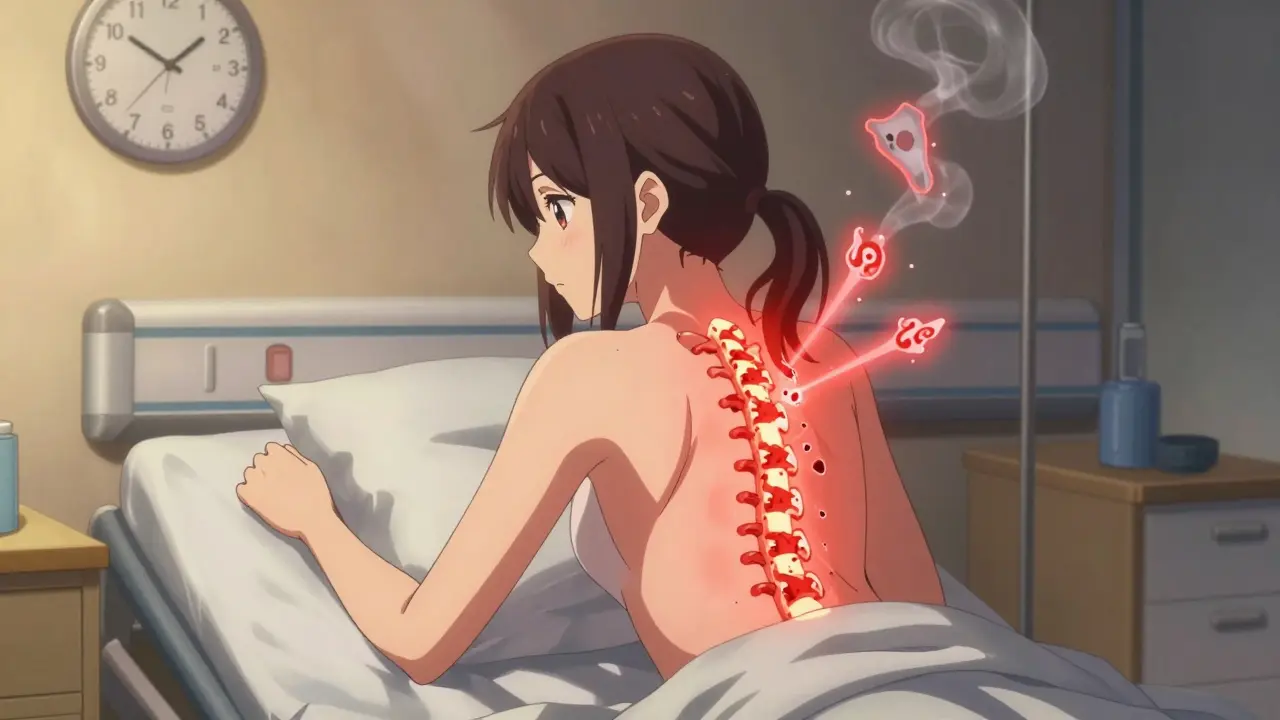
RFA is the next step when nerve blocks work but don’t last. Instead of numbing the nerve, RFA heats it up-just enough to stop it from sending pain signals for months, sometimes years. Here’s how it works: A thin, insulated needle is placed near the same nerve targeted by the diagnostic block. A small electrical current is sent through the needle to test placement. You’ll feel a tingling or mild buzz. If it matches your pain, you’re in the right spot. Then, radiofrequency energy heats the tip of the needle to 80-90°C. That heat creates a tiny lesion on the nerve, like a controlled burn. The nerve doesn’t die-it just can’t send pain signals as easily. The procedure takes 20 to 45 minutes. You’re awake but lightly sedated. Most people go home the same day. You might feel sore for a few days, but pain relief usually starts building after 1-2 weeks. Full results show up by week 4. Unlike nerve blocks, RFA doesn’t need repeating every few weeks. Studies show it lasts 6 to 24 months, depending on the nerve and your body’s healing process. For facet joint pain in the spine, success rates hit 70-80% in well-selected patients. For knee osteoarthritis, cooled RFA (a newer version) gives 65% of patients meaningful relief at 6 months-better than steroid shots, which often wear off by 3 months.How RFA and Nerve Blocks Compare
| Feature | Nerve Block | Radiofrequency Ablation (RFA) |
|---|---|---|
| Goal | Temporary pain relief, diagnostic test | Long-term pain signal disruption |
| Duration of Relief | Hours to weeks | 6 to 24 months |
| How It Works | Chemical interruption (anesthetic/steroid) | Thermal lesion (heat-based nerve disruption) |
| Procedure Time | 10-20 minutes | 20-45 minutes |
| Recovery Time | Same day, no restrictions | 24-48 hours, then gradual return |
| Success Rate (Chronic Back Pain) | 30-50% beyond immediate relief | 70-80% |
| Cost (USD) | $500-$1,500 | $3,000-$5,000 |
| Repeat Frequency | Every 1-6 months | Every 1-2 years |
The big difference? Nerve blocks are a pause button. RFA is a reset switch.
Who Is a Good Candidate for RFA?
RFA isn’t for everyone. It works best when two things are true:- You’ve had a successful diagnostic nerve block. If your pain didn’t drop by at least 50-80% after the block, RFA probably won’t help. That’s not a guess-it’s standard protocol. Johns Hopkins and the Spine Intervention Society both stress this step. Skipping it leads to failed procedures.
- Your pain comes from specific, identifiable nerves. RFA is most proven for:
- Facet joint pain in the neck or lower back
- Sacroiliac joint pain
- Knee osteoarthritis (using genicular nerve RFA)
- Occipital neuralgia (headaches from neck nerves)
- Plantar fasciitis (in select cases)
It’s not for nerve damage from diabetes, widespread fibromyalgia, or pain from tumors. It’s not a cure for arthritis-it’s a way to mute the pain signal from arthritic joints.
Patients aged 45-65 with chronic, localized pain who’ve tried physical therapy and medications often see the best results. Studies show 75% success in this group for spinal pain.
What to Expect After RFA
You won’t wake up pain-free. That’s a common misunderstanding. The nerve doesn’t stop firing instantly. The heat causes a controlled injury, and your body takes time to respond. For the first 3-7 days, you might feel more sore than before. That’s normal. Pain relief usually starts creeping in after 1-2 weeks. By week 4, most people know if it worked. About 85% of patients report at least 50% pain reduction. Many cut back on opioids-70% reduce or stop them entirely, according to clinical data from Gardner Orthopedics. You can walk out of the clinic the same day. Most people return to light work in 24 hours. Avoid heavy lifting or intense exercise for 48 hours. Physical therapy often starts after 2 weeks to rebuild strength around the treated area.
Risks and Limitations
RFA is low-risk, but not risk-free. The most common side effect is temporary soreness at the injection site. About 5-10% of patients get neuritis-a brief nerve inflammation that lasts 1-2 weeks. Numbness or tingling near the treated area can happen but usually fades. The real risk? Wrong targeting. If the diagnostic block was inaccurate, RFA will fail. That’s why proper testing is non-negotiable. Studies show 20-30% of RFA failures come from skipping or misinterpreting the nerve block. Also, nerves can regenerate. That’s why relief lasts months, not forever. In 10-15% of cases, the nerve grows back faster than expected. When that happens, RFA can be repeated safely.Why RFA Is Becoming a Standard Option
The opioid crisis changed pain care. In 2023, Medicare data showed a 22% drop in long-term opioid use among patients who got RFA instead of just pills. Hospitals and insurers now favor RFA because it’s cost-effective. A single RFA ($3,000-$5,000) costs less than one spinal cord stimulator implant ($20,000-$50,000), and it doesn’t require surgery or hardware. New tech is expanding its use. Cooled RFA, which uses a special needle to create larger lesions, is now standard for knee pain. Pulsed RFA-using short bursts of energy without heat-is being studied for patients who can’t tolerate thermal treatment. The FDA approved the first pulsed-field system for spinal pain in 2022. The American Society of Anesthesiologists now lists RFA as a second-line treatment after physical therapy and meds, but before surgery. They cite strong evidence for chronic back pain. By 2030, they predict RFA will reduce spinal fusion surgeries by 15-20%.What Comes Next?
If nerve blocks and RFA haven’t helped, other options exist-spinal cord stimulation, peripheral nerve stimulation, or surgery. But for many, RFA is the sweet spot: minimally invasive, low risk, and long-lasting. The key is patience and precision. Don’t rush into RFA without a clear diagnostic block. Don’t expect miracles. But if you’ve been stuck in pain for years, and you’ve tried everything else, RFA might be the tool that finally gives you back your life.How long does pain relief last after RFA?
Pain relief from radiofrequency ablation typically lasts 6 to 24 months. The exact duration depends on the nerve treated, your age, activity level, and how quickly your body regenerates the nerve. For spinal pain, most people get 12-18 months of relief. For knee osteoarthritis, cooled RFA provides relief for about 6 months in 65% of patients.
Is RFA better than a nerve block?
RFA isn’t better-it’s different. Nerve blocks give short-term relief and help confirm the pain source. RFA is for when you need longer-lasting results. If a nerve block gives you 80% pain relief for a week, RFA might give you 70% relief for 18 months. They’re often used together: block first, then RFA if the block works.
Can I drive home after RFA?
No. You’ll be given light sedation during the procedure, so you’ll need someone to drive you home. You can usually drive again the next day if you’re not taking opioids or strong pain meds. Always follow your doctor’s specific instructions.
Does RFA hurt?
The procedure itself isn’t painful. You’ll feel pressure and a mild buzz during nerve testing, but the area is numbed first. Afterward, you may feel soreness for a few days-like a bad muscle ache. Most people describe it as less painful than a joint injection.
Will RFA fix my arthritis?
No. RFA doesn’t repair damaged joints or reverse arthritis. It only interrupts the pain signals coming from nerves around the joint. Think of it like turning down the volume on a speaker-the music (arthritis) is still there, but you don’t hear it as loudly.
How do I know if I’m a good candidate for RFA?
You’re a good candidate if: 1) You’ve had a diagnostic nerve block that gave you 50-80% pain relief for at least 4 hours, 2) Your pain is localized (not widespread), and 3) You’ve tried physical therapy and medications without lasting results. If your pain improves with movement and worsens with specific positions, RFA is more likely to help.
Can RFA be repeated?
Yes. If the nerve regenerates and pain returns, RFA can be safely repeated. Most patients who benefit from the first treatment get similar results from a second one. Repeat procedures are common and don’t increase risk significantly.
What’s the difference between RFA and pulsed radiofrequency?
Traditional RFA uses heat to destroy part of the nerve. Pulsed radiofrequency (PRF) uses short bursts of electrical energy without heat. PRF doesn’t damage the nerve-it changes how it sends pain signals. PRF is often used for nerves that are too sensitive to heat or in areas where tissue damage is risky. Relief from PRF is usually shorter (3-6 months) than traditional RFA.
For many, the choice between nerve blocks and RFA comes down to one question: Do you need a pause button or a reset switch? Nerve blocks are quick, cheap, and useful for testing. RFA is the next step-when you’re ready for real, lasting change.

Alana Koerts
December 17, 2025 AT 13:34pascal pantel
December 18, 2025 AT 23:59Gloria Parraz
December 19, 2025 AT 12:29Sahil jassy
December 20, 2025 AT 10:53Kathryn Featherstone
December 22, 2025 AT 04:01Nicole Rutherford
December 23, 2025 AT 13:46Chris Clark
December 23, 2025 AT 21:21Dorine Anthony
December 24, 2025 AT 18:48