Medication Guide Distribution Requirements for Pharmacists and Providers
 Feb, 3 2026
Medication Guide Distribution Checker
This tool helps determine if a Medication Guide is required for a prescription based on FDA regulations. Enter the scenario details below to get a clear answer.
Prescription Scenario
What Exactly Is a Medication Guide?
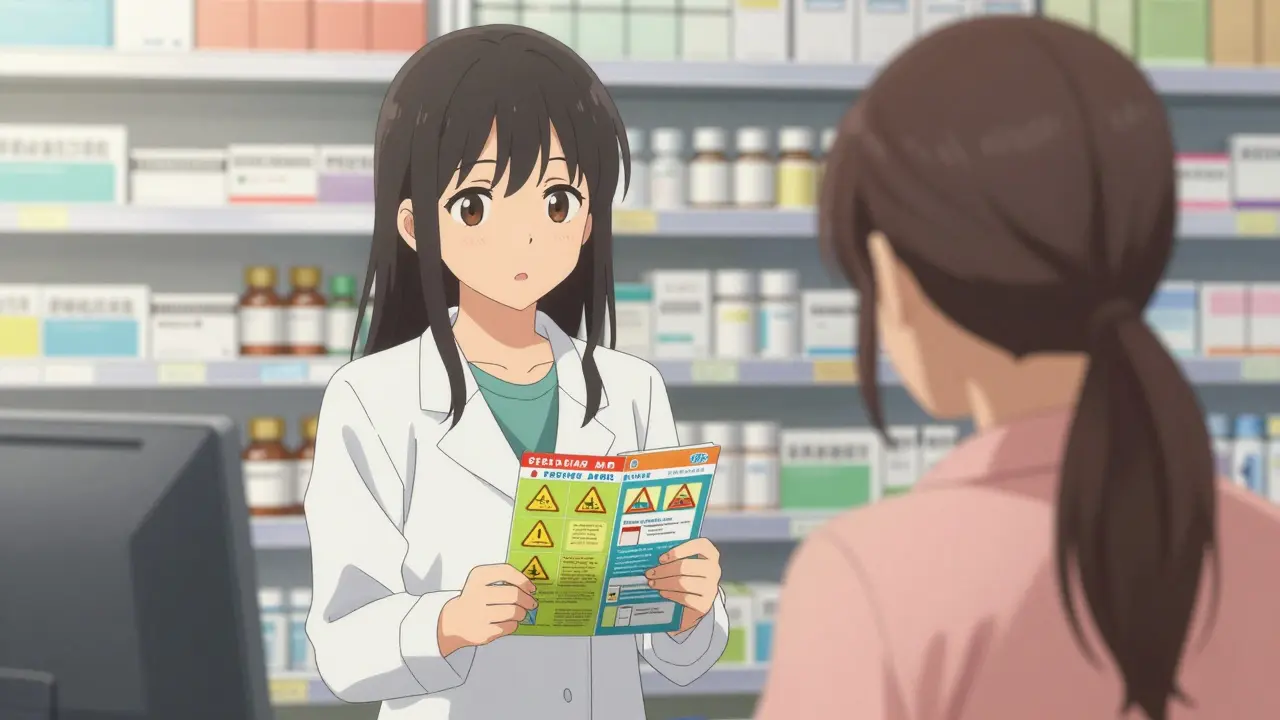
A Medication Guide is a printed handout that comes with certain prescription drugs. It’s not just any patient info - it’s an FDA-approved document designed to explain serious risks in plain language. These guides are required for about 200 medications in the U.S., including drugs like isotretinoin for acne, clozapine for schizophrenia, and estrogen therapies. The FDA only makes a Medication Guide mandatory when the drug has risks that could seriously harm patients if not understood - like birth defects, life-threatening side effects, or the need for strict dosing schedules.
Think of it this way: a package insert is for doctors. A Medication Guide is for you. It avoids medical jargon. It tells you what to watch for, when to call your doctor, and what not to mix with the drug. It’s the only type of patient labeling the FDA actually reviews and approves before it hits the market.
When Do You Have to Hand Out a Medication Guide?
Pharmacists and providers don’t give out these guides every time, every patient, everywhere. The rules are specific. You only need to hand one out in five situations:
- The patient or their caregiver asks for it - no questions asked.
- The drug is being dispensed for self-use outside a hospital - like picking up a prescription at the pharmacy.
- This is the first time a patient is getting the drug in an outpatient clinic, infusion center, or dialysis unit.
- The Medication Guide has been updated with new safety info - then you must give the new version.
- The drug is part of a REMS program (like iPLEDGE for isotretinoin), and the program requires it.
Here’s where people get confused: if you’re giving epoetin alfa weekly to a cancer patient in an infusion center, you only hand them the guide the first time. Not every visit. But if the FDA updates the guide because of a new black box warning, you must give them the new one - even if it’s their 12th dose.
What About Hospitals and Nursing Homes?
No. Medication Guides are not required in inpatient settings like hospitals or long-term care facilities. That doesn’t mean patients aren’t getting safety info - it just means the FDA doesn’t require the printed guide. Instead, nurses and doctors are expected to verbally explain risks and answer questions. If a patient in a hospital asks for a Medication Guide, staff should still give them one if available. But they’re not legally obligated to do so.
This distinction matters. A patient discharged from the hospital with a new prescription for clozapine? They need the guide when they pick it up at the pharmacy. The hospital didn’t have to give it to them - but the pharmacy does.
Medication Guides vs. Other Patient Info
There’s a lot of patient information out there - but not all of it is equal. Here’s how Medication Guides stack up:
- Patient Medication Information (PMI) - This is the generic handout pharmacies often print. It’s not FDA-approved. It’s made by the pharmacy or vendor. It’s helpful, but it’s not a substitute for a Medication Guide.
- Package Inserts - These are thick, technical documents meant for prescribers. They’re full of clinical trial data, dosing charts, and adverse reaction stats. Patients can’t read them. Medication Guides are their simplified, patient-friendly version.
- REMS Documents - Some Medication Guides are part of a Risk Evaluation and Mitigation Strategy. For example, the iPLEDGE program for isotretinoin requires both the guide and a signed acknowledgment form. In these cases, the guide isn’t optional - it’s a legal requirement tied to the drug’s approval.
The key difference? Medication Guides are the only ones the FDA has reviewed, approved, and legally mandated. Everything else is voluntary.
Common Mistakes Pharmacists Make
Even experienced pharmacists mess this up. A 2022 survey of over 1,200 hospital pharmacists found that 68% were unsure when they had to hand out a guide in outpatient clinics. Forty-two percent admitted they sometimes gave out guides when they didn’t have to - just to be safe.
Here are the top three mistakes:
- Giving it every time - If a patient gets the same drug every week in a clinic, you only give the guide the first time - unless it’s updated.
- Ignoring electronic requests - Patients can ask for the guide in digital form. You can’t refuse. The FDA allows electronic delivery as long as the patient consents and can access it.
- Not checking for updates - If the FDA approves a new version of a Medication Guide, you must switch over. Some pharmacies use outdated versions for months because no one told them it changed.
One pharmacy in Ohio reduced errors by 73% after linking their dispensing system to a database that flagged when a Medication Guide was needed and which version to use. Barcode scans triggered alerts. No more guesswork.
Why This Matters for Patient Safety
These guides aren’t paperwork. They’re safety nets. A 2022 study found that only 37% of patients could recall key safety points from a Medication Guide one week after receiving it. That’s alarming. But it’s not because the guides are bad - it’s because they’re often handed out without discussion.
Dr. Janet Woodcock, former head of the FDA’s drug center, said it best: “Medication Guides help patients understand the risks and make informed choices.” But that only works if the patient reads it - and understands it.
That’s why the best pharmacists don’t just hand out the guide. They pause. They ask: “Have you read this?” “Do you know what to watch for?” “What are you most worried about?” That conversation turns a piece of paper into real protection.

What’s Changing in 2026?
The FDA is reviewing the whole program. A congressionally mandated study is due by the end of 2024. Early signs point to changes:
- More drugs may be added - especially specialty meds for cancer, rare diseases, and autoimmune conditions.
- Electronic delivery will become more common. The FDA proposed new rules in May 2023 to make digital options easier - but paper will still be required if requested.
- Guides may get simpler. A draft guidance from January 2023 suggests standardizing format, font size, and layout to improve readability.
Industry analysts predict the number of drugs requiring guides will rise 22% over the next five years. That means more work for pharmacists - but also more chances to protect patients.
What You Need to Do Today
If you’re a pharmacist or provider, here’s your checklist:
- Know which drugs in your inventory require a Medication Guide. Keep a list.
- Train your staff on the five distribution rules. Don’t assume they know.
- Set up a system to track guide updates. Subscribe to FDA alerts.
- Offer electronic copies - but never force them. Always give paper if asked.
- Use the guide as a conversation starter. Don’t just hand it over.
It’s not about compliance. It’s about preventing harm. One missed guide, one misunderstood warning - and someone could end up in the ER. Or worse.
Who’s Responsible When It Goes Wrong?
The law puts the responsibility on the dispenser - the pharmacist or provider who hands the drug to the patient. If a patient suffers harm because they weren’t given a required Medication Guide, the pharmacy or clinic can face FDA enforcement, lawsuits, or loss of licensure.
There’s no gray area here. If the drug is on the list, and you’re in one of the five required situations - you must give the guide. No exceptions.
Do I have to give a Medication Guide every time a patient refills a prescription?
No. You only need to give it when the drug is dispensed for the first time in an outpatient setting, or if the guide has been updated. For refills, unless the FDA has issued a new version, you don’t need to hand it out again.
Can a patient refuse to receive a Medication Guide?
No. The law requires you to offer it. Even if the patient says they don’t want it, you must still provide it. You can ask if they’d like it in paper or electronic form, but you cannot skip giving it.
What happens if I forget to give a Medication Guide?
If it’s a required situation and you didn’t provide it, you’re in violation of FDA regulations. This could lead to a warning letter, audit, or fines. More importantly, you’ve put the patient at risk. Always double-check your dispensing system for alerts.
Are Medication Guides required for controlled substances?
Only if the FDA has specifically required it. Not all controlled substances need a Medication Guide. For example, opioids like oxycodone don’t require one - unless they’re part of a REMS program. Always check the FDA’s current list, not the drug’s schedule.
Can I use a generic version of a Medication Guide if the brand name one isn’t available?
No. Medication Guides are drug-specific and FDA-approved for a particular brand or generic formulation. Even if two drugs have the same active ingredient, the guide must match the exact product being dispensed. Never substitute.
How do I know if a Medication Guide has been updated?
Subscribe to the FDA’s Drug Safety Communications and check the Drugs@FDA database regularly. Many pharmacy software systems now auto-update Medication Guide versions - but don’t rely on them alone. Always verify with the FDA website.

Meenal Khurana
February 4, 2026 AT 14:42Janice Williams
February 5, 2026 AT 19:40Prajwal Manjunath Shanthappa
February 6, 2026 AT 14:08Zachary French
February 6, 2026 AT 14:54Joy Johnston
February 8, 2026 AT 11:54Amit Jain
February 9, 2026 AT 15:23Justin Fauth
February 11, 2026 AT 02:26Jesse Naidoo
February 12, 2026 AT 17:53Daz Leonheart
February 13, 2026 AT 21:25