Medication Costs: How Coupons, Generics, and Prior Authorizations Affect Your Pocket in 2025
 Dec, 18 2025
Every year, millions of Americans skip doses, split pills, or go without medication because they can’t afford it. It’s not because they don’t care about their health-it’s because the system is broken. Prescription drug prices in the U.S. are the highest in the world, and the way costs are hidden behind coupons, insurance jargon, and prior authorizations makes it nearly impossible to know what you’ll actually pay at the pharmacy counter.
Why Your Prescription Costs More Than You Think
The sticker price on your pill bottle? That’s the list price, and it’s almost never what you pay. Behind the scenes, pharmaceutical companies set high list prices so they can offer deep discounts to pharmacy benefit managers (PBMs), insurers, and government programs. You, the patient, end up paying the full list price if your insurance doesn’t cover it-or worse, if your plan has a deductible you haven’t met yet. In 2025, the average cost of a 30-day supply of a branded medication is $147. For some specialty drugs, like those for diabetes or rheumatoid arthritis, it can hit $1,000 or more. Meanwhile, in Canada or the UK, the same drugs often cost under $50. The difference isn’t about quality-it’s about how the U.S. lets drugmakers set prices with little oversight.Generics: The Hidden Secret to Saving Money
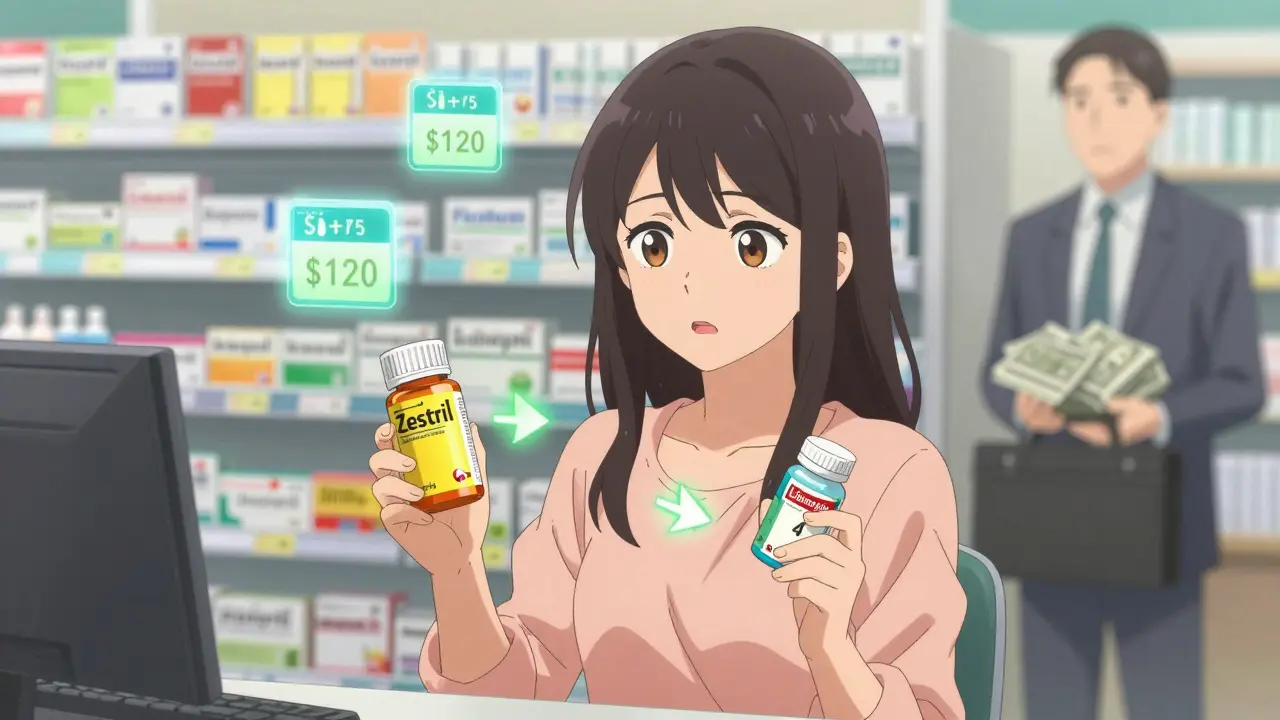
Generic drugs are chemically identical to brand-name versions but cost 80% to 85% less. Yet, many people still ask for the brand because they think generics are weaker or less effective. That’s not true. The FDA requires generics to meet the same safety and effectiveness standards as brand-name drugs. Take lisinopril, a common blood pressure medication. The brand name is Zestril. The generic? Lisinopril. Same active ingredient. Same side effects. Same results. But Zestril can cost $120 for a month’s supply. Lisinopril? $4 at Walmart, $10 at CVS if you don’t have insurance. Even when a drug has a generic version, your doctor might still prescribe the brand. Ask for the generic every time. If your pharmacist says it’s not available, ask why. Sometimes, it’s because your insurance plan pushes a specific brand-often because they get a kickback from the manufacturer. That’s where prior authorization comes in.Prior Authorization: The Bureaucratic Roadblock
Prior authorization is when your insurance company demands proof that you’ve tried cheaper alternatives before they’ll pay for your prescribed drug. It sounds reasonable. In practice, it’s a nightmare. You get a prescription for a new diabetes drug. Your doctor submits the request. Two weeks later, you get a letter saying it’s denied because you didn’t try metformin first-even though you’ve been on metformin for five years and it stopped working. You call your insurer. They say you need a letter from your doctor explaining why metformin failed. You call your doctor. They’re swamped. By the time it’s approved, you’ve gone 10 days without your meds. In 2025, 72% of all specialty drug prescriptions require prior authorization. That’s up from 43% in 2018. The average time to get approval? 7.3 days. For patients with chronic conditions like multiple sclerosis or cancer, delays can mean hospitalization. And here’s the kicker: insurers often approve the most expensive option-not the cheapest. Why? Because they get rebates from drugmakers for pushing high-cost drugs. So even if you qualify for a cheaper generic, your plan might steer you toward a $1,200 brand-name drug because the insurer pockets a $300 rebate from the manufacturer.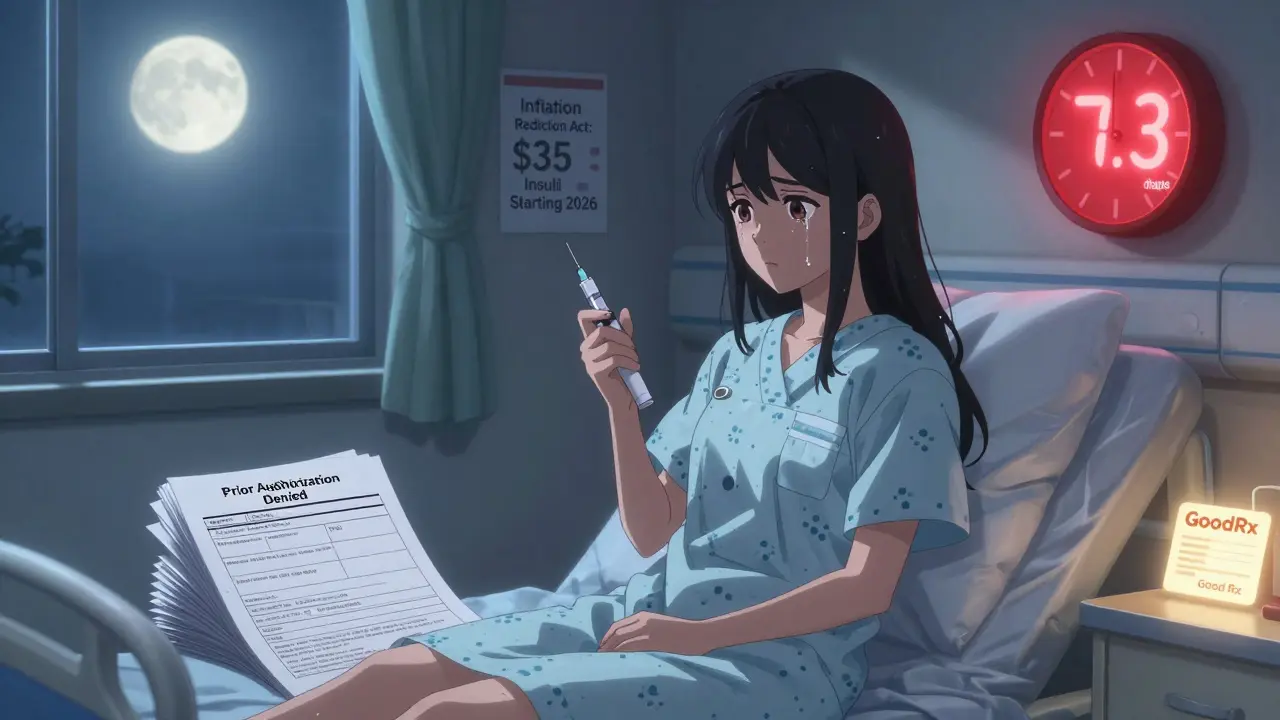
Coupons: Helpful or Harmful?
You’ve seen them: $10 off your Eliquis, $50 off your Humira, free first month. These coupons look like a gift. But they’re not. Pharmaceutical companies issue coupons to make expensive drugs seem affordable. They’re designed to get you hooked on the brand-name drug so you never switch to a cheaper generic-even when one exists. If you use a coupon, your insurance doesn’t count that payment toward your deductible. So you’re paying less now, but you’re still stuck in a system that charges you more later. Worse, coupons are illegal for Medicare and Medicaid patients. If you’re on Medicare Part D and use a manufacturer coupon, your plan might deny coverage entirely. That’s why some patients end up paying full price after their coupon runs out. The only safe coupons are those from pharmacies-not drugmakers. GoodRx, Blink Health, and Costco’s cash prices often beat insurance. For example, a 30-day supply of atorvastatin (Lipitor) might cost $120 with insurance, but only $8 with a GoodRx coupon. No prior authorization. No waiting. Just pay and walk out.What Changed in 2025? The Inflation Reduction Act Is Finally Kicking In
The biggest shift in U.S. drug pricing since Medicare Part D launched in 2003 happened quietly in January 2025. The Inflation Reduction Act (IRA) started rolling out its first drug price negotiations. For the first time ever, Medicare can negotiate prices for 10 high-cost drugs. The first batch includes insulin, blood thinners, and diabetes drugs. By January 2026, those 10 drugs will be priced 60% lower for Medicare beneficiaries. That means someone on insulin will pay no more than $35 per month-down from $150. Over 19 million seniors will save an average of $400 a year on prescriptions. And it’s not just Medicare. The IRA also capped out-of-pocket drug costs at $2,000 per year for Medicare Part D users. That’s a big deal. Before 2025, there was no cap. People with chronic illnesses could spend $10,000 or more in a single year just on meds. Now, once you hit $2,000, your plan pays 100% for the rest of the year. States are following suit. Minnesota now uses Medicare’s negotiated prices as a ceiling for what Medicaid pays. California passed a law requiring PBMs to disclose their rebates. New York is cracking down on pharmacy steering. These aren’t just feel-good policies-they’re changing how drugs are priced.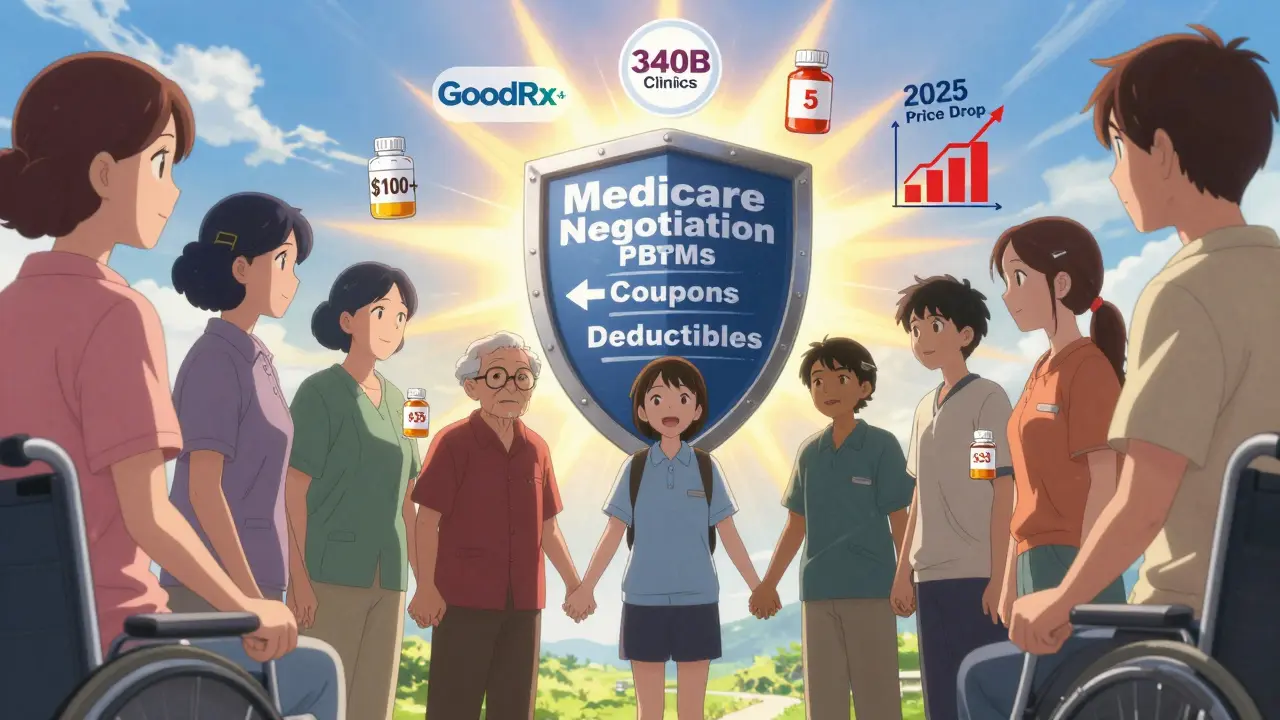
What You Can Do Right Now
You don’t have to wait for policy changes to save money. Here’s what works today:- Always ask for the generic. Even if your doctor says it’s not available, ask if a therapeutic alternative exists. For example, instead of a branded GLP-1 drug for weight loss, ask about semaglutide generic when it becomes available in 2026.
- Use pharmacy discount programs. GoodRx, SingleCare, and RxSaver often have lower prices than insurance. Compare prices at CVS, Walgreens, and Walmart before you fill.
- Don’t use manufacturer coupons if you’re on Medicare. Use cash prices instead. You’ll save more and avoid coverage issues.
- Appeal prior authorization denials. Your doctor can submit an appeal. Many get approved on the second try. Keep copies of every letter and call log.
- Ask about 340B pharmacies. If you’re low-income or on Medicaid, some hospitals and clinics offer drugs at 340B prices-up to 70% off. Ask your doctor if they’re affiliated with one.
The Bigger Picture: Why This Matters
Medication costs aren’t just about money. They’re about survival. A 2024 study in JAMA found that patients who couldn’t afford their prescriptions were 2.5 times more likely to be hospitalized. Diabetes patients skipping insulin end up in the ER. Heart patients skipping blood pressure meds have strokes. The system was built to profit, not to heal. But change is happening. Drugmakers are starting to feel pressure. PBMs are being regulated. States are stepping in. And for the first time, patients have real tools to fight back. You’re not powerless. You have the right to ask questions. To demand generics. To challenge denials. To shop around. The next time you get a prescription, don’t just take it. Question it. Research it. Negotiate it. Your health-and your wallet-depend on it.Can I use a GoodRx coupon with my insurance?
You can’t use GoodRx and insurance together. But you can choose which one gives you the lower price. GoodRx often beats insurance, especially for generics. Always compare the cash price on GoodRx to your insurance copay before filling your prescription.
Why does my insurance deny my generic drug?
Your plan may have a formulary that favors a specific brand, even if a generic exists. This is often because the insurer gets a rebate from the brand-name maker. Ask your pharmacist if there’s a therapeutic alternative your plan covers. If not, file a formulary exception request with your insurer.
Are generic drugs really as good as brand names?
Yes. The FDA requires generics to have the same active ingredient, strength, dosage form, and route of administration as the brand. They must also be bioequivalent-meaning they work the same way in your body. The only differences are inactive ingredients like fillers or dyes, which rarely affect effectiveness.
How long does prior authorization take?
It varies. For non-urgent drugs, it can take 3 to 7 business days. For urgent cases-like cancer treatment or severe pain-you can request an expedited review. Most insurers must respond within 72 hours for urgent requests. Always follow up by phone after submitting paperwork.
Will Medicare drug price negotiations affect my private insurance?
Not directly. But many private insurers use Medicare’s negotiated prices as a benchmark. If Medicare pays $35 for insulin, your private plan may lower its price too to stay competitive. Some employers and Medicaid programs are already adopting Medicare’s prices as a cap.
What if I can’t afford my meds even with coupons and generics?
Contact the drug manufacturer’s patient assistance program. Most big pharma companies offer free or low-cost drugs to people who qualify based on income. Also, check with local community health centers-they often have medication access programs. Nonprofits like NeedyMeds and RxAssist can help you find options.

Chris porto
December 19, 2025 AT 04:18It's wild how we treat medicine like a luxury item instead of a basic need. I get that companies need to make money, but when someone has to choose between insulin and groceries, something's deeply wrong.
It's not about being anti-capitalist-it's about being human.
William Liu
December 20, 2025 AT 18:08Generics saved my life last year. I was paying $200 a month for a blood pressure med. Switched to the generic-$8 at Walmart. Same results. No drama. Why isn't this common knowledge?
jessica .
December 21, 2025 AT 04:09They say the IRA is helping but wait till you see what they're hiding behind the scenes. Big Pharma and the gov are in bed together. You think they want you to pay less? Nah. They just want you to think they care while they raise prices on everything else.
And GoodRx? That's a trap. They get paid by the pharmacies. You're not saving-you're being manipulated.
Ryan van Leent
December 22, 2025 AT 02:34Why do people still trust doctors? They're just the middlemen for the drug companies. My last script was for a brand name even though the generic was cheaper and my doctor knew it. He said 'it's what my rep told me to prescribe'
And prior auth? That's just bureaucratic torture designed to make you give up. I gave up. Now I'm off my meds. So what.
Glen Arreglo
December 22, 2025 AT 16:19I've worked in community health for 15 years. The 340B program is the real hero here. Hospitals that participate can offer meds at 60-70% off to low-income folks. But most patients don't even know it exists.
Doctors need to be trained to say 'ask about 340B' the same way they say 'take with food.' It's not a secret-it's a right.
And if you're on Medicare, never use a manufacturer coupon. Always check GoodRx first. I've seen people pay $150 for insulin when they could've paid $35. It's not their fault-they just weren't told.
shivam seo
December 23, 2025 AT 23:18USA is the only country where you pay more for the same pill than in 30 other nations. That's not capitalism. That's theft with a pharmacy receipt.
Canada doesn't have a 'free market' for drugs. They negotiate. We let corporations write the rules. Of course it's broken. We let the fox guard the henhouse.
Andrew Kelly
December 25, 2025 AT 17:00Everyone's acting like generics are this magic solution but they're not always available. What about when the generic is delayed because of a shortage? Or when the generic has different fillers that give you migraines? The FDA says they're 'bioequivalent' but bioequivalent doesn't mean identical.
And the IRA? Don't get excited. The 10 drugs they're negotiating? That's less than 1% of all prescriptions. They're cherry-picking the ones with the loudest headlines. The rest? Still $1,000 a month.
Isabel Rábago
December 27, 2025 AT 14:30I used to think coupons were helping until I realized I was paying $120 for a month’s supply of my antidepressant and the coupon only covered $50. Then my deductible reset and I was back to paying full price. I didn't realize the coupon didn't count toward my out-of-pocket.
It's like a drug company giving you a $10 bill then stealing $110 from your wallet later.
And now I'm terrified to switch to the generic because I'm afraid my anxiety will get worse. But I can't afford this anymore. So I'm stuck. And no one talks about that part.
Mike Rengifo
December 28, 2025 AT 04:33Just checked my last script. Brand name. $140. GoodRx says $9. I paid $9. Cash. No insurance. No forms. No waiting.
Why do I even have insurance anymore?
Ashley Bliss
December 29, 2025 AT 14:11I cried in the pharmacy last week. Not because I was sick. Because I had to ask the pharmacist if I could get my insulin for $35 like they said on TV. I didn't know it was possible. I've been paying $150 for three years.
And now I feel guilty. Guilty that I didn't know. Guilty that I didn't fight harder. Guilty that I didn't tell anyone.
Why is it so hard to just be alive without going broke?
Mahammad Muradov
December 29, 2025 AT 17:05India produces 40% of the world's generic drugs. We make them cheaper and better. Why does America pay 10x more? Because your system is designed for profit not health. Your doctors are trained to sell pills, not cure people.
It's not a medical issue. It's a moral failure.
Monte Pareek
December 30, 2025 AT 00:04Let me break this down real simple for anyone still confused. Step one: Every time you get a script, ask 'is there a generic?' If they say no, ask 'why?' If they say 'insurance won't cover it' ask 'what if I pay cash?' Then pull up GoodRx on your phone right there in the pharmacy. Nine times out of ten the cash price is lower.
Step two: If you're on Medicare, NEVER use a manufacturer coupon. Use cash. Always. They're designed to trap you. Step three: If prior auth gets denied, file an appeal. Do it the day it comes in. Call your doctor and make them help. They're paid to do this. Step four: If you're low income, ask your clinic if they're a 340B provider. Most are. You're entitled to it. Don't be shy. This isn't charity. It's your right.
I've helped over 200 people do this. No one ever regrets it. The hardest part? Asking. The rest? Just paperwork.
Lynsey Tyson
December 31, 2025 AT 07:48I just want to say thank you to the people who wrote this. I was about to skip my meds this month. Now I'm going to call my doctor and ask about generics. And check GoodRx. I didn't know I had options.
You made me feel less alone.
Allison Pannabekcer
December 31, 2025 AT 13:34My mom has rheumatoid arthritis. She was paying $900 a month for her drug. We found a 340B clinic through NeedyMeds. Now she pays $45. She cries every time she gets her prescription. Not from pain. From relief.
People think this is just about money. It's not. It's about dignity. It's about being able to take a breath without wondering if you can afford the next pill.
Thank you for writing this. I'm sharing it with everyone I know.