Mail-Order Pharmacy Generic Practices: What You Need to Know About Quality
 Dec, 11 2025
When you get your generic medications through the mail, you might wonder: Is this the same as what I’d get at my local pharmacy? Are they safe? Do they work just as well? The answer isn’t just yes-it’s backed by strict rules, advanced technology, and years of real-world testing. But that doesn’t mean there aren’t risks, especially when your pills have to survive a hot truck ride across the country.
Why Mail-Order Pharmacies Use Generics
Mail-order pharmacies dispense about 30% of all prescriptions in the U.S., and nearly 90% of those are generic drugs. Why? Because generics cost 80-85% less than brand-name versions, according to the FDA. For people on long-term medications like metformin, levothyroxine, or lisinopril, that savings adds up fast. Mail-order services let insurers and employers offer bulk dispensing-three months’ supply at a time-cutting down on refill trips and administrative costs. But the real question isn’t cost. It’s quality.How Generic Drugs Are Tested for Quality
Every generic drug must prove it works the same as the brand-name version. The FDA requires bioequivalence studies showing that the amount of medicine absorbed into your bloodstream (called AUC) and how fast it gets there (Cmax) are within 80-125% of the brand. In practice, most generics fall within 4% of the original-far tighter than the legal limit. This isn’t guesswork. Labs use high-performance liquid chromatography (HPLC) to measure active ingredients down to 0.1% variation. That’s like spotting one wrong grain of sand in a full sandbox. These tests aren’t just done once. Every batch of generic medication shipped to a mail-order pharmacy is checked for identity, strength, purity, and dissolution. That means they confirm it’s the right drug, in the right dose, free of contaminants, and able to break down properly in your body. No batch gets released without passing.Storage and Shipping: The Hidden Challenge
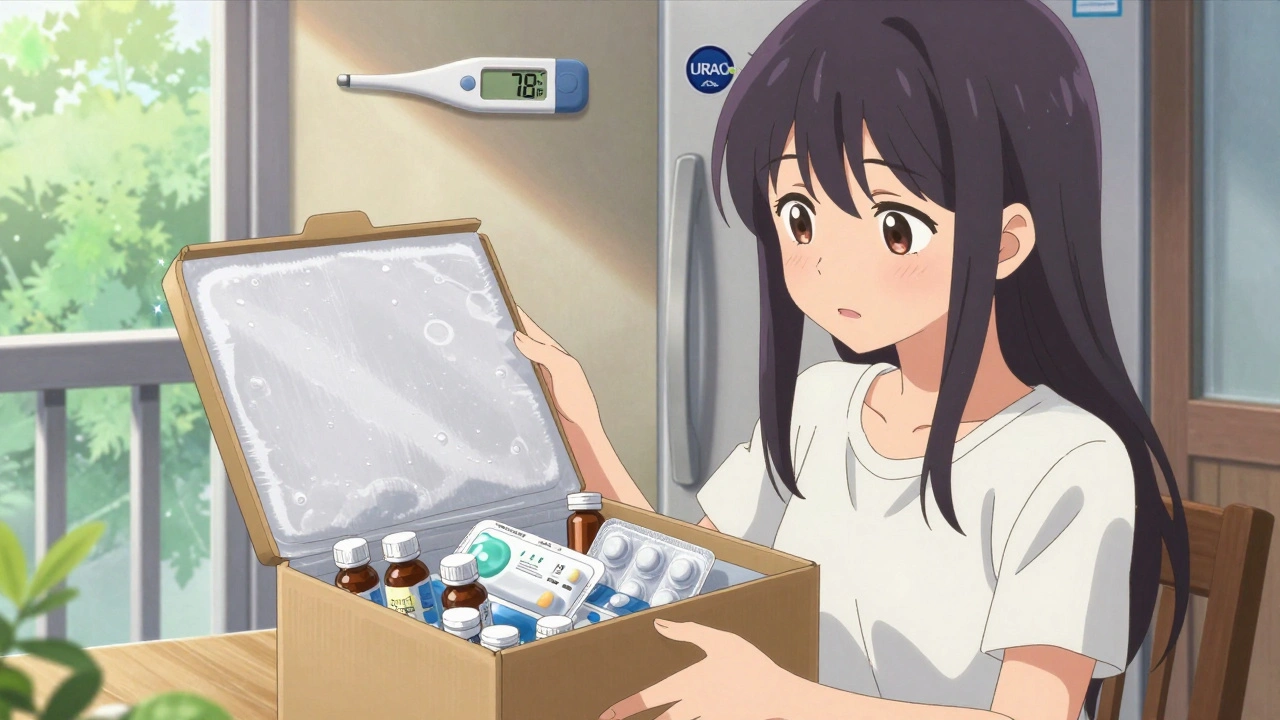
Retail pharmacies store drugs in climate-controlled back rooms. Mail-order pharmacies? They store thousands of bottles in massive, temperature-monitored warehouses. Most generics need to stay between 20-25°C (68-77°F). Some, like insulin or levothyroxine, must stay refrigerated at 2-8°C (36-46°F). Sensors check every 15 minutes. If the temperature spikes, alarms sound, and the batch is flagged. Shipping is where things get tricky. A pill sitting in a truck in Texas in July can hit 120°F inside a cardboard box. That’s why mail-order pharmacies use insulated packaging with phase-change materials-special gels that absorb heat and keep things cool for 7-10 days. Standard retail take-home bags? They only protect for 2-4 hours. A 2022 University of California San Francisco study showed that mail-order packaging kept temperature-sensitive drugs stable even after 96 hours in 95°F heat. Retail bags failed after just 8 hours. That’s not a small difference-it’s life-changing for someone relying on insulin or thyroid meds.Accreditation and Oversight: Who’s Watching?
Not every pharmacy that ships pills is equal. The gold standard is URAC Mail Service Pharmacy Accreditation. To get it, a pharmacy must pass 30% more quality checks than a regular retail pharmacy. That includes double-checking high-risk generics like warfarin and insulin, tracking every pill with a unique National Drug Code (NDC), and keeping electronic records for six years. The system uses barcode scans at every step-receiving, picking, packing, shipping-to hit 99.98% accuracy. One missed scan? The system flags it. The FDA inspects about 1,200 domestic and 600 foreign drug factories each year. About 15-20% of those focus on mail-order facilities. In 2023, they issued 3-5 warning letters for quality violations-mostly around recordkeeping or temperature control lapses. That’s not a lot, but it shows the system is watching.
Real User Experiences: What People Are Saying
On Reddit’s r/pharmacy, over 140 people shared their experiences with mail-order generics in early 2024. Eighty-two percent said their meds worked the same, looked the same, and never changed in appearance. One user wrote: “I’ve been on the same Teva metformin for five years. Same color, same imprint, same size. No issues.” But 18% had problems. Most involved extreme weather. One person in Arizona reported duloxetine capsules sticking together after a four-day shipment in 95°F heat. Another said their insulin arrived warm. Trustpilot reviews show an average rating of 4.1/5 for quality, but complaints cluster around shipping in summer months. Consumer Reports surveyed 2,345 users in 2023. Eighty-seven percent believed their mail-order generics were as good as brand-name drugs. But 34% still worried about whether heat or delays damaged the medication. That’s not paranoia-it’s a real concern the industry is trying to fix.Who’s Leading the Market?
Three big players-Express Scripts, OptumRx, and CVS Caremark-handle 78% of all mail-order generic prescriptions. They’ve invested millions in temperature-controlled warehouses, real-time tracking, and predictive analytics. CVS, for example, now adjusts packaging based on the weather forecast at the delivery address. If it’s going to be 90°F in Atlanta, they add extra cooling packs. That cut temperature excursions by 63% in 2022. Independent mail-order pharmacies make up the other 22%. Many of them rely on the same suppliers and systems as the big three, but they don’t always have the same resources. That’s why accreditation matters. If a small pharmacy isn’t URAC-certified, ask how they handle temperature control during shipping.What About the Risks?
No system is perfect. The biggest issue? Returns. Once a pill leaves the pharmacy, FDA rules say it can’t be restocked-even if it’s unopened. That means if a shipment gets delayed or damaged, the whole batch gets thrown out. Mail-order pharmacies lose about 7% of their generics to waste. Retail pharmacies? Only 2-3%. That’s a financial hit, but it’s also a safety rule. Another concern is narrow therapeutic index drugs-medications where even small changes can cause harm. Levothyroxine is the classic example. A 2021 Stanford study found that even within FDA’s 20% bioequivalence range, some patients had unstable thyroid levels when switching between generic brands. That’s why the FDA now requires extra post-market monitoring for 15 specific drugs, including warfarin, phenytoin, and cyclosporine.
What’s Changing in 2025?
The FDA’s 2024-2028 plan includes new rules for real-time GPS and temperature tracking on all sensitive generics. Imagine getting a text alert if your insulin package got too hot during transit. Pilot programs using blockchain are already cutting counterfeit drug incidents by 40% at Express Scripts. Climate change is forcing innovation. McKinsey predicts temperature-related quality issues could rise 15-20% by 2035 if packaging doesn’t improve. Companies are now testing new materials that keep drugs stable for up to 14 days-even in desert heat.What Should You Do?
If you’re on a mail-order generic:- Check your packaging when it arrives. Is it cold? Is the seal intact? Is there condensation inside? That could mean it got too warm.
- If you’re on insulin, thyroid meds, or seizure drugs, call your pharmacy if the package feels warm or looks damaged.
- Ask if your pharmacy is URAC-accredited. If not, ask how they handle temperature control.
- Don’t leave packages on your porch in summer. Bring them inside right away.
- Keep your meds in their original bottles. Don’t transfer them to pill organizers until you’re ready to take them.
Bottom Line
Mail-order pharmacies don’t cut corners on generic quality-they go further. Their storage systems are tighter, their tracking is more detailed, and their packaging is designed for the real world, not just the pharmacy shelf. Yes, there are risks, especially with extreme weather. But the data shows that for most people, mail-order generics are just as safe and effective as retail ones. The system isn’t flawless. But it’s monitored, tested, and improving. And for millions of people, it’s the only way they can afford to stay healthy.Are generic drugs from mail-order pharmacies less effective than brand-name drugs?
No. The FDA requires every generic drug to perform the same as the brand-name version in your body. Bioequivalence testing shows that generics absorb into the bloodstream at nearly identical rates-usually within 4% of the brand. Mail-order pharmacies test every batch before shipping to ensure this standard is met. Thousands of patients use generics daily without any difference in effectiveness.
Can heat during shipping ruin my generic medication?
It can, but mail-order pharmacies are designed to prevent it. They use insulated packaging with cooling gels that maintain safe temperatures for up to 10 days-even in 95°F heat. Temperature sensors track conditions during transit, and major providers adjust packaging based on weather forecasts. Still, if your medication arrives warm, especially if it’s insulin, thyroid, or seizure medicine, contact your pharmacy immediately. Don’t take it if it looks melted, sticky, or discolored.
How do I know if my mail-order pharmacy is reputable?
Look for URAC Mail Service Pharmacy Accreditation. It means the pharmacy meets higher standards than regular retail pharmacies, including double-checking high-risk drugs, real-time temperature monitoring, and full track-and-trace systems. You can also check reviews on Trustpilot or ask your insurer which mail-order providers they recommend. The top three-Express Scripts, OptumRx, and CVS Caremark-are all URAC-accredited.
Why do my generic pills look different each time I refill?
That’s normal. Generic drugs can come from different manufacturers, and each one uses different colors, shapes, or imprints to distinguish their version. But as long as the drug name, strength, and NDC code match, it’s the same medicine. The FDA requires all generics to be bioequivalent, so appearance doesn’t affect effectiveness. If you’re unsure, call your pharmacist and ask for the manufacturer name.
Are there any generic drugs I should avoid getting through mail-order?
The FDA doesn’t ban any generics from mail-order, but for drugs with a narrow therapeutic index-like warfarin, levothyroxine, phenytoin, or cyclosporine-some doctors prefer you get them from a local pharmacy where you can check the batch and get immediate advice. If you’re on one of these, ask your doctor if mail-order is right for you. Also, avoid mail-order if you live in an area with extreme heat and no reliable delivery service.
What happens if my medication arrives damaged or warm?
Don’t take it. Contact your mail-order pharmacy right away. They’re required to replace it at no cost. Because of FDA rules, they can’t restock returned meds, so they’ll send a new shipment immediately. Keep the original packaging and take photos if possible-this helps them improve their shipping process. If you’re on a time-sensitive medication like insulin, ask for expedited shipping or pick it up locally while you wait.

Ashley Skipp
December 13, 2025 AT 04:39Generics work fine unless you live in a damn oven like Arizona and your insulin arrives melted like candle wax
Stop acting like the system is perfect it’s not
wendy b
December 14, 2025 AT 10:24Actually, the FDA’s bioequivalence range is 80-125% but most generics are within 4%? That’s statistically insignificant and frankly, misleading. I’ve seen patients on levothyroxine have wild TSH swings just because they switched from Teva to Mylan-same drug, different filler, different gut absorption. The system isn’t broken, it’s just optimized for profit, not precision. And don’t get me started on how they ship insulin in cardboard boxes with ‘cooling gels’ that turn to soup after 48 hours in a Texas truck. Pathetic.
Nathan Fatal
December 15, 2025 AT 21:40The data here is solid and the real story is in the logistics, not the chemistry. Mail-order pharmacies have more rigorous batch testing than most retail locations because they handle volume. The real risk isn’t the pill-it’s the delivery chain. That’s why companies like CVS now use weather-based packaging adjustments. It’s not magic, it’s engineering. And yes, if your insulin arrives warm, call them immediately. But don’t assume the drug is bad because the box was hot. The drug inside might still be fine. Trust the process, but verify the outcome.
sandeep sanigarapu
December 16, 2025 AT 11:56Good information. In India, we use generics daily. Temperature control is not always possible. But if medicine works, we use it. Safety is important, but access is more important. Many people cannot afford brand names.
Robert Webb
December 17, 2025 AT 03:08It’s fascinating how we’ve built this entire infrastructure around the idea that medicine must be delivered like a frozen pizza, but we still treat it like a luxury item when it’s actually a basic human need. The fact that we’re using phase-change materials to protect thyroid medication from desert heat tells us more about our society than about pharmacology. We’ve solved the science, but not the equity. The real question isn’t whether generics work-it’s why millions still have to gamble with their health just to afford the dose. The system works for the 87% who get it right, but what about the 13% who get a warm bottle and no help? That’s not a glitch-it’s a design flaw.
Stacy Foster
December 17, 2025 AT 12:58Wait. Let me get this straight. You’re telling me the FDA approves generics from factories in China and India, ships them across the world, then puts them in cardboard boxes that get baked in a truck for days, and you call that ‘safe’? What about the 2022 whistleblower report about tainted metformin from Bengaluru? Or the 15,000 pills recalled in 2023 because of carcinogens? They’re not testing every batch-they’re testing one per thousand. And you think your insulin is safe? You’re just lucky so far. This isn’t healthcare. It’s Russian roulette with a prescription.
Donna Anderson
December 18, 2025 AT 18:51Yessss! I’ve been on mail-order for 3 years and my blood pressure meds have never failed me. I used to freak out when the pills looked different but now I know it’s just the manufacturer changing the dye. And the cooling packs? Genius. I once left mine on the porch for 2 hours in 90° heat and it was still cool inside. I’m so glad we’re finally making this stuff work for real people. Keep pushing for better packaging-this system deserves better than just ‘good enough’.
Rob Purvis
December 19, 2025 AT 03:10Just to clarify: URAC accreditation is mandatory for Medicare Part D mail-order providers, so if your insurer uses Express Scripts or OptumRx, you’re already covered. The real issue is transparency-most patients don’t know they can ask for the manufacturer name or batch number. If your pill looks different, call your pharmacy and ask for the NDC code. It’s on the bottle. If it matches your last refill, you’re fine. If not, they’ll swap it. No drama. No panic. Just ask. And yes, if it’s warm, don’t take it. But don’t assume the worst. The system has safeguards. You just have to use them.