Low-GI Diet Guide: Using Glycemic Index for Weight Control
 Apr, 22 2026
Ever wonder why some people can eat a giant bowl of pasta and feel sleepy an hour later, while others feel energized after a hearty meal of lentils and brown rice? The secret usually boils down to how your body handles sugar. If you're trying to manage your weight or keep your energy levels steady, you've probably come across the concept of the low-GI diet is a nutritional approach that focuses on eating carbohydrates that are digested slowly, causing a gradual rise in blood glucose levels. It's not a restrictive "fad" diet, but rather a way of choosing smarter carbs to avoid the dreaded blood sugar rollercoaster.
What exactly is the Glycemic Index?
Think of the Glycemic Index (or GI) as a ranking system from 0 to 100 that measures how quickly a carbohydrate-containing food raises your blood glucose compared to pure glucose . Pure glucose is the gold standard and sits at 100. If a food has a low score, it means your body breaks it down slowly, releasing sugar into your bloodstream over a longer period. If it's high, you get a sharp spike in energy followed by a sudden crash.
Generally, foods are split into three buckets. Low-GI foods are 55 or less, medium-GI are between 56 and 69, and high-GI foods hit 70 or higher. Why does this happen? It usually comes down to fiber. Foods rich in fiber, or those with a complex structure, act like a speed bump for your digestion. Fats and acids can also slow things down, which is why adding a splash of vinegar or some olive oil to a meal can actually lower the overall glycemic response of that dish.
| Food Item | GI Value | Category |
|---|---|---|
| Barley | 25 | Low |
| Chickpeas | 28 | Low |
| Apples | 36 | Low |
| Oats | 55 | Low/Medium |
| White Bread | 75 | High |
| White Rice | 73 | High |
| Potatoes | 85 | High |
Can a Low-GI Diet actually help with weight control?
The relationship between GI and weight control is a bit of a tug-of-war in the scientific community. On one hand, the logic is sound: when you eat low-GI foods, you produce less insulin. Since insulin is a fat-storage hormone, keeping it stable can theoretically make it easier for your body to burn stored fat. Some experts, like Dr. David Ludwig from Harvard, suggest that this metabolic efficiency can actually increase your daily energy expenditure by 50 to 100 calories.
Beyond the chemistry, there's the "fullness factor." Low-GI foods are often packed with fiber, which keeps you feeling full longer. If you aren't fighting hunger pangs every two hours, you're less likely to reach for a sugary snack. However, it's not a magic pill. Research from the American Institute for Cancer Research (AICR) points out that if you eat the exact same number of calories, a low-GI diet doesn't necessarily result in more weight loss than a high-GI one. In short, while the *quality* of the carbs helps with hunger and hormones, the *quantity* of calories still matters.
Managing blood sugar and metabolic health
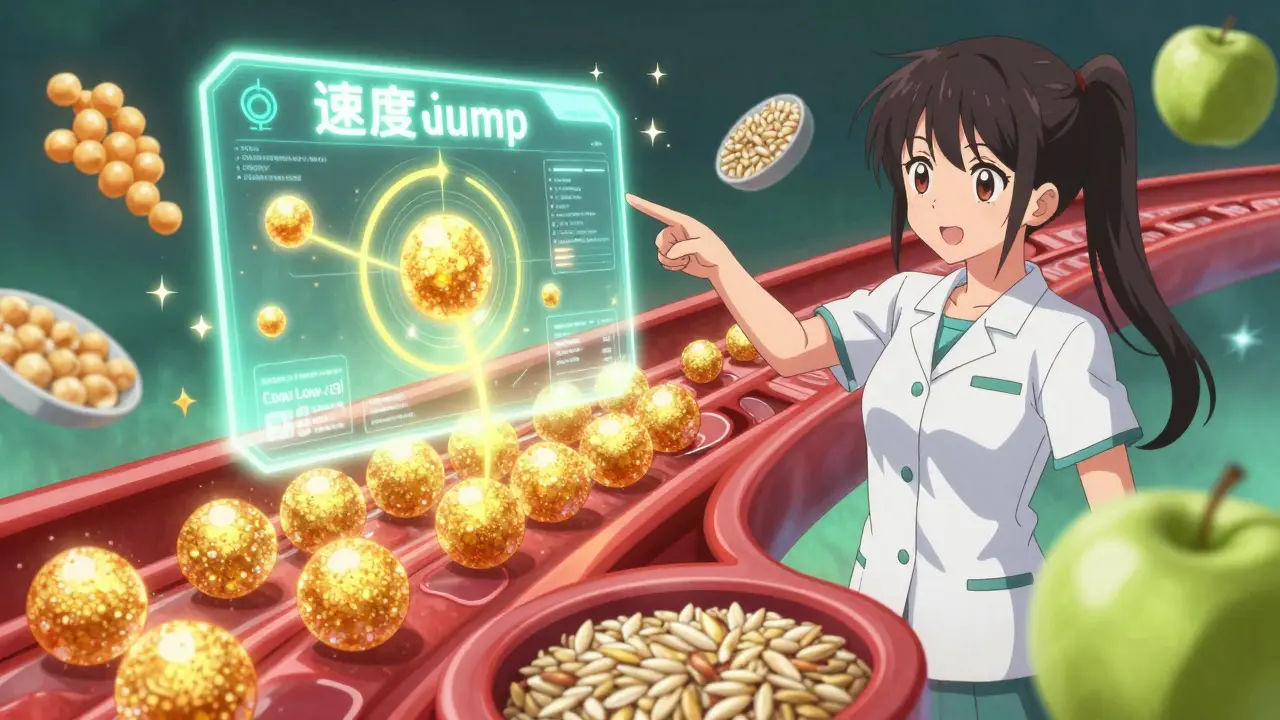
While the weight loss debate continues, the benefits for blood sugar management are crystal clear. For anyone dealing with Type 2 Diabetes a chronic condition that affects the way the body processes blood sugar (glucose) , switching to low-GI options is a game-changer. Studies have shown that these diets can reduce post-meal glucose peaks by as much as 30-40%.
This isn't just about avoiding spikes; it's about long-term stability. By reducing the load on your pancreas, you can lower your hemoglobin A1c levels-a key marker of long-term blood sugar control. Even for those without diabetes, this approach helps prevent metabolic syndrome and reduces the risk of cardiovascular issues by improving lipid profiles and lowering LDL cholesterol.
The "Hidden Traps" of the Glycemic Index
If you start strictly following a GI chart, you might run into a few surprising problems. First, not every low-GI food is a "health food." For example, ice cream and chocolate cake often have lower GI values than a baked potato because of their high fat content, which slows down sugar absorption. If you eat cake just because it's low-GI, you're still loading up on saturated fats and empty calories.
Second, how you prepare your food changes its score. Think about pasta: if you cook it al dente a culinary term meaning "to the tooth," where pasta is cooked to be firm when bitten , it maintains a lower GI (around 45). If you overcook it until it's mushy, the GI jumps to 65. The same goes for fruit; a green, unripe banana is low-GI, but once it gets spotted and sweet, the starch turns to sugar and the GI climbs.
Lastly, your body is unique. A study from the Weizmann Institute found that two people can eat the exact same piece of bread and have wildly different blood sugar responses. This is why "personalized nutrition"-using data to see how your specific body reacts-is the next big frontier in health.
How to transition to a Low-GI lifestyle
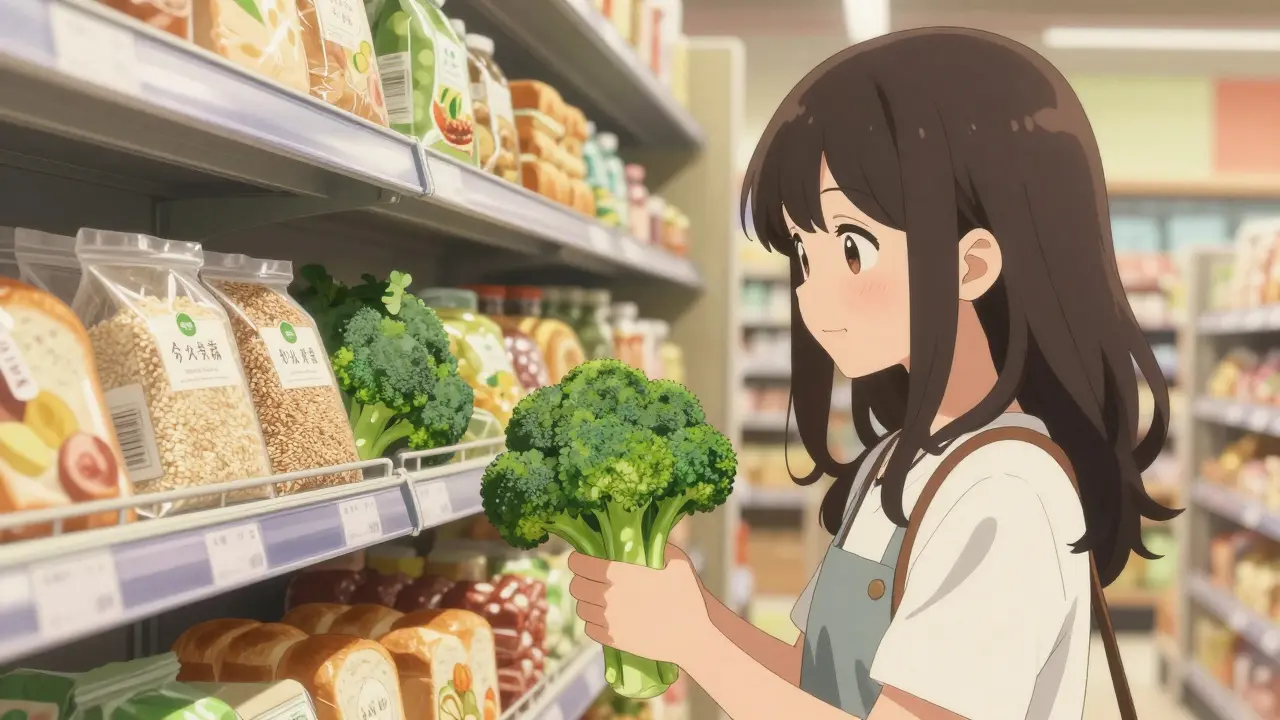
You don't need to carry a calculator to the grocery store to make this work. Most people find that after a few weeks of mindful swapping, it becomes second nature. The goal is to swap "refined" for "whole." Instead of white rice, try quinoa or barley. Instead of corn flakes, go for steel-cut oats. Instead of a white flour tortilla, try a corn or whole-grain wrap.
A practical rule of thumb is to pair your carbs with proteins and healthy fats. If you're eating a piece of fruit (carb), add a handful of almonds (protein/fat). This further slows the digestion process and keeps your insulin levels flat. Many people find that integrating these principles into the Mediterranean Diet an eating pattern based on the traditional cuisines of countries bordering the Mediterranean Sea, emphasizing plant-based foods and healthy fats is the easiest way to maintain the habit long-term.
Here is a quick checklist for your next grocery trip:
- Vegetables: Focus on non-starchy options like broccoli, spinach, and cauliflower.
- Fruits: Reach for berries, apples, and pears over dried fruits or overly ripe tropical fruits.
- Grains: Choose barley, buckwheat, and wild rice over white bread and instant rice.
- Legumes: Load up on lentils, chickpeas, and kidney beans.
- Dairy: Opt for Greek yogurt and hard cheeses over sweetened flavored yogurts.
Will I feel tired if I switch to a low-GI diet?
Actually, it's the opposite. High-GI diets cause a spike and then a "crash," which is why you might feel sleepy after a big pasta meal. Low-GI foods provide a slow, steady stream of energy, which usually eliminates those mid-afternoon energy dips.
Can I eat any fruit on a low-GI diet?
Most fruits are great, but some are better than others. Berries, cherries, and apples are very low on the index. Watermelon and very ripe mangoes are higher. The best trick is to pair fruit with a protein, like apple slices with peanut butter, to flatten the glucose response.
Is a low-GI diet the same as a low-carb diet?
No. A low-carb diet (like Keto) focuses on reducing the total amount of carbohydrates you eat. A low-GI diet focuses on the type of carbohydrates. You can still eat a significant amount of carbs on a low-GI diet, as long as they are whole, high-fiber sources.
Do I need to track the GI of every single ingredient?
Not necessarily. Tracking every gram is exhausting and often unnecessary. Instead, focus on the "plate method": fill half your plate with non-starchy vegetables, a quarter with lean protein, and a quarter with a low-GI whole grain or legume.
Why do some low-GI foods still make me feel sluggish?
This could be due to individual variability. As mentioned, some people react differently to certain low-GI foods. It's also possible you're eating too many calories overall, even if the GI is low. Keep an eye on your portions and how you feel after specific meals.
Next Steps for Your Journey
If you're just starting out, don't try to overhaul your entire pantry overnight. Start by swapping one high-GI item per meal. Maybe trade your morning white toast for a bowl of oats, or switch your white rice to quinoa for dinner. Pay attention to your hunger levels and energy crashes over the next two weeks.
If you have a pre-existing condition like diabetes, always talk to your doctor before making a major shift, as low-GI diets can significantly lower blood sugar and might require a medication adjustment to avoid hypoglycemia. For most people, the goal isn't perfection-it's about making better choices that keep your energy stable and your heart healthy.

Amy Fredericks
April 23, 2026 AT 11:07Swapping white rice for quinoa has been such a game changer for my afternoon slump! 🌟 It's all about those small, sustainable changes that make us feel better without feeling deprived.
Mike Arrant
April 24, 2026 AT 21:26Most of you are just ignoring the obvious fact that you're still eating way too many carbs in general. Low-GI is just a band-aid for people who can't commit to a real carnivore or keto diet. You're basically just playing with your food while still feeding the insulin monster.
Rick Brewster
April 26, 2026 AT 17:24one must contemplate if the very notion of a ranking system for sustenance is not merely a reductive attempt to quantify the chaotic symphony of biological existence where the interaction between a legume and a human gut is far more metaphysical than a mere digit on a chart and honestly the obsession with these numbers reveals a deeper societal anxiety about the loss of control over our own ephemeral mortality in a world obsessed with optimization
Chidi Prosper
April 27, 2026 AT 22:24Exactly. Focusing on whole grains and legumes is a practical way to handle energy. In my experience, adding a bit of healthy fat to the meal makes a massive difference in how I feel throughout the workday.
Sarah Watters
April 29, 2026 AT 17:14Funny how they push these 'guides' while the real data on seed oils and processed grains is being buried by the pharmaceutical industry. It's all designed to keep us dependent on their 'management' systems rather than actual natural healing. Just follow the money and you'll see who benefits from these specific recommendations.
Mayur Pankhi Saikia
April 30, 2026 AT 02:45The absurd notion that a 'green' banana is inherently superior... is merely a simplistic oversimplification!!! Any real expert knows that the glycemic load-not the index-is the only metric that actually matters in a real-world setting, yet people continue to cling to these basic charts like they are holy scripture... simply pathetic.
Anantha Lakshmi
April 30, 2026 AT 20:20Let's stay positive everyone! 🌈 There are so many delicious ways to incorporate these foods. I love making a chickpea salad with lots of lemon and olive oil to keep things fresh and healthy! 💪✨
Saptatshi Biswas
April 30, 2026 AT 23:38It is absolutely disgraceful how some people try to apply these generic Western nutritional standards to diverse global diets. The nuances of traditional Indian grains are completely ignored in these simplistic tables, which serves only to marginalize our ancestral wisdom in favor of a sterile, clinical approach to eating!
Divyanshu Giri
May 2, 2026 AT 12:59Keep smashing it with the healthy swaps guys! Just keep moving and eating the good stuff and you will feel like a rocket ship! No need to overthink it just eat the beans and go get it!