Intentional Overdose: Mental Health Support and Crisis Resources You Can Trust
 Dec, 12 2025
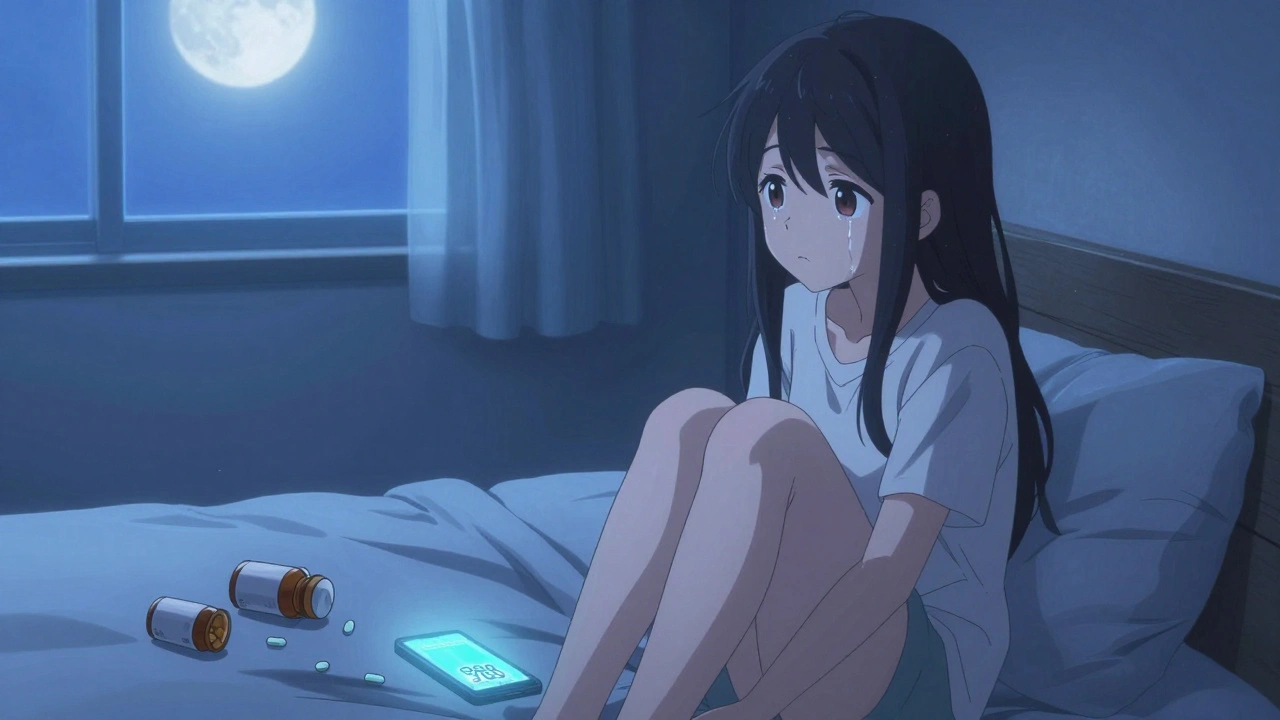
When someone takes too many pills on purpose, it’s not just a medical emergency-it’s a cry for help. Intentional overdose is one of the most common ways people attempt suicide, especially among teens and middle-aged adults. It’s often not about the drugs themselves, but about unbearable pain that feels impossible to escape. Prescription opioids, acetaminophen, and even common over-the-counter medications like ibuprofen or sleep aids are used because they’re easy to get. But here’s the hard truth: surviving an intentional overdose doesn’t mean the pain is gone. Many end up with liver failure, brain damage, or years of physical and emotional recovery. And for every person who makes it, dozens more don’t call for help at all.
Why Do People Choose Overdose as a Method?
It’s not random. People who attempt suicide by overdose often describe it as "quiet," "private," and "less violent" than other methods. They don’t want to scare anyone. They don’t want to be a burden. A 2024 study from Mental Health America found that 68% of people who tried to end their life with drugs had reached out to a crisis line within the past month. That means they were searching for help-just not the kind they could find.
Accessibility plays a huge role. A teenager can walk into their own medicine cabinet and find enough pills to stop their heart. A middle-aged parent might have leftover painkillers from an old injury. Unlike a gun or a bridge, there’s no barrier. No one asks questions. No one sees it coming. That’s why overdose accounts for 15-20% of all suicide deaths in the U.S., even though it’s not the most lethal method. Firearm deaths are more likely to be fatal, but overdose is more common because it’s easier to hide and plan.
The Real Numbers Behind the Crisis
In 2024, the CDC reported a 27% drop in overall overdose deaths-from about 105,000 in 2023 to roughly 76,650. That sounds like progress. But here’s what’s not being said: that number includes both accidental overdoses from addiction and intentional suicide attempts. The CDC tracks them separately using medical codes, and the data shows something troubling. While accidental overdoses are falling thanks to naloxone access and safer prescribing, intentional overdoses haven’t dropped as fast.
Meanwhile, 14 million U.S. adults said they seriously thought about suicide in the past year. That’s 5.6% of the adult population. Among teens aged 12-17, 10.1% reported serious suicidal thoughts. And only 52.1% of adults with a mental illness got any treatment at all. That gap-between who needs help and who gets it-is widening. There are 320 people with serious mental health needs for every one mental health provider. When you’re in crisis, waiting five or six minutes on the phone for someone to answer isn’t just frustrating-it’s dangerous.
What’s Working: The 988 Lifeline and Other Crisis Tools
Since the 988 Suicide & Crisis Lifeline launched in July 2022, it’s handled over 4.7 million contacts in 2024. That’s a 32% jump from the year before. People are using it. And for good reason. One Reddit user, "AnxietySurvivor89," wrote: "I called 988 after swallowing too many pills. The counselor stayed on the line for 18 minutes until the ambulance arrived. That’s what saved me."
The service is free, confidential, and available 24/7. You don’t need insurance. You don’t need to be in a hospital. You just need to be in pain. And it works. Crisis Text Line, which you can reach by texting HOME to 741741, answered 3.2 million messages in 2024 with an average response time of 37 seconds. These aren’t just hotlines-they’re lifelines.
But here’s the problem: staffing is collapsing. SAMHSA, the agency that funds most of these services, has cut staff by 18% since 2022. Wait times on the 988 line have jumped from 2.4 minutes in 2022 to 5.7 minutes in 2024. In some states, callers are being transferred to voicemail. Forty-two percent of people trying to get same-day crisis help couldn’t reach anyone. That’s not a system failure-it’s a policy failure.

Who’s Most at Risk-and Why
It’s not just about mental illness. It’s about isolation, money, and access. Suicide rates are highest among adults aged 45-64, with 20.2 deaths per 100,000 people. Rural communities have 25% higher rates than cities, and 40% fewer providers. Black and American Indian/Alaska Native populations face the highest rates of fatal overdose deaths, but the data doesn’t always separate intentional from accidental cases. That means we might be undercounting how many of these deaths are preventable.
Young people are especially vulnerable. A 2025 report found that 2.8 million teens had depression severe enough to interfere with school, relationships, or daily life. Many of them don’t tell their parents. Many can’t get help without parental consent. Some don’t even know 988 exists. Schools rarely teach it. Parents rarely talk about it. So when the pain gets too loud, they turn to what’s closest: a bottle of pills.
What’s Being Done-and What’s Being Taken Away
The CDC has proven that suicide prevention works. Programs that increase economic support-like raising the minimum wage-have been shown to reduce suicide attempts by 15.4%. School-based mental health programs cut adolescent suicide attempts by 22%. Connecting people to community groups, peer support, and consistent therapy saves lives.
But the funding is vanishing. In 2025, the federal government proposed cutting SAMHSA’s budget by $1.07 billion. That’s not a small adjustment. That’s a collapse. It would eliminate $480 million in state-level prevention funding. It would shut down crisis centers. It would fire trained counselors. The Congressional Budget Office warns that without action, suicide rates could rise 8-12% by 2027. That means thousands more deaths. More families shattered. More hospitals overwhelmed.
Experts like Dr. Nora Volkow of NIDA say the solution is simple: treat mental health and substance use as one problem, not two. But that requires funding, training, and political will. Right now, we’re treating symptoms while pulling the plug on the system that could fix the cause.

What You Can Do Right Now
If you’re thinking about ending your life-call 988. Text HOME to 741741. Talk to someone. Even if you’re scared. Even if you think no one cares. You are not alone. And you are not a burden.
If you’re worried about someone else:
- Ask directly: "Are you thinking about killing yourself?" It doesn’t plant the idea-it opens the door.
- Remove access to pills, knives, or guns. Don’t wait for permission.
- Stay with them until help arrives. Don’t leave them alone.
- Call 988. Even if they say they don’t want help. Sometimes, just hearing a voice can stop a crisis.
If you’re a parent, teacher, or friend: learn the signs. Withdrawal. Giving away possessions. Talking about being a burden. Saying "I wish I wasn’t here." These aren’t just mood swings. They’re warnings.
And if you’re reading this because you’re not sure if you should care-care anyway. You don’t need to fix someone’s life. You just need to show up. A text. A call. A ride to the ER. That’s enough.
Where to Find Help-Right Now
- 988 Suicide & Crisis Lifeline: Call or text 988. Available 24/7 in English and Spanish.
- Crisis Text Line: Text HOME to 741741. Free, anonymous, and fast.
- SAMHSA National Helpline: 1-800-662-HELP (4357). For treatment referrals and support.
- Trans Lifeline: 877-565-8860. For transgender and nonbinary people.
- Veterans Crisis Line: Dial 988, then press 1. Or text 838255.
These services are not perfect. They’re underfunded. They’re stretched thin. But they’re here. And they’re saving lives every day.
It Doesn’t Have to Be This Way
We’ve seen what happens when we invest in prevention. Overdose deaths dropped by over 27,000 in one year. That’s not luck. That’s policy. That’s funding. That’s people showing up for each other.
But progress is fragile. Every cut to mental health funding is a gamble with human lives. Every silence around suicide is a missed chance to save someone. You don’t need to be a doctor, a counselor, or a policymaker to make a difference. You just need to be willing to listen. To speak up. To act.
Someone out there is holding a bottle of pills right now, wondering if anyone will notice. Don’t wait for them to ask. Reach out. Call 988. Send a text. Say their name. Tell them they matter.
Because they do.

Bruno Janssen
December 14, 2025 AT 08:40i’ve been here. swallowed a whole bottle of ibuprofen once after my mom died. didn’t want to die, just wanted the noise to stop. ambulance came, stomach pumped, woke up in a room full of people asking me why i didn’t call first. i didn’t know who to call. no one ever taught us how to scream without screaming.
now i text 741741 when the dark comes back. they reply in 23 seconds. that’s all i need.
Scott Butler
December 14, 2025 AT 19:27this is why america’s falling apart. people used to tough it out. now we hand out crisis lines like candy. if you’re weak enough to overdose on Advil, maybe you shouldn’t be allowed to walk around unsupervised. get a job. get a religion. stop whining.
988? more like 988-GET-A-GRIP.
Tyrone Marshall
December 15, 2025 AT 17:54the real tragedy isn’t the overdose-it’s that we treat mental health like a bonus feature, not infrastructure. we fund highways, but not helplines. we build prisons, but not peer support centers. we pay cops to respond to crises, but not counselors.
i’ve sat with people who called 988 and got voicemail. i’ve held hands while they cried because the system failed them. this isn’t about willpower. it’s about whether we believe human suffering deserves a response.
if you think funding crisis lines is a waste, ask yourself: would you rather pay for a funeral or a therapist? because right now, we’re choosing the wrong one.
and yes, i’ve been on the other side of that phone call too. the silence after you hang up? that’s the sound of a soul deciding whether to keep breathing. don’t let it be silent.
Emily Haworth
December 17, 2025 AT 09:09988 is a government trap 😳 i heard they track your ip and send your data to the fbi 🤫 and the counselors? they’re all undercover agents from the deep state trying to gaslight you into taking antidepressants 💊👁️🗨️
my cousin took 30 pills and called 988-next thing she knew, they took her kids and put her in a locked ward for 3 weeks 😭 they said it was "for her safety" but i know what they really wanted…
they want to control your mind. don’t fall for it. go to the woods. talk to the trees. they don’t lie.
🌱🌲💚
Tom Zerkoff
December 19, 2025 AT 02:08It is imperative to underscore the statistical and sociological validity of the data presented herein. The CDC’s disaggregation of intentional versus accidental overdoses is methodologically sound, and the correlation between reduced mental health funding and elevated suicide rates is supported by longitudinal peer-reviewed studies, including those published in JAMA Psychiatry and The Lancet.
Furthermore, the operational efficacy of the 988 Lifeline, despite staffing shortages, remains statistically significant in reducing acute crisis escalation. The 32% year-over-year increase in utilization reflects a societal shift toward destigmatization of mental health intervention.
However, the proposed federal budget cuts to SAMHSA represent a catastrophic regression in public health infrastructure. A $1.07 billion reduction would directly impact over 1,200 community-based crisis centers, resulting in an estimated 1,800 preventable deaths annually by 2027, according to the CBO’s modeling.
One must not confuse compassion with weakness. To fund mental health is not to enable dependency-it is to uphold the foundational covenant of civil society: that no citizen shall be left to suffer in silence.
kevin moranga
December 20, 2025 AT 05:41hey. i’m not a therapist. i don’t have all the answers. but i know what it’s like to sit on the bathroom floor at 3 a.m. with a bottle in one hand and your phone in the other, wondering if anyone would even notice if you didn’t wake up.
i called 988. the lady on the other end didn’t judge me. she didn’t tell me to "get over it." she just said, "i’m here. tell me what’s going on." and we talked for 47 minutes.
you don’t have to be broken to deserve help. you just have to be hurting. and if you’re reading this right now? you’re not alone. i’m right here with you. even if you don’t know me. even if you’re scared. even if you think no one cares.
you matter. your pain matters. your life matters.
call 988. text HOME to 741741. send me a message. i’ll reply. i promise.
you’ve already survived 100% of your worst days. don’t let today be the one you give up.
i believe in you.
Alvin Montanez
December 21, 2025 AT 19:17every time someone says "it’s not about the pills, it’s about the pain," i want to vomit. you know what else causes pain? getting fired. losing your house. your kid getting bullied. your wife leaving you. you think your pain is special? everyone’s hurting. the difference is some people get up and go to work anyway. they don’t call 988. they don’t post on Reddit. they don’t turn to drugs.
you want to die? fine. but don’t drag the rest of us into your pity party. we’re paying for your therapy, your ambulance rides, your hospital stays. and now you want us to fund more of it? no thanks. take responsibility. stop being a victim. grow up.
if you can’t handle life, maybe you shouldn’t be allowed to have access to pills. lock them up. make it harder. that’s what real help looks like. not some 24/7 hotline for emotional toddlers.
Lara Tobin
December 22, 2025 AT 09:22i just wanted to say thank you to whoever wrote this. i read it while sitting in my car outside the hospital after my sister got discharged. she tried last month. didn’t make it. but she’s alive now. and i’ve been scared to talk about it because i thought people would think i was weak for crying.
but this? this made me feel less alone.
thank you.
💙
Keasha Trawick
December 22, 2025 AT 12:06let’s be real-this isn’t a crisis. it’s a cultural collapse. we’ve turned emotional resilience into a luxury good. we’ve commodified healing into subscription-based therapy apps and branded wellness retreats. meanwhile, the kid in rural Iowa with depression can’t get a therapist within 60 miles, and their school’s counselor is juggling 800 students and a full-time job as a disciplinarian.
we’ve replaced community with algorithms. replaced connection with content. replaced empathy with engagement metrics.
and now we’re shocked that people are reaching for pills? no. we’re shocked because we didn’t build the scaffolding. we didn’t plant the roots. we just handed out band-aids and called it a system.
the real overdose? the one where we overdose on distraction and underdose on humanity.
Deborah Andrich
December 23, 2025 AT 11:47