Hypertension Management: Natural Strategies and Medication Control
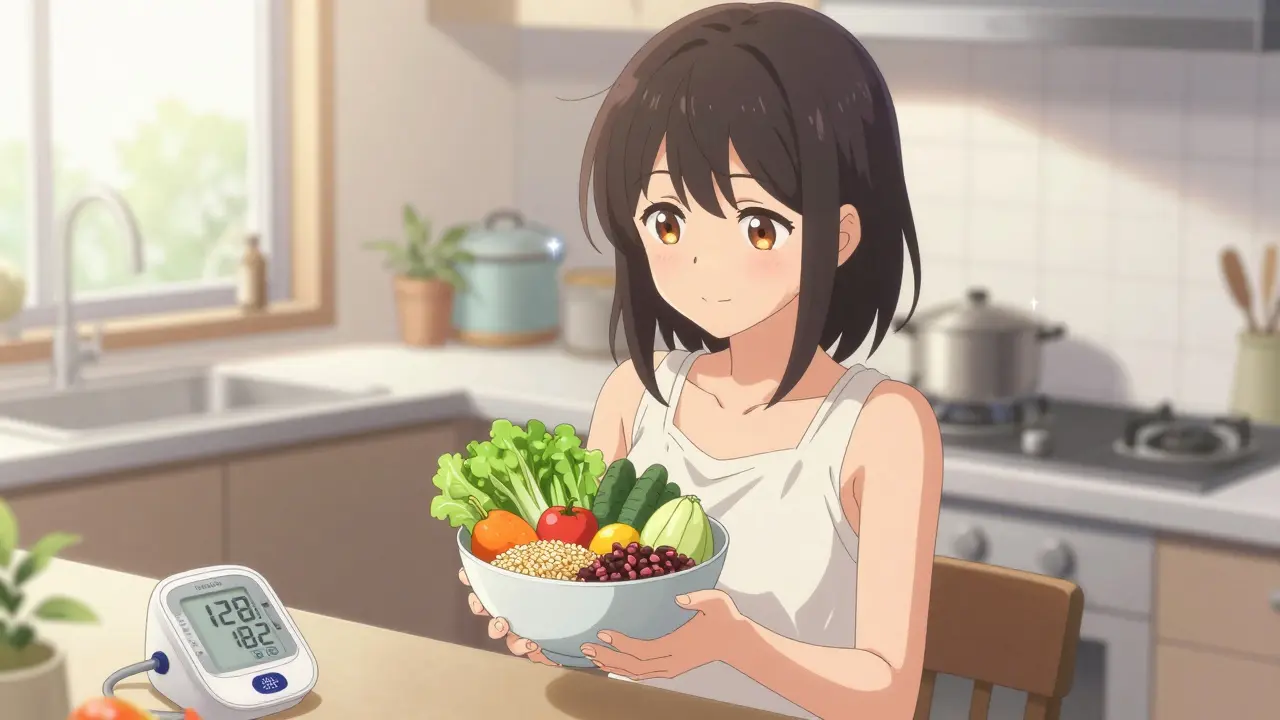 Feb, 7 2026
High blood pressure doesn’t have to mean lifelong pills. Millions of people are learning that blood pressure control doesn’t have to rely only on medication. While drugs like ACE inhibitors and calcium channel blockers are proven and effective, a growing body of evidence shows that natural strategies-when used correctly and alongside medical advice-can make a real difference. The goal isn’t to replace your doctor’s prescription, but to work smarter: reduce your reliance on medication, lower your risk of side effects, and take real control of your health.
What Hypertension Really Means
Hypertension isn’t just a number on a screen. It’s defined as systolic pressure consistently above 130 mm Hg or diastolic above 80 mm Hg, according to the 2017 American Heart Association guidelines. That might sound technical, but what it means in real life is this: your heart is working harder than it should, your arteries are under more stress, and your risk of stroke, heart attack, or kidney damage goes up with every point higher your numbers climb.
Worldwide, over 1.28 billion adults have hypertension. That’s nearly one in five people. And here’s the kicker: about half of them aren’t even aware they have it. Blood pressure doesn’t cause obvious symptoms until damage is already done. That’s why monitoring it regularly-even at home-is one of the most important things you can do.
How Medications Work (and Their Limits)
First-line medications like lisinopril, amlodipine, or hydrochlorothiazide work fast. In as little as two weeks, they can drop systolic pressure by 15 to 20 mm Hg. That’s significant. But they come with trade-offs. Common side effects include dizziness, fatigue, dry cough, leg swelling, or even electrolyte imbalances. In 2022, U.S. adverse event reports listed over 1,200 serious cases tied to antihypertensive drugs-many involving interactions or dosage errors.
And here’s something many don’t realize: medication doesn’t fix the root cause. It manages the symptom. If you’re eating a high-sodium diet, sitting all day, and stressed out, pills might hold your pressure steady-but they won’t reverse the damage building up in your arteries. That’s where natural strategies come in.
The DASH Diet: More Than Just a Trend
The DASH diet isn’t some fad. It was developed in 1997 by the National Heart, Lung, and Blood Institute and tested in controlled trials with thousands of participants. When followed strictly for 30 days, it lowers systolic blood pressure by 8 to 14 mm Hg. That’s comparable to a single medication.
What does it actually look like? More vegetables, fruits, whole grains, nuts, and lean proteins. Less processed food, sugary drinks, and saturated fats. The targets are specific: 4,700 mg of potassium, 1,250 mg of calcium, 500 mg of magnesium, and no more than 2,300 mg of sodium per day. For most Americans, that means cutting sodium in half-from the average 3,400 mg down to 1,500 mg. That alone can drop your systolic pressure by 5 to 6 mm Hg.
Real-world success? A 2023 Healthline survey found that 73% of people who stuck with the DASH diet saw measurable improvements-especially when paired with weight loss. One user reported dropping from 146/92 to 128/82 in 10 weeks by switching from canned soups to homemade meals and adding spinach, sweet potatoes, and bananas daily.

Exercise: The Silent Blood Pressure Med
You don’t need to run a marathon. Just 150 minutes of moderate activity per week-like brisk walking at 3 to 4 mph-can lower systolic pressure by 5 to 8 mm Hg. That’s about the same as a low-dose diuretic.
The key is consistency. A study from the University of Rochester showed that people who walked 30 minutes five days a week saw their pressure drop within four weeks. And it’s not just about the heart: regular movement improves insulin sensitivity, reduces inflammation, and helps your body manage stress hormones that spike blood pressure.
Try this: break your walks into three 10-minute sessions if you’re short on time. Park farther away. Take the stairs. Stand up every hour. These small shifts add up.
Supplements That Actually Work
Not all supplements are created equal. Some are hype. A few have solid science behind them.
- Coenzyme Q10 (CoQ10): At doses of 100-225 mg daily, studies show an average systolic reduction of 11-17 mm Hg. It’s especially helpful for people on statins, which can deplete natural CoQ10 levels. Bioavailability improves when taken with a fatty meal.
- Aged Garlic Extract: 600-1,200 mg daily can lower systolic pressure by 7-10 mm Hg in stage 1 hypertension. A 2020 meta-analysis in Nutrients confirmed this. But here’s the warning: garlic can interact with blood thinners like warfarin. Talk to your doctor before starting it.
- Hibiscus Tea: Drinking 3-4 cups daily for six weeks has been shown to reduce systolic pressure by 7.2 mm Hg compared to placebo. One Reddit user reported dropping from 148 to 135 in six weeks. GoodRx reviews show 78% of users noticed a difference.
- Magnesium: 368 mg daily (preferably glycinate or citrate) leads to modest but real drops-about 2 mm Hg systolic and 1.8 mm Hg diastolic. Many people report fewer leg cramps too.
On the flip side, supplements like hawthorn berry show inconsistent results. Amazon reviews show 42% of users saw no change. And avoid licorice root, yohimbe, or ephedra-they can raise blood pressure. The FDA has issued warnings on these.
When Natural Strategies Shine
Natural methods aren’t magic. They take time. Most require 4 to 8 weeks before you see results. Medications? You might feel the difference in two weeks. But here’s the advantage: natural approaches have far fewer side effects. In 2022, only 127 serious adverse events were reported for all supplements combined-compared to over 1,200 for medications.
They’re especially powerful for stage 1 hypertension (130-139/80-89 mm Hg) in people with low cardiovascular risk. Dr. Deepak Bhatt from Harvard says a 3- to 6-month trial of intensive lifestyle changes-DASH, exercise, weight loss-can be appropriate before adding drugs.
And when used together? The 2023 SPRINT-2 trial showed that combining lifestyle changes with reduced medication doses achieved the same blood pressure control-with 32% fewer side effects. That’s not just better health. It’s better quality of life.

What Doesn’t Work (And What’s Dangerous)
Don’t fall for the “miracle cure” claims. You won’t find a supplement that replaces a statin or a beta-blocker. And some “natural” products are risky.
St. John’s wort? Can interfere with blood pressure meds. Licorice root? Raises blood pressure and depletes potassium. Yohimbine? A stimulant that spikes pressure. These aren’t myths-they’re documented in the Natural Medicines Comprehensive Database.
Also, don’t assume “natural” means “safe.” Supplements aren’t regulated like drugs. A 2022 NIH survey found that 42% of supplement users don’t tell their doctors they’re taking them. That’s dangerous. Garlic + lisinopril? Possible dizziness. Magnesium + kidney disease? Could be toxic. Always talk to your provider before starting anything.
Real-Life Integration: How to Start
You don’t need to overhaul your life overnight. Start small.
- Track your numbers: Buy a home BP monitor. Take readings at the same time each day.
- Reduce sodium: Swap one processed food for whole food this week. Try no-salt-added tomato sauce instead of canned.
- Try hibiscus tea: Replace one sugary drink with 2 cups of unsweetened hibiscus tea daily.
- Walk 10 minutes after dinner: Consistency beats intensity.
- Talk to your doctor: Ask if your meds can be adjusted as you improve. Don’t stop them on your own.
Success stories aren’t rare. One man in Ohio dropped from 152/96 to 124/80 in four months by cutting salt, walking daily, and adding CoQ10. He reduced his lisinopril dose by half. His doctor approved it-because he had data to show it was working.
The Bottom Line
Hypertension management isn’t about choosing between pills and plants. It’s about combining both. Medications give you fast control. Natural strategies give you long-term healing. The most successful people don’t pick one path-they use both.
The American Medical Association’s 2024 guidelines now officially recognize seven natural approaches with solid evidence: DASH diet, sodium restriction, potassium and magnesium supplements, CoQ10, garlic, and transcendental meditation. That’s not a coincidence. It’s science.
For stage 2 hypertension (140/90 or higher) or if you have heart disease, diabetes, or kidney problems-medication is still essential. But even then, natural strategies can reduce your dose, lower your side effects, and improve your overall health.
Your blood pressure doesn’t have to be a life sentence. It’s a signal. Listen to it. Act on it. And don’t be afraid to ask: What else can I do?
Can I stop my blood pressure medication if I start natural remedies?
No. Never stop or reduce your medication without your doctor’s guidance. Natural strategies can help lower your blood pressure, but they don’t replace the need for medical treatment in most cases. Stopping medication suddenly can cause dangerous spikes in pressure. Work with your provider to safely adjust your regimen as your lifestyle improves.
How long does it take for natural remedies to lower blood pressure?
Most natural approaches take 4 to 8 weeks to show measurable results. The DASH diet may show effects in as little as two weeks, but full benefits take 30 days or more. Supplements like CoQ10 and garlic need consistent daily use for at least a month. Exercise and weight loss effects build gradually. Patience and consistency are key.
Which supplements are safest for high blood pressure?
The most evidence-backed and safest options are magnesium (368 mg daily), aged garlic extract (600-1,200 mg daily), and hibiscus tea (3-4 cups daily). CoQ10 (100-200 mg daily) is also well-studied. Avoid licorice, yohimbe, and St. John’s wort-they can raise blood pressure or interfere with meds. Always check with your doctor before starting any supplement.
Does weight loss really help with blood pressure?
Yes-significantly. For every kilogram (2.2 pounds) of weight lost, systolic pressure typically drops by about 1 mm Hg. Losing 5-10% of your body weight can reduce pressure by 5-20 mm Hg. That’s equivalent to one or even two medications. Weight loss also improves insulin sensitivity and reduces inflammation, both of which contribute to hypertension.
Is the DASH diet hard to follow?
It’s easier than you think. The DASH diet doesn’t require special foods or expensive ingredients. It’s about eating more vegetables, fruits, whole grains, beans, nuts, and lean proteins-and cutting back on salt, sugar, and processed foods. Start by replacing one processed snack with an apple or a handful of almonds. Swap soda for sparkling water with lemon. Small, consistent changes lead to lasting results.

John Watts
February 7, 2026 AT 17:17Man, this post hit different. I was on lisinopril for 3 years, and honestly? I felt like a zombie. Dizzy all the time, couldn’t keep up with my kids. Started DASH diet + 100mg CoQ10. Didn’t even touch meds for 2 weeks. Went from 148/94 to 126/80 in 6 weeks. My doc was shocked. Not saying ditch pills, but if you’re in stage 1? Give it a real shot. You’ve got nothing to lose but the fatigue.
Ritteka Goyal
February 8, 2026 AT 02:15so i read this whole thing and i am like wow india is so behind in this area like in usa they have so much awareness but here people still think high bp is just stress and drink more chai lol. i started hibiscus tea 3 months ago and my bp dropped from 142/90 to 128/82 and i am 38 and i never exercised before now i walk 45 min every day after work and my mom says i look younger i think its the tea and no salt in my dal :)
Tricia O'Sullivan
February 9, 2026 AT 11:19Thank you for this exceptionally well-researched and balanced exposition. The integration of clinical data with pragmatic lifestyle recommendations is precisely the kind of nuanced public health communication we need. I particularly appreciate the emphasis on medical supervision and the caveats regarding supplement interactions. It is refreshing to encounter a discourse that neither sensationalizes natural remedies nor dismisses them outright. A model of responsible health communication.
Alex Ogle
February 9, 2026 AT 12:21I’ve been doing this for 18 months. Started with walking. Then added DASH. Then CoQ10. Then garlic. Then magnesium. Then hibiscus tea. Then… I stopped counting. My BP was 158/98. Now? 122/78. No meds. No drama. Just… consistency. I didn’t believe it either. But I tracked it. Every damn day. Took 14 weeks to see the full shift. It’s not magic. It’s math. And discipline. And showing up when you don’t feel like it. I’m not a guru. Just someone who stopped waiting for a pill to fix a lifestyle.
Brandon Osborne
February 9, 2026 AT 14:26Oh great, another one of these ‘natural remedies’ cult posts. You people are dangerous. You think skipping your meds because you drank some tea is smart? I’ve seen three people in my family die from strokes because they listened to this nonsense. Your ‘natural’ approach doesn’t care if you’re 60 and have diabetes. It doesn’t care if your arteries are clogged. You’re not ‘taking control’ - you’re gambling with your life. Medication is science. Tea is a placebo with a pretty color.
Lyle Whyatt
February 10, 2026 AT 03:06Just wanna say I’m from Australia and we’ve got the same problem here - people think ‘natural’ means ‘no effort’. I did the DASH diet for 6 months, lost 14kg, walked 5x a week, and cut sodium by 80%. My BP dropped 22 points. But here’s the thing - I still take 5mg amlodipine. Why? Because I’m not an idiot. I use the lifestyle stuff to reduce my dose, not eliminate it. My doc says I’m the perfect example of what they want: a patient who’s engaged, informed, and responsible. It’s not either/or. It’s both/and. And yeah, hibiscus tea? Tastes like candy. I drink it with lemon. Love it.
Sam Dickison
February 10, 2026 AT 19:09CoQ10 bioavailability is 2-3x higher with fats. Take it with avocado or olive oil. Also, magnesium glycinate > oxide. Oxide is basically a laxative. And for god’s sake, don’t use table salt. Use potassium chloride blends - they help with sodium reduction AND boost potassium. Also, home BP monitors? Get one with memory. Log it. Sync it to your phone. Data > vibes.
Brett Pouser
February 12, 2026 AT 09:01My dad had stage 2 HTN. Started DASH, lost 20 lbs, walked daily. After 4 months, his BP was 132/84. Doc said, ‘Let’s cut your lisinopril in half.’ He did. Then another month later, cut it again. Now he’s on 1/4 dose. Says he feels like he’s 40 again. Not saying everyone can do it. But if you’re motivated? It’s possible. And honestly? Better than feeling like a pill-popping robot.
Simon Critchley
February 14, 2026 AT 00:35LOL at the ‘miracle cure’ haters. I’ve been on meds for 12 years. Tried everything. Then I stumbled on hibiscus tea. 3 cups a day. 6 weeks. BP dropped 14 points. No side effects. No weight loss. Just tea. Now I’m down to 1/2 dose. Doc says ‘keep going’. I’m not a cultist. I’m a guy who likes tea and doesn’t want to take 3 pills a day. Science says it works. So… cool. 🤷♂️
John McDonald
February 14, 2026 AT 09:25Agreeable. The data here is solid. But let’s not romanticize. The SPRINT-2 trial showed 32% fewer side effects - not zero. And 73% adherence to DASH? That’s a lie. Real-world adherence is closer to 22%. The reason this works for some? They’re already health-literate. The rest? They need structure. Prescription + coaching. Not just ‘eat more spinach’. We need systems, not slogans.
Andrew Jackson
February 16, 2026 AT 00:38It is profoundly disturbing how the modern medical-industrial complex has incentivized pharmaceutical dependency. The human body is not a machine to be patched with synthetic compounds. True healing emerges from alignment with natural rhythms - circadian, dietary, and ancestral. To reduce hypertension to a biochemical equation is to ignore the soul’s role in physical equilibrium. I do not reject science - I transcend its limitations.
Joseph Charles Colin
February 16, 2026 AT 20:46Important note: Aged garlic extract’s active compound is S-allyl cysteine. Dose-response is linear up to 1,200mg. Beyond that, no added benefit. Also, CoQ10: ubiquinol form is better absorbed than ubiquinone - especially if you’re over 40. And magnesium? 368mg daily is the sweet spot. More doesn’t help - just causes diarrhea. Stick to the numbers. Don’t guess.
John Sonnenberg
February 17, 2026 AT 08:41STOP. JUST STOP. I tried everything. DASH. Garlic. Hibiscus. CoQ10. Magnesium. Walked 10k steps a day. Lost 18 pounds. And guess what? My BP went from 140/90 to 139/89. I was so angry. I cried. I screamed into a pillow. I thought I was doing everything right. But the numbers didn’t care. I’m back on meds. And I’m not ashamed. Because sometimes, your body just needs help. And that’s okay. It doesn’t make you weak. It makes you real.
Joshua Smith
February 18, 2026 AT 18:33Quick question - if someone’s on a beta-blocker, does CoQ10 still help? Or does the med interfere with the benefit? Also, is there a best time of day to take hibiscus tea? Morning or night? Asking for a friend. (It’s me.)