How to Request Easy-Open Caps and Accessible Labels for Prescription Medication Safety
 Dec, 31 2025
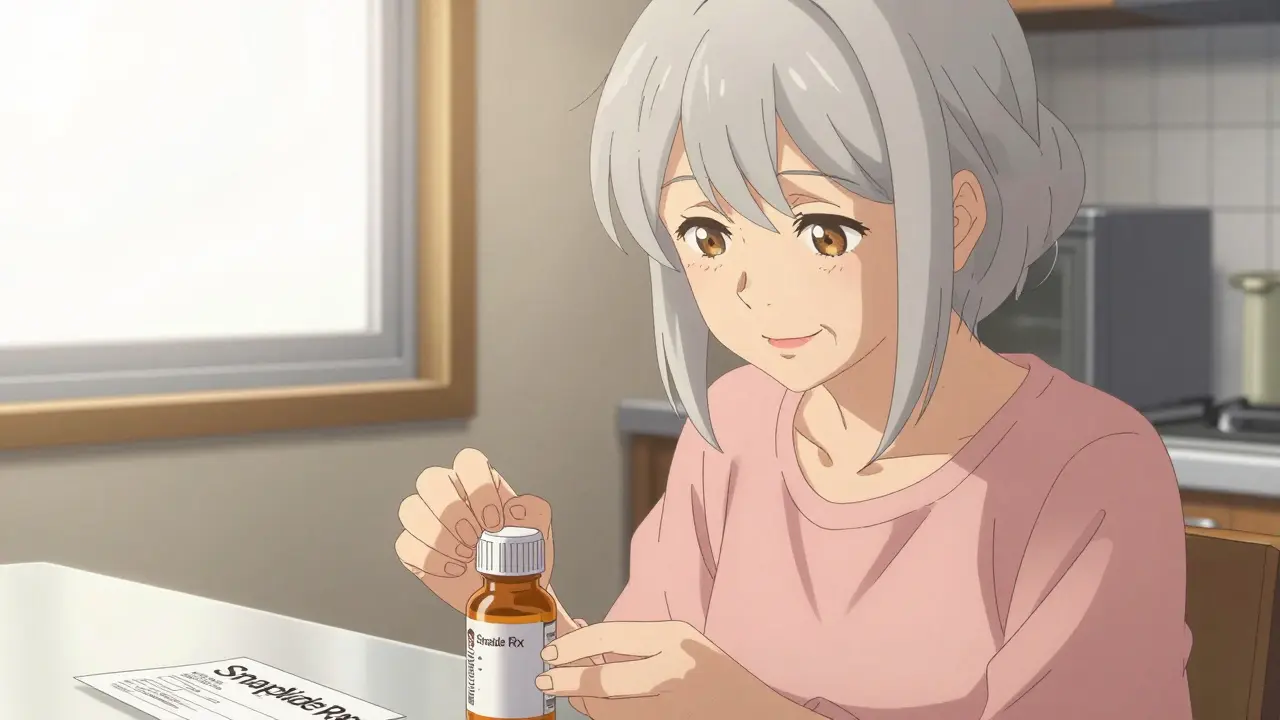
Every year, millions of older adults struggle to open their prescription bottles. It’s not just frustrating-it’s dangerous. Missed doses, skipped medications, and even accidental overdoses happen because the very thing meant to keep kids safe makes it nearly impossible for seniors to get their medicine out. You don’t have to accept this. You have the right to request easy-open caps and accessible labels-and pharmacies are legally required to provide them.
Why Standard Pill Bottles Are a Problem for Seniors
Child-resistant packaging was created in the 1970s to stop young children from accidentally swallowing pills. That’s important. But the design hasn’t kept up with the needs of an aging population. Today, nearly half of adults over 65 say they can’t open standard push-and-turn caps without help. That’s not a minor inconvenience. It’s a health risk.These caps require 4.5 to 8.5 pounds of downward pressure while twisting. For someone with arthritis, shaky hands, or weak grip strength, that’s like trying to open a locked door with a broken key. Studies show that 49% of seniors struggle with these caps. And when they can’t open them, they skip doses, cut pills in half, or stop taking their meds altogether.
Worse, many pharmacies assume you don’t need help unless you ask-and even then, they often say they don’t have the right bottles in stock. That’s not true. The law says they must provide accessible options upon request, no documentation needed.
What Counts as Accessible Packaging?
Not all easy-open caps are the same. Here’s what actually works:- SnapSlide Rx: A sliding mechanism that requires less than 2.5 pounds of force. No twisting. Just push and slide. It still blocks kids-94% pass child-resistance tests.
- Flip-top caps with large serrations: These have big ridges for better grip. They’re easier to twist and don’t need much pressure. Some still meet child-resistant standards.
- Cold-seal wallet packs: Used for pills like blood thinners or diabetes meds. Each dose is sealed in its own pouch. You tear it open with your fingers-no strength needed.
- Push-button caps: Press down and twist. Less force than traditional caps. Look for ones labeled “senior-friendly” or “easy-open.”
Avoid anything labeled “non-child-resistant.” That’s not the goal. You want safety for kids and access for you. The best solutions meet both.
What Makes a Label Accessible?
If you can’t read the label, you can’t take your medicine safely. Standard labels use tiny 10- to 12-point font. Accessible labels must be much larger:- Large print: Minimum 16-point font. Some pharmacies offer 18- or 20-point for better visibility.
- High-contrast colors: Black text on white or yellow background. Avoid green-on-red or light gray-on-white.
- Braille: Must follow Grade 2 Braille standards with 0.5mm dot height. Not all pharmacies offer this, but they’re required to if you ask.
- Audible labels: Some pharmacies provide QR codes or phone numbers you can call to hear your medication details spoken aloud. The audio must cover all info in under 90 seconds.
One patient in Wisconsin told her pharmacist she couldn’t read her blood pressure label. The next week, she got a bottle with 18-point font, a bold red “TAKEN” box she could check off, and a QR code that played a recording of her doctor’s instructions. She started taking her meds on time for the first time in years.
How to Request Accessible Packaging-Step by Step
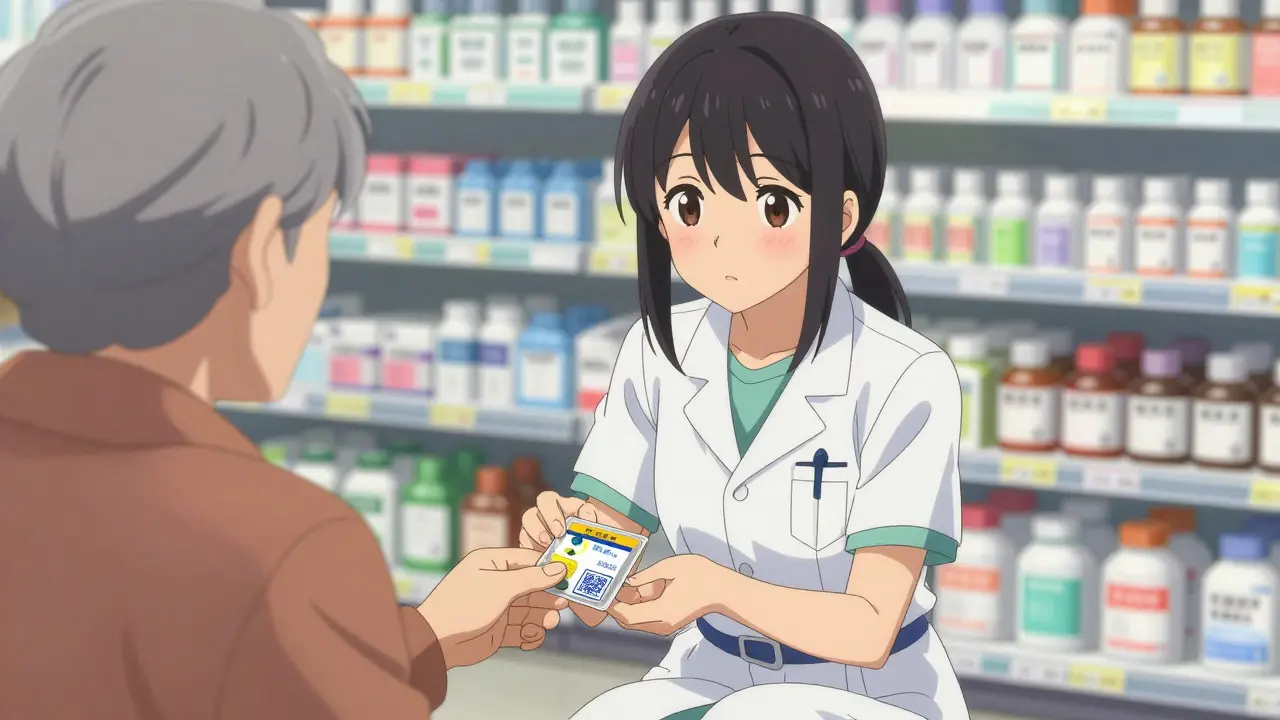
You don’t need a doctor’s note. You don’t need to prove you have arthritis or vision loss. The law says pharmacies must give you accessible packaging if you ask. Here’s how to do it right:- Ask at the time of prescription: Don’t wait until pickup. When your doctor writes the script, say, “Can you please send this to the pharmacy with easy-open caps and large-print labels?”
- Call the pharmacy ahead: Even if your doctor sends it electronically, call the pharmacy and say, “I need my prescription in senior-friendly packaging with large print labels. Can you confirm you can provide that?”
- Be specific: Don’t just say “easy-open.” Say: “I need SnapSlide caps or a flip-top with big ridges, and 16-point font or larger.” Name the type if you know it.
- Ask for a timeline: Pharmacies usually need 24 to 72 hours to get the right bottles. Plan ahead. If you’re picking up on Friday, ask on Monday.
- If they say no, push back: Say: “I’m requesting this under the Access Board’s 2019 guidelines. Pharmacies are required to provide accessible packaging upon request.”
CVS and Walgreens now offer these options nationwide, but independent pharmacies sometimes lag. If one location says no, try another. Or call their corporate customer service line. Most have a dedicated accessibility team.
What to Do If the Pharmacy Refuses
Some pharmacies still don’t know the rules. Or they say they don’t have inventory. That’s not an excuse. Here’s what to do:- Ask for the pharmacy manager. They’re more likely to know the policy.
- Call the National Council on Aging’s Medication Access Hotline at 1-800-555-0123. They’ve helped over 12,000 people in the first quarter of 2024 alone.
- File a complaint with your state’s Board of Pharmacy. Forty-two states now enforce the Access Board’s 2019 labeling rules.
- Use the American Foundation for the Blind’s online tool to find pharmacies near you that offer accessible packaging. It’s free and updated monthly.
One woman in Phoenix went to Walgreens three times asking for large-print labels for her mother’s heart medication. Each time, they said no. She finally cited HIPAA and the Access Board guidelines. The fourth time, they gave her the right label-and apologized. She posted about it on Yelp. The next week, the store started training staff on accessibility.
Cost and Insurance Coverage
Accessible packaging costs 15% to 20% more to make. That’s why some pharmacies hesitate. But here’s the good news: Medicare Part D now covers the cost difference for beneficiaries with documented dexterity or vision issues. If you’re on Medicare, ask your plan about coverage.Even if you’re not on Medicare, the cost is often absorbed by the pharmacy. You shouldn’t pay extra. If they try to charge you, say: “I’m requesting a legally required accommodation. There’s no additional fee.”
And the long-term savings? Huge. A Kaiser Permanente study found that seniors using easy-open packaging improved medication adherence by 32%. That means fewer ER visits, fewer hospitalizations, and better health outcomes.
What’s Changing in 2025 and Beyond
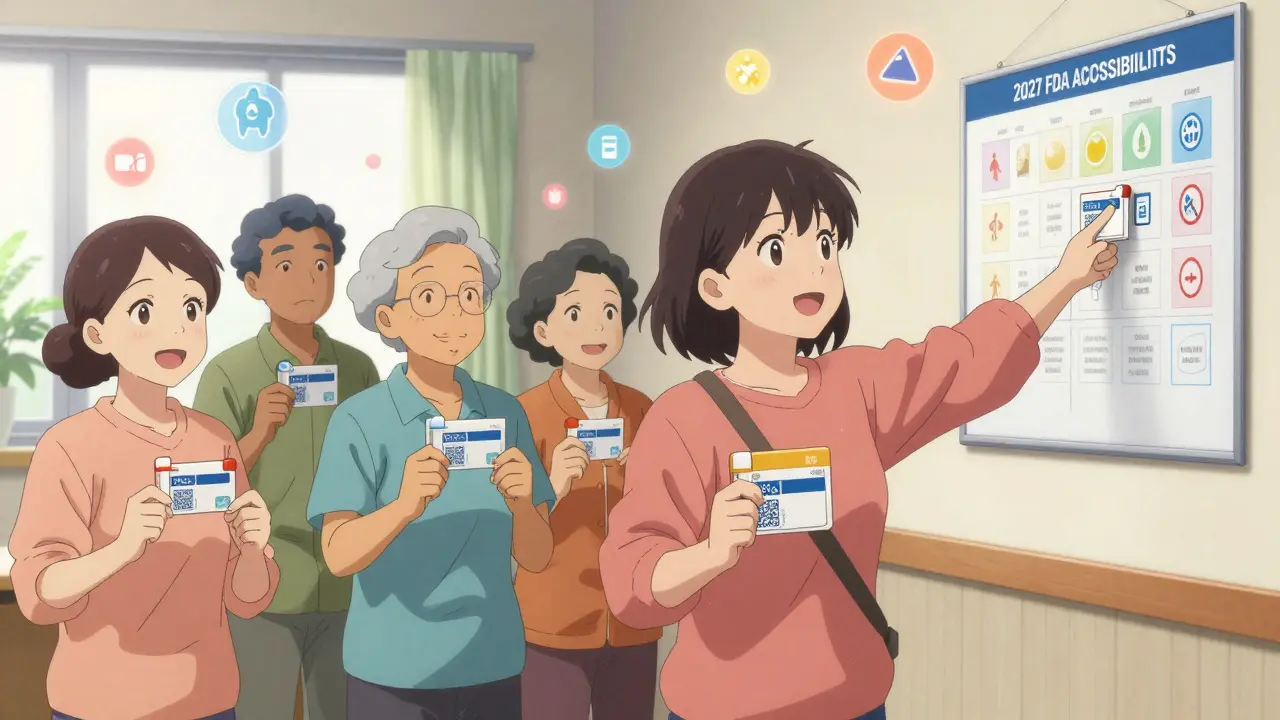
The rules are getting stronger. In January 2025, the European Union’s new Medical Device Regulation requires all prescription packaging to be tested for both child resistance and senior accessibility. The FDA is moving in the same direction. Their May 2024 draft guidance says all new prescriptions must include accessibility features by 2027.SnapSlide just released Version 2.0 with biometric authentication-so only the right person can open it. It’s still easy for seniors, but even harder for kids. That’s the future: safety that adapts to the user, not the other way around.
By 2027, 65% of all prescription medications in the U.S. will have accessible packaging built in. Right now, it’s only 28%. You’re part of the change. Every time you ask, you push the industry forward.
Real Stories, Real Results
A man in Ohio with Parkinson’s couldn’t open his insulin pen caps. He switched to SnapSlide vials. He started taking his insulin on time. His A1C dropped from 9.1 to 6.8 in six months. A woman in Florida with macular degeneration used to guess what her pills were by color and size. She got large-print labels with bold icons: a red heart for her blood pressure med, a green leaf for her vitamin D. She hasn’t had a mix-up since. These aren’t rare cases. They’re the norm. And they’re possible because someone asked.Do I need a doctor’s note to get easy-open caps?
No. You do not need a doctor’s note, proof of disability, or any documentation. Under the Access Board’s 2019 guidelines, pharmacies must provide accessible packaging upon request-no questions asked. If they say you need proof, they’re misinformed. Politely remind them that the law doesn’t require it.
Are easy-open caps less safe for children?
No. The best senior-friendly caps, like SnapSlide Rx and flip-top designs with large ridges, still meet child-resistance standards set by ISO 8317. Independent tests show they block 92% to 94% of children under five from opening them-just like standard caps. The goal isn’t to make packaging child-proof. It’s to make it child-resistant for kids and easy to open for adults with limited strength.
Can I get braille labels for my prescriptions?
Yes. Braille labels are required under the Access Board’s guidelines if you request them. Not every pharmacy keeps them in stock, but they must order them for you. Ask specifically for “Grade 2 Braille with 0.5mm dot height.” If they say no, call the American Foundation for the Blind’s helpline-they can help you escalate the request.
How long does it take to get accessible packaging?
Most pharmacies need 24 to 72 hours to prepare accessible packaging. Some can do it the same day if they have the bottles on hand. Always ask when you call in the prescription. Plan ahead-don’t wait until the day you need your meds. If you’re picking up on a weekend, request it at least three business days in advance.
Why don’t all pharmacies offer this?
The main reason is cost and inventory. Accessible packaging costs 15-20% more to produce, and many independent pharmacies don’t keep extra stock. Chain pharmacies like CVS and Walgreens have rolled it out nationwide. Smaller ones may need to order it. That doesn’t mean they can refuse. If they say they don’t have it, ask them to order it for you. They’re legally required to.
Is there a way to find pharmacies that already offer accessible packaging?
Yes. The American Foundation for the Blind has a free online tool that shows pharmacies within 10 miles that offer large print, braille, or SnapSlide caps. You can search by ZIP code and filter by the type of accessibility you need. It’s updated monthly and trusted by over 20,000 users.
Next Steps: What to Do Today
If you or someone you care about is struggling with pill bottles:- Check your next prescription. Ask for easy-open caps and large-print labels when it’s called in.
- If you already have a prescription, call your pharmacy and ask to switch. Say: “I need my meds in senior-friendly packaging.”
- If they say no, ask for the manager or call the National Council on Aging at 1-800-555-0123.
- Share this info with others. Many seniors don’t know they have this right.
Medication safety shouldn’t depend on how strong your hands are. It should depend on how well the system works for you. And it can-when you speak up.

Phoebe McKenzie
January 1, 2026 AT 03:03Let me get this straight - pharmacies are STILL making seniors struggle to open their meds like it’s 1985? This isn’t ‘inconvenient,’ it’s criminal negligence. I’ve seen my own grandmother break a nail trying to twist a bottle open while her blood pressure meds sat there mocking her. And now you’re telling me the law says they HAVE to help? Then why are they still acting like it’s a favor? Stop being polite. Demand it. File a complaint. Call the media. This isn’t ‘accessibility’ - it’s basic human dignity. And if your pharmacy says no, go to the next one and make them feel guilty. I’m not asking. I’m demanding change.
Stephen Gikuma
January 2, 2026 AT 18:38Who’s really behind this? The pharmaceutical lobby? The ADA? The UN? I’ve been watching - this ‘accessible packaging’ push is just the first step. Next thing you know, they’ll be forcing all meds to come with QR codes that play audio in 12 languages. Then they’ll track who opens what, when. They’re not helping seniors - they’re building a surveillance state under the guise of ‘safety.’ And don’t tell me it’s ‘no documentation needed.’ That’s the trap. They want you to ask so they can log you as ‘disabled.’ Next thing, your insurance hikes your premiums because you’re ‘high-risk.’ Wake up.
Bobby Collins
January 3, 2026 AT 02:20okay but like… did you know that some of these ‘easy open’ caps are actually made by a company that’s owned by a guy who used to work for Pfizer? and he’s like… super into crypto? and i swear i saw a tweet where he said ‘this is how we get everyone on the blockchain’?? idk man. i just don’t trust it. what if the braille labels have microchips? or the qr codes track your heartbeat? i’m not saying it’s true… but i’m also not saying it’s not. 🤔👁️
LIZETH DE PACHECO
January 3, 2026 AT 10:45This is exactly the kind of post that gives me hope. I work at a community center for seniors, and I’ve spent the last year helping people navigate this exact issue. One woman, 82, told me she hadn’t taken her heart med in 3 months because she couldn’t open the bottle - she was too ashamed to ask for help. We walked into her pharmacy together, she said ‘I need large print and SnapSlide,’ and they gave it to her on the spot. No drama. No paperwork. Just human kindness. You don’t need to yell. You don’t need to fight. Just ask. And if they hesitate? Say ‘I’m not asking for special treatment. I’m asking for the law to be followed.’ That’s all it takes. You’re not alone.
Lee M
January 5, 2026 AT 03:19Every time society tries to ‘solve’ a problem by changing the object instead of the person, we lose a piece of our resilience. Why should the entire pharmaceutical industry redesign its packaging because some people’s hands are weak? Why not teach strength training? Why not encourage physical therapy? The real issue isn’t the bottle - it’s the decline of bodily autonomy in old age. We’ve turned aging into a disability to be managed, not a natural phase to be embraced. The easy-open cap is a symptom of a culture that refuses to let people suffer - even when suffering builds character.
Matthew Hekmatniaz
January 5, 2026 AT 07:55I’ve lived in four countries and seen how different cultures handle this. In Japan, pharmacists personally hand out meds with labels written in calligraphy so the elderly can read them. In Sweden, they send out mobile pharmacy units with staff who help open bottles. Here? We expect people to fight bureaucracy just to get their heart meds. This isn’t about ‘convenience’ - it’s about dignity. And the fact that we’re even having this conversation means we’ve already failed. But change is possible. I’ve seen it. Ask. Persist. Share. One person asking changes the system. Not because they’re loud - because they’re consistent.
Dusty Weeks
January 6, 2026 AT 06:13bro i just asked for large print and they gave me a bottle with like 24pt font and a QR code that plays a recording of my dr saying ‘take 1 pill at 8am’… i cried. like actually cried. i’ve been taking my bp med wrong for 2 years bc i thought the red one was the good one. now i know. thanks for this post. 🥹❤️
Bill Medley
January 7, 2026 AT 09:41Pharmacies are legally obligated under the Americans with Disabilities Act and Access Board guidelines to provide accessible packaging upon request. No documentation required. This is not a privilege. It is a right. If denied, escalate to the state board of pharmacy. Documentation of refusal is advised. Compliance is non-negotiable.
gerard najera
January 8, 2026 AT 14:35There’s a deeper truth here: we design systems for the average, then punish those who fall outside. The pill bottle was never meant for the elderly - it was designed for the young, the strong, the able. And we call it ‘safety’ because it protects children. But safety isn’t just about keeping things out. It’s also about letting people in. To demand accessibility isn’t to ask for special treatment. It’s to ask for inclusion. And inclusion isn’t charity. It’s justice.