How to Coordinate Medication Plans after Hospital Discharge: A Complete Guide
 Jul, 4 2026
Leaving the hospital is a relief, but for many patients, the real danger begins once they walk through those automatic doors. You might feel better than you did when you arrived, but your body is still recovering, and your medication list has likely changed. Maybe a new antibiotic was added. Perhaps your blood pressure pill was paused because your readings were low in the clinic. If these changes aren’t communicated clearly to your primary care doctor or pharmacist, you could end up taking the wrong dose, missing a critical drug, or doubling up on something that causes harm.
This gap in communication is called medication reconciliation, defined as the process of creating the most accurate list possible of all medications a patient is using-including name, dose, frequency, and route-and comparing it against the admission, transfer, or discharge orders to identify any discrepancies. It is not just paperwork; it is a vital safety net. According to data from the Agency for Healthcare Research and Quality (AHRQ), medication errors during transitions of care account for 18% to 50% of all adverse drug events. In simpler terms, nearly half of the serious mistakes made with drugs happen right at this handoff point. Coordinating your plan effectively can prevent hospital readmissions, which cost the healthcare system billions annually and put your health at risk.
Understanding the 30-Day Window
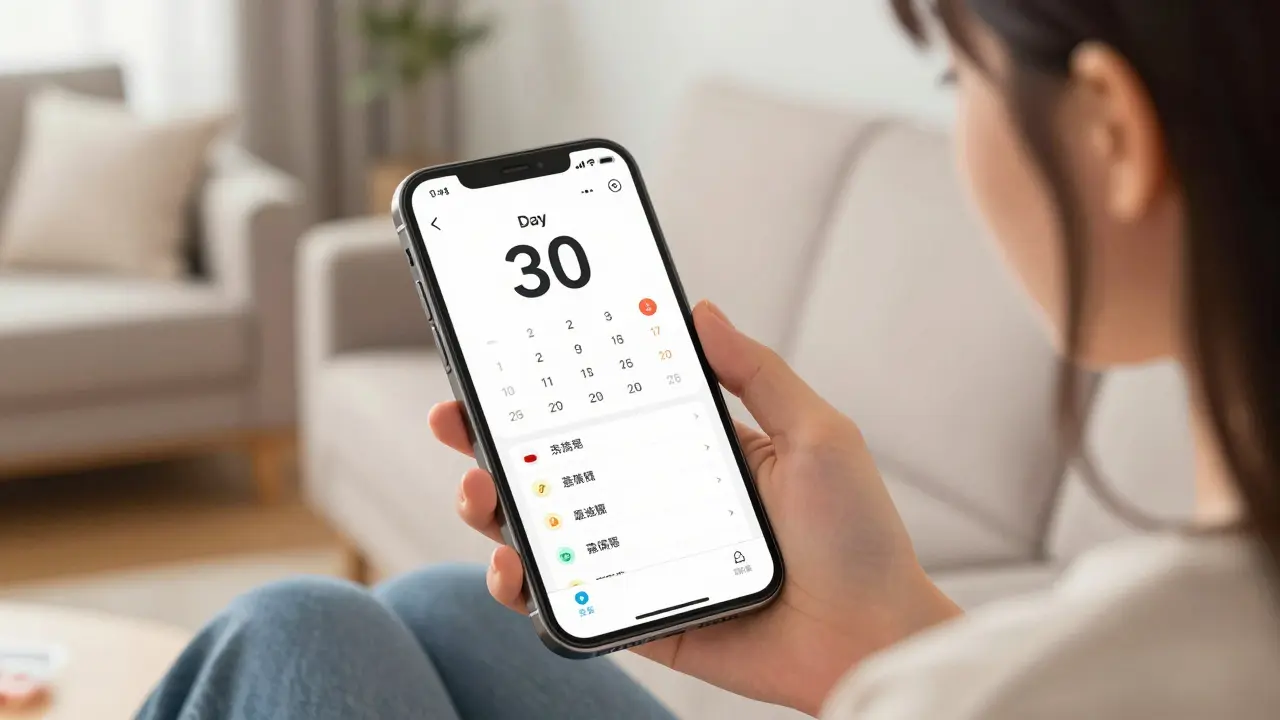
The most critical period for coordinating your medications is the first 30 days after you leave the hospital. This timeframe is not arbitrary. It is built into national quality standards, specifically the NQF 0097 measure adopted by the Centers for Medicare & Medicaid Services (CMS). This standard requires that a healthcare provider reviews your current outpatient medication list against your hospital discharge list within 30 days. Why 30 days? Because this is when patients are most vulnerable. Your body is adjusting to new routines, new pills, and old habits. It is also when confusion peaks. You might forget why a pill was stopped, or you might assume a daily vitamin is still necessary when it interacts with a new heart medication.
To meet this standard, providers must document specific actions. They need to show that they compared the two lists and resolved any differences. For you, the patient, this means you should expect contact from your care team during this window. If you do not hear from them by day seven or ten, it is time to call. Do not wait until day 29. The goal is to catch errors before they cause harm, such as restarting an anticoagulant that was temporarily stopped during surgery but forgotten upon discharge.
Who Should Lead the Conversation?
You might wonder who is responsible for fixing these mismatches. Is it your primary care physician (PCP)? Your specialist? The hospital pharmacy? The answer is often all of them, but coordination fails when everyone assumes someone else is handling it. Research published in the Journal of the American College of Clinical Pharmacy in 2023 highlights a crucial finding: pharmacist-led reconciliation yields significantly better outcomes. In a multicenter study, involving pharmacists reduced medication discrepancies by 32.7% and cut 30-day readmissions by 28.3%. Pharmacists are trained to spot interactions and dosing errors that doctors might miss in a busy clinic visit.
However, billing rules complicate this ideal scenario. Under current CMS guidelines, only one "Transitions of Care" (TRC) visit can be billed per discharge episode. This creates a tug-of-war between PCPs and specialists. If your cardiologist bills for the follow-up, your general practitioner cannot bill for another TRC visit for the same event. This financial restriction can lead to fragmented care where neither provider feels fully responsible for the full medication list. As a patient, you need to bridge this gap. Ask explicitly: "Who is reviewing my entire list, including the supplements and over-the-counter drugs I take?" Make sure that person talks to the other providers involved.
Building Your Own Master List
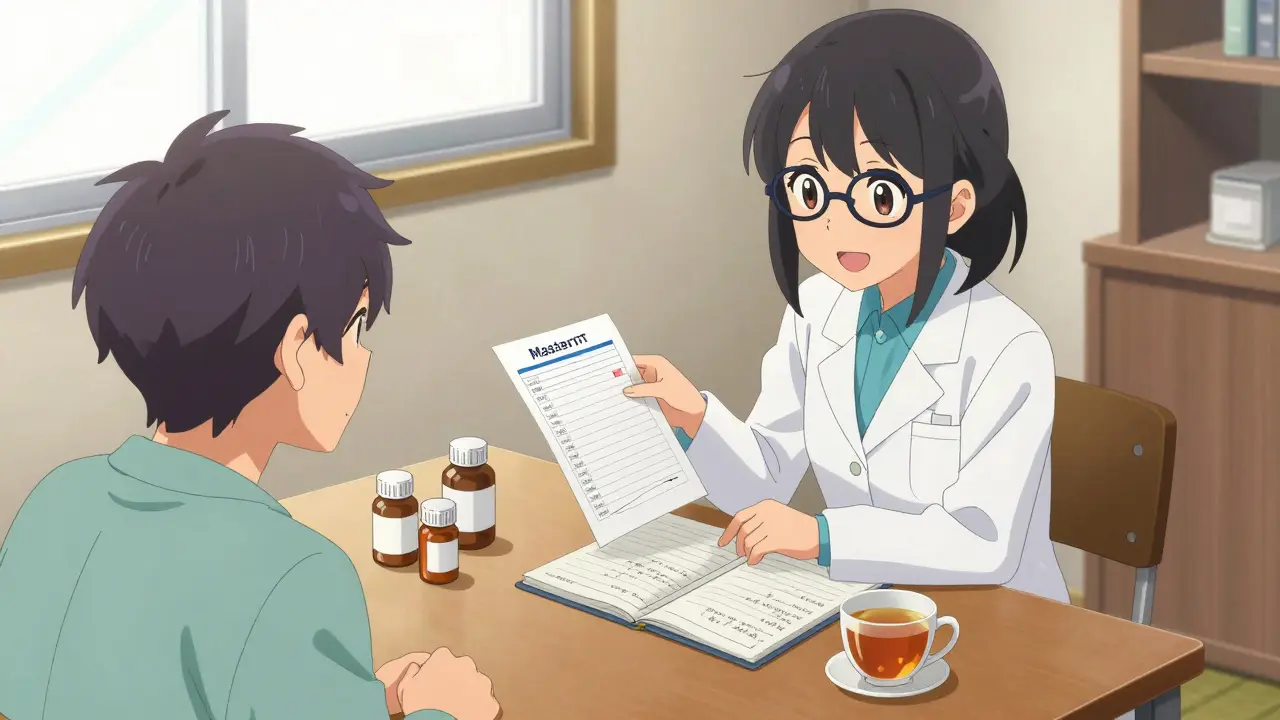
While professionals play a huge role, you are the constant in your own care. Hospitals rely on what you tell them, and you rely on what they write down. Errors creep in at both ends. To protect yourself, create a personal master medication list. This should include every substance you ingest: prescription pills, over-the-counter pain relievers, eye drops, creams, vitamins, herbal supplements, and even frequent antacids. Many people forget that ibuprofen or St. John’s Wort can interact dangerously with prescribed drugs.
Bring this physical or digital list to every appointment. When you are discharged, ask the nurse or pharmacist to update this list right there with you. Highlight any changes in red. Did they stop your statin? Did they change your insulin timing? Write it down. Studies show that patients who actively participate in verifying their discharge instructions have higher adherence rates and fewer errors. Do not just pocket the discharge summary and hope for the best. Read it. Compare it to your master list. If something looks off, ask immediately. "Wait, I usually take this in the morning, but the note says evening. Which is correct?" These small clarifications save lives.
Bridging the Technology Gap
You might think that electronic health records (EHRs) would solve this problem automatically. After all, shouldn't the hospital's computer talk to your doctor's computer? Unfortunately, interoperability remains a major hurdle. A 2022 AHRQ survey found that 68% of hospitals reported issues with fragmented EHRs between settings. Your hospital might use Epic, while your local clinic uses Cerner, and they don't always share data seamlessly. Even when they do, alerts can get buried in endless notifications.
Newer technologies are helping to close this gap. AI-assisted tools are now being tested to flag potential discrepancies in EHR data with up to 87% accuracy, according to a 2022 study in JAMIA. Some top-performing hospitals are using mobile apps that allow patients to update their medication lists in real-time, ensuring their providers see the latest info. However, you cannot rely solely on technology. Human verification is still essential. Automated systems can miss context, like whether you actually filled the prescription or if you are allergic to a generic alternative. Always verify the tech with a human conversation.
| Approach | Key Benefit | Potential Drawback | Best For |
|---|---|---|---|
| Pharmacist-Led Review | Highest accuracy; reduces discrepancies by ~33% | d>May require extra scheduling or fees if not coveredPatients with complex regimens or multiple chronic conditions | |
| Primary Care Follow-Up | Convenient; integrates with overall health check | Time-constrained visits may lead to rushed reviews | Stable patients with minor medication changes |
| Telehealth/Virtual Check-In | Flexible; no travel needed within 30-day window | Lacks physical inspection of pill bottles | Patient mobility issues or remote locations |
| Specialist-Only Review | Deep expertise in specific condition | Risk of overlooking non-specialty meds (e.g., cholesterol) | Post-surgical recovery focused on one organ system |
Common Pitfalls to Avoid
Even with good intentions, mistakes happen. One common error is assuming that "no changes" means everything stays the same. Sometimes, a hospital stops a medication due to a temporary issue, like kidney stress, but fails to restart it later. Another pitfall is duplicate therapy. You might continue taking your home blood pressure med while the hospital adds a similar IV drug, leading to dangerous lows once you go home. Watch out for these red flags:
- Missing restart dates: If a med was held, when exactly does it start again?
- Dose confusion: Was the dose increased for acute treatment, or should it return to baseline?
- Over-the-counter overlaps: Are you taking acetaminophen in a cold medicine AND as a separate painkiller?
- Supply gaps: Do you have enough pills to last until your next refill appointment?
If you notice any of these, do not guess. Call the number on your discharge paper. Most hospitals have a discharge coordinator or a nurse line specifically for these questions. Use it.
When to Seek Immediate Help
Not all medication issues are subtle. Some require urgent attention. If you experience sudden dizziness, severe nausea, rash, difficulty breathing, or extreme fatigue after starting a new regimen, seek medical help immediately. These could be signs of a severe adverse drug reaction. Keep your updated medication list handy when you go to the ER or urgent care. This allows the new providers to quickly understand what you are taking and avoid further complications.
Coordinating your medication plan is an active process, not a passive one. By understanding the 30-day window, knowing who is responsible, maintaining your own records, and asking tough questions, you take control of your safety. The system is designed to help you, but it needs your voice to work correctly. Stay engaged, stay curious, and never hesitate to double-check.
What is the purpose of medication reconciliation after discharge?
The purpose is to ensure continuity of care by comparing the medications you were taking before hospitalization with those prescribed at discharge. This process identifies and resolves discrepancies, such as omitted drugs, incorrect doses, or harmful interactions, thereby preventing adverse drug events and hospital readmissions.
How long do I have to get my medications reconciled?
According to national quality standards (NQF 0097), medication reconciliation should occur within 30 days of hospital discharge. This window allows providers to review your transition from inpatient to outpatient care and adjust your regimen as needed.
Who is responsible for reconciling my medications?
Responsibility typically falls on your primary care provider, specialists, or pharmacists. Research shows that pharmacist-led reconciliation is particularly effective. However, billing restrictions mean only one provider can bill for a formal Transitions of Care visit, so clear communication between all your doctors is essential.
Should I include over-the-counter drugs and supplements in my list?
Yes, absolutely. Over-the-counter medications, vitamins, herbal supplements, and topical creams can interact with prescription drugs. Including them ensures your provider has a complete picture of what is in your system, preventing potentially dangerous interactions.
What should I do if I suspect a medication error after discharge?
Contact your healthcare provider immediately. If you experience severe symptoms like difficulty breathing, rash, or extreme dizziness, seek emergency medical attention. Have your discharge summary and current medication list ready to share with the medical team.
Can telehealth be used for medication reconciliation?
Yes, telehealth is an accepted method for medication reconciliation within the 30-day window. It offers flexibility and avoids the need for an office visit, though it lacks the ability for providers to physically inspect your pill bottles for verification.
Why do medication errors happen so often after hospital stays?
Errors often stem from poor communication between hospital and outpatient providers, fragmented electronic health records, and assumptions that "no changes" means everything is unchanged. Additionally, patients may misunderstand instructions or fail to report all substances they are taking.
