How to Confirm Pharmacist Notes and Counseling Points after Pickup
 Mar, 29 2026
Did you know that half of all medication errors happen right when you take your first dose? That is the reality according to recent safety data. You might think the risk ends once you walk out of the pharmacy, but the real danger starts when you get home. Understanding how to confirm pharmacist notes and counseling points after you pick up your prescription is not just a checklist item; it is a critical safety habit. Many patients assume the conversation at the counter is enough, but memories fade quickly. Without written confirmation, you might miss vital details about timing, side effects, or interactions.
The Gap Between Pickup and Understanding
When you collect a new script, there is often a disconnect between what the pharmacist tells you verbally and what you retain later. Studies from safety organizations show a significant drop-off in recall within 24 hours of leaving the pharmacy. This is why relying on memory alone is risky. You need a physical or digital record to refer back to before you open that bottle. This record is often called counseling documentation or pharmacist notes.
Pharmacist counseling documentation serves as a formal record of instructions given by a healthcare professional regarding proper medication use. Counseling Documentation is essential because it bridges the gap between the clinical decision and your actual usage at home.In many healthcare systems, there are laws requiring pharmacists to offer this help. For example, regulations in various jurisdictions mandate that patients receive counseling on new prescriptions. However, the law often stops short of guaranteeing you get a written copy immediately. This creates a situation where you have to take active steps to secure these records for yourself.
Digital Access Through Pharmacy Apps
One of the easiest ways to find your notes nowadays is through the pharmacy’s own technology. Major chains have moved much of their record-keeping online. If you use a mobile app, you might be able to see exactly what was discussed during your pickup. However, these systems vary wildly in how fast and how much information they share.
For instance, some large networks require you to log in and pass biometric checks before showing sensitive health data. Even then, there is often a lag time. You might walk out the door with your medicine, only to find the notes aren't uploaded yet. Some providers have a 48-hour window before the data becomes visible in the portal. Others upload them sooner, sometimes within four hours if you complete identity verification right at the counter.
| Feature | Mobile App Portals | Email Summaries | Physical Copy |
|---|---|---|---|
| Availability Speed | Often 24-72 hours delay | Immediate at request | Immediate at pickup |
| Data Completeness | Varies by system | Detailed summaries | Depends on staff time |
| Success Rate | 62% to 87% consistency | 89% reliability | Requires manual request |
If you rely on apps, check your account settings immediately after pickup. Some systems automatically send notifications when notes are ready. Others, like certain national chains, require you to manually select a verification option inside the app menu. It is worth checking even if you don’t see a notification, as some platforms bury these documents under tabs labeled 'Prescription History' or 'Medical Records.' Remember that for controlled substances, the rules change slightly due to stricter privacy and security laws, which can hide specific dosage details from digital views.
Requesting Physical or Email Proof at the Counter
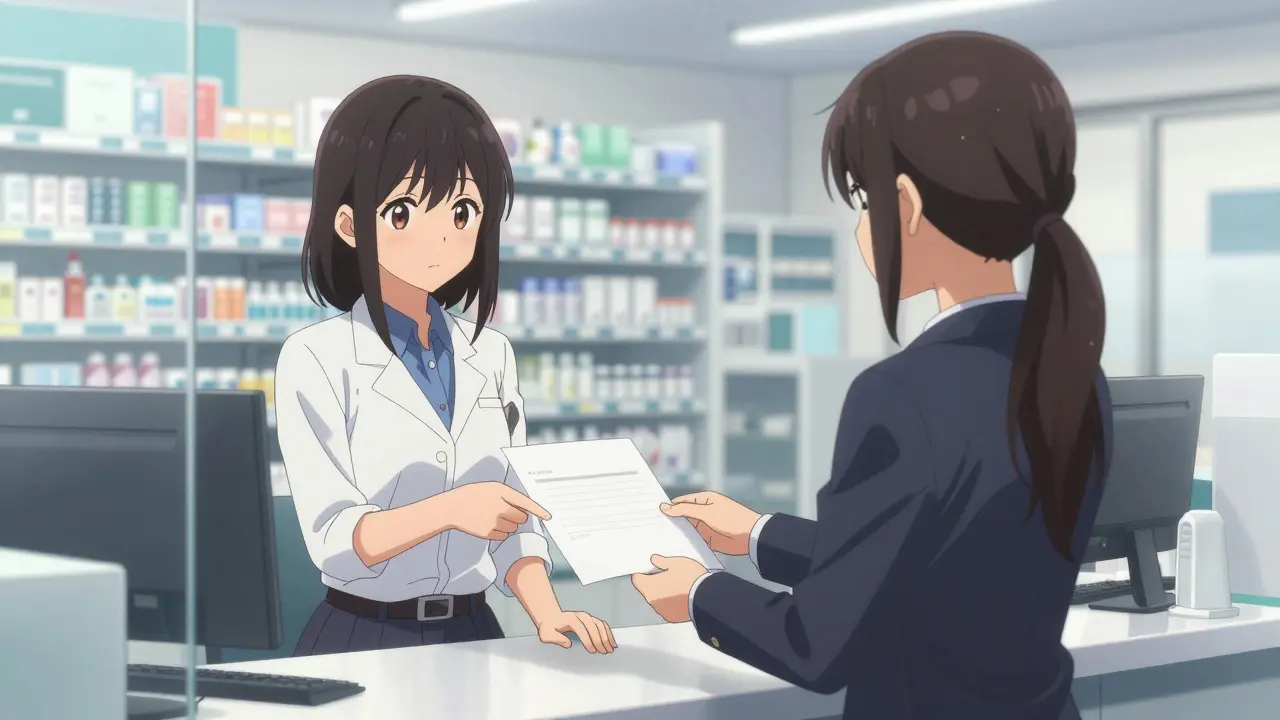
If digital tools seem too slow or complicated, you have another option. You can ask for a printed slip or an email summary right when you pay. This is often more reliable than waiting for the system to sync up later. Research suggests that requesting a written handout at the moment of pickup has a very high success rate. Pharmacists are trained to provide this upon request.
What should you specifically ask for? Do not just ask if there are "notes." Instead, ask for a medication facts sheet or a counseling summary. Be precise. Tell the pharmacist, "Can I please have a written list of the side effects and instructions we just discussed so I don’t forget them?" This puts the responsibility clearly on getting a tangible record. Even better, ask for it to be emailed directly to you from their terminal. There is documented evidence that patients who request an email summary receive one far more often than those who wait for the app to update.
This approach works especially well with independent pharmacies. While smaller shops may not have the fancy cloud portals of big corporations, they often pride themselves on personalized service. They might write a quick handwritten note on the bottle label or a dedicated card. Don’t overlook this; sometimes a scribbled reminder from a local specialist is more useful than a generic automated printout from a corporate system.
Understanding Timing and Delays
You need to manage your expectations regarding when these notes appear. The industry standard for digital uploads is often slower than you might hope. Many systems suffer from a backlog, meaning the note might sit unpublished for a day or two. This delay is problematic because the first dose is usually taken within hours of pickup. This is the critical window where errors happen.
Recent quality metrics suggest that systems are improving, with targets moving toward 4-hour availability windows. However, until that becomes the norm everywhere, you cannot assume the app is up to date. If you are starting a new medication today, waiting three days for the digital notes to show up leaves you vulnerable in the meantime. Always treat the verbal instructions as temporary and the written confirmation as the final authority. If the app shows nothing after 24 hours, call the pharmacy. Do not guess the instructions based on a generic label.
Furthermore, privacy regulations play a huge role here. Security concerns prevent many systems from instantly publishing sensitive medical data online. This is why some apps hide specific counseling details behind extra login screens or fail to show certain controlled substance notes at all. If you encounter this barrier, a direct phone call to the pharmacist can bypass the software restrictions safely.
Troubleshooting Missing Documentation
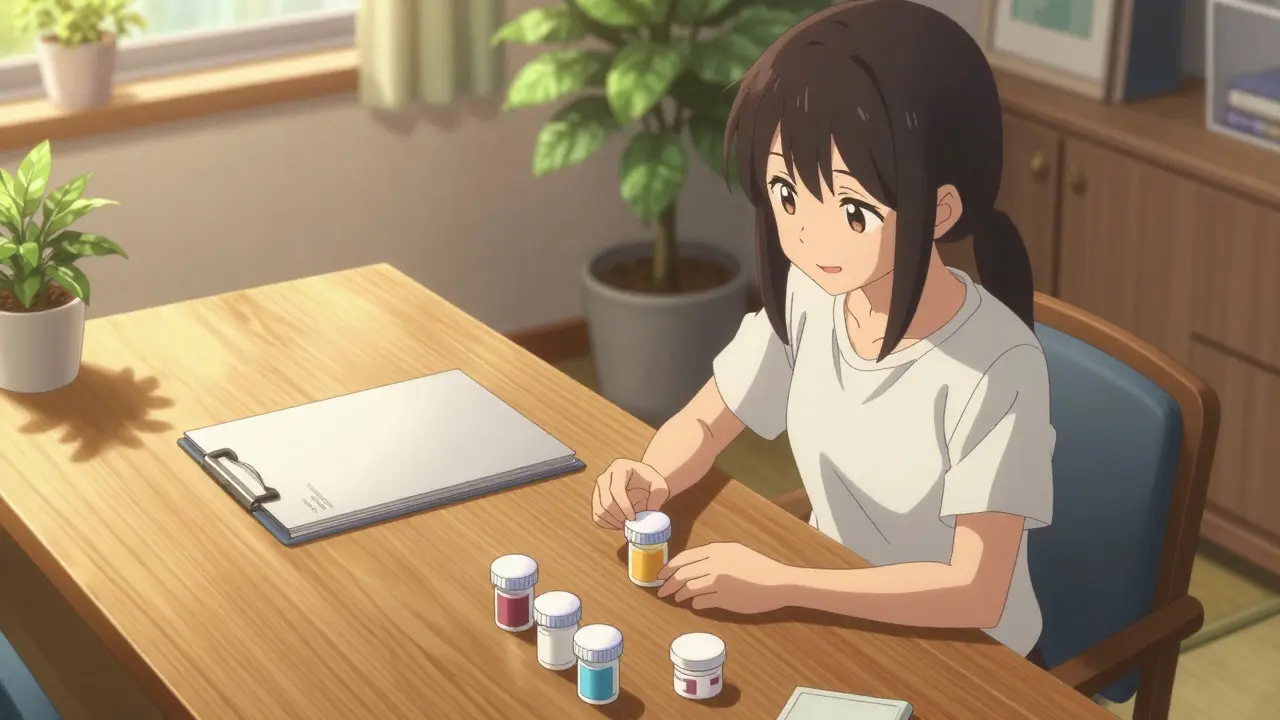
Sometimes, despite your best efforts, the notes simply do not appear. Maybe the app crashes, or the printer was empty at the counter. What do you do next? First, verify your identity. Sometimes accounts get locked if the phone number on file doesn’t match your mobile device. Second, check the portal manually. Automatic notifications fail sometimes.
If the documentation is still missing after 48 hours, contact the pharmacy directly. Ask the manager if the counseling session was actually recorded in their system. If it wasn’t, this is a safety risk. You have the right to have this information documented. If the pharmacy refuses to provide proof of what was counseled, you can escalate the issue to state pharmacy boards or consumer protection agencies. They track these compliance issues, especially regarding patient safety documentation.
Another troubleshooting tip involves switching locations. Some franchise locations within the same chain have outdated terminals compared to newer ones. If your usual corner store consistently fails to provide records, try a nearby branch with newer technology. Consistency matters less than accuracy. Your safety depends on having that data point confirmed somewhere.
Long-Term Safety Habits
Making this a routine prevents accidents later on. Keep a master list of your current medications and their specific counseling points. Update this list every time you pick up a refill or a new drug. This private log acts as your backup to whatever the pharmacy provides. It ensures that if the digital system fails, you still have a reference.
Also, review these notes regularly. Do not just read them once and toss them. Before your next appointment with your doctor, bring your notes. If anything looks different or confusing, clarify it then. This creates a loop of safety where you, the pharmacist, and your prescriber are all aligned. Safety isn't a one-time event; it is a continuous process involving constant verification.
Do I have a legal right to written counseling notes?
In many regions, legislation like the Omnibus Budget Reconciliation Act requires pharmacists to offer counseling, but written documentation is often dependent on individual pharmacy policy or specific patient request.
How long does it take for notes to appear in the app?
Most digital portals experience a delay ranging from 24 to 72 hours after pickup, though some integrated systems offer immediate access upon identity verification.
Can I get counseling notes via email?
Yes, requesting an email summary at the counter is often faster and more reliable than waiting for digital portals, with high success rates reported by patient groups.
What should I do if notes are missing?
Contact the pharmacy directly to verify if the session was recorded. If unresolved, you may file a complaint with state regulatory boards regarding patient safety documentation protocols.
Are controlled substance notes available online?
Access varies significantly due to stricter regulations, often limiting detailed digital notes for these medications compared to standard prescriptions.

Carolyn Kask
March 31, 2026 AT 10:08We already have enough safety protocols in place without people panicking over paperwork.
The system works if you actually listen during the process.
Most errors come from people who refuse to read the basic label on the bottle.
I have seen countless cases where patients blame the pharmacy for their own negligence.
You cannot rely on memory because your memory is flawed by design.
This nation has the highest standards of care available globally.
If you do not understand the instructions, you need to go back to school.
Stop expecting special treatment when the basics are right there on the screen.
Katie Riston
April 1, 2026 AT 06:11It is fascinating how we trust institutions blindly in the face of biological limitations.
We walk into these sterile white rooms feeling like gods walking among mortals.
Yet we forget exactly what they told us by the time dinner rolls around.
This gap represents a fundamental flaw in human cognition regarding health data.
We believe knowledge transfers automatically upon utterance alone without verification.
That belief is a dangerous illusion perpetuated by inefficient healthcare systems worldwide.
The brain prioritizes immediate survival signals over future dosage schedules for obvious reasons.
So the warning about potential side effects gets filed away as background noise.
Noise that eventually becomes toxic reality when taken internally by the body.
We desperately need external anchors to pull us back from pure instinct.
A piece of paper acts as that necessary anchor in the storm of modern medicine.
Without it, we drift into self-medication without any guardrails whatsoever.
Technology promises to solve this issue but consistently lags behind our biology.
Waiting for an app update is equivalent to waiting for salvation in a sinking boat.
Therefore you must secure the written proof before leaving the counter completely.
Brian Yap
April 1, 2026 AT 15:29Fair points on the technology lag.
Down under we still get a lot of handwritten slips at the local shop.
It feels more personal than staring at a screen.
Sometimes the old ways work just fine for basic stuff :)
Ruth Wambui
April 2, 2026 AT 13:01Big Pharma wants you confused so you keep coming back for refills.
They gatekeep the information intentionally to sell more consultations later.
Trust me on this because the data is buried deep online.
Those digital portals track your consumption patterns for profit motives.
Do not let them tell you what to do with your own body.
Keep your own records offline where they cannot see the history.
Michael Kinkoph
April 2, 2026 AT 22:51Your conjecture is entirely unfounded regarding corporate intent!!!
The regulations are there to protect patient safety!!!
Why would anyone hide life-saving information deliberately?
Such assertions undermine the integrity of licensed professionals!!!
We must adhere to documented facts rather than speculation!!!
Please refrain from spreading such unverified theories further.
Jonathan Sanders
April 4, 2026 AT 21:12You really don't get the emotional weight of being scared sick.
It isn't about corporate greed, it is about living in fear constantly.
My anxiety spikes every time I pick up a script.
The whole experience leaves me feeling drained and empty inside.
You sound like you have never felt that kind of pain personally.
I wish you could understand the struggle instead of preaching logic.
emma ruth rodriguez
April 5, 2026 AT 23:58As a clinical specialist, I recommend verifying all documentation formally.
Patient autonomy requires understanding the mechanism of action clearly.
Written confirmation ensures adherence to the prescribed therapeutic regimen.
Pharmacy policy varies but the obligation remains constant across regions.
Requesting a printout secures the chain of custody for health records.
This practice aligns with best practices in medication management today.
Consultation logs provide evidence of informed consent during counseling.
Rick Jackson
April 7, 2026 AT 06:45Just follow the rules and ask for the paper copy.
Beccy Smart
April 8, 2026 AT 04:51Lol why complicate it so much 🙄
Just take the pill and hope for the best 🤷♀️
Half of people ignore the leaflet anyway 😴
Too much stress thinking about every single tiny detail 🛌
sanatan kaushik
April 10, 2026 AT 04:32In my village we trust the doctor words more.
Paper sometimes gets lost or burned by rain.
But here the law needs papers for everything.
Respect the system but stay safe too my friend.
Debbie Fradin
April 10, 2026 AT 05:42They say the app updates fast but my last login failed twice.
Maybe the real trick is asking nicely at the counter instead.
I bet the staff likes being helpful when you smile politely.
Optimism helps but backup plans save lives honestly speaking.