How to Childproof Your Home for Medication Safety: A Complete Guide
 Aug, 5 2026
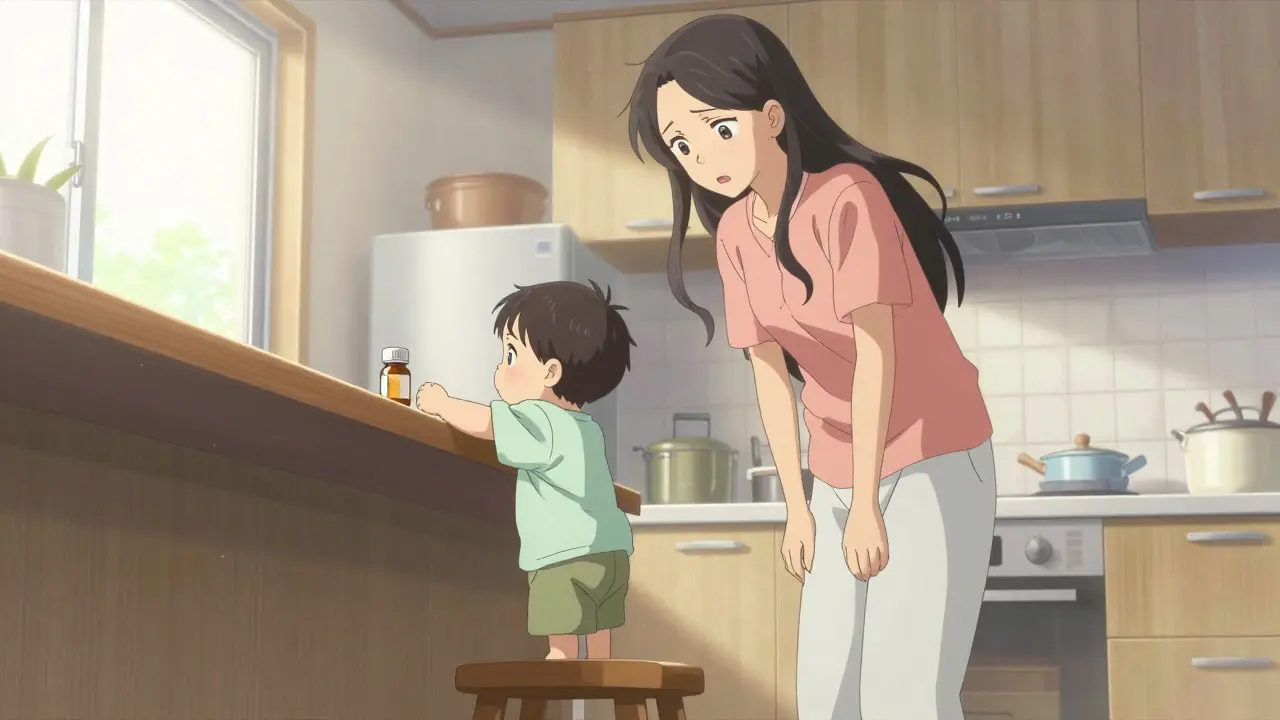
Imagine this: you’re rushing to get your toddler dressed for school. You pop an ibuprofen for a headache, set the bottle on the counter, and turn away for just ten seconds. In that brief window, your curious two-year-old has already climbed onto the stool and swallowed three pills. This isn’t a nightmare scenario; it’s one of the most common ways children end up in the emergency room.
According to the Centers for Disease Control and Prevention (CDC), medicines are the leading cause of child poisoning in the United States. Every year, roughly 60,000 children under five visit the ER because they got their hands on unsupervised medication. The scary part? Most of these accidents happen at home, with adult medications, and often within arm’s reach of the child.
You don’t need to be paranoid to keep your family safe. You just need a plan. By understanding where kids look, how they access things, and what behavioral habits put them at risk, you can create a home environment where medicine stays out of sight-and out of harm’s way. Here is exactly how to do it.
The "Up, Away, and Out of Sight" Rule
The CDC promotes a simple mantra called "Up and Away and Out of Sight". It sounds basic, but sticking to it consistently has been shown to reduce childhood medication poisoning incidents by 29%. The rule breaks down into three physical requirements for every pill, liquid, or supplement in your house.
Up: Store everything above counter height. Specifically, aim for at least 48 inches from the floor. Children can climb, stand on furniture, and pull themselves up using drawers. If it’s on the kitchen counter, it’s not safe. If it’s on a nightstand, it’s definitely not safe. In fact, data shows that 78% of medication access incidents involve nightstands and dressers.
Away: Move medicine away from high-traffic areas like the kitchen sink or bathroom vanity where you might leave it temporarily while washing dishes or brushing teeth. These "temporary" spots become permanent hazards when distractions hit. Instead, designate a single, secure location for all household medications.
Out of Sight: If a child can see it, they want it. Clear plastic containers on open shelves invite curiosity. Use opaque cabinets, locked boxes, or high linen closet shelves. Studies show that keeping purses and diaper bags in coat closets rather than entryway hooks reduces access risks by 63%.
| Unsafe Location | Risk Factor | Safe Alternative |
|---|---|---|
| Nightstand / Dresser | 78% of incidents occur here; easy to climb to | High cabinet with lock |
| Kitchen Counter | 12% of incidents; left during food prep | Upper pantry shelf (locked) |
| Purse / Diaper Bag | 15% of incidents; portable and accessible | Coat closet or high drawer |
| Floor / Under Bed | Dropped pills during administration | Immediate cleanup routine |
Beyond Child-Resistant Caps
You’ve probably noticed those weird, hard-to-open caps on prescription bottles. They’re called child-resistant caps. While helpful, they aren’t foolproof. A study published in the JAMA Network found that while these caps reduce a child’s ability to access medication by 50% compared to standard screw-top lids, they still fail frequently enough to be dangerous on their own.
The American Academy of Pediatrics reminds us that "child-resistant does not mean childproof." Toddlers are surprisingly strong and persistent. Once they figure out the push-and-turn mechanism, they’ll use it again. That’s why physical barriers like locks are superior.
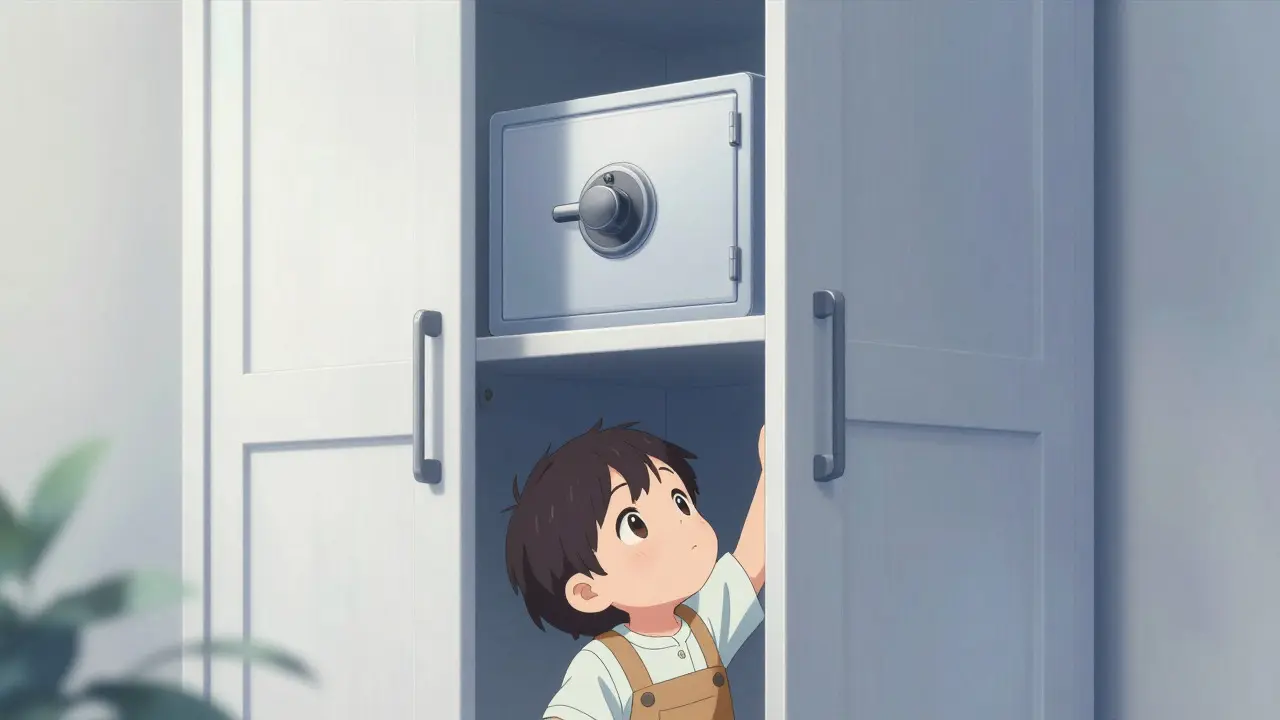
Safety latches alone only reduce access by about 35%. However, combining latches with locked storage increases effectiveness to 89%. Consider installing magnetic locks inside upper cabinets or using a dedicated medication safe. Sales of these safes have grown by 32% year-over-year, reflecting a shift toward more robust security measures. Even a small lockbox kept in a high linen closet works wonders.
The Hidden Dangers: Guests and Temporary Spots
We often think we’re safe because our own medicine is locked away. But what about Grandma’s blood pressure pills? Or the guest who brings over a bag of vitamins? Data from Child Care Aware reveals that 28% of medication access incidents involve guests’ belongings.
When visitors come over, make it a habit to ask if they carry any medications in their purses, coats, or bags. Offer to store those items in a secure location immediately. Don’t assume a visitor will remember to hide their pills after taking one. Be proactive. Say something like, "Let me put your bag in the closet so the kids don’t get into anything." It’s polite, it’s practical, and it saves lives.
Also, watch out for "temporary" placement. Did you drop a pill on the floor while giving your child medicine? Pick it up immediately. Seven percent of incidents happen because a pill was dropped and left there. Did you leave a cough syrup bottle on the bathroom sink while washing your hands? Put it back. Sixty-eight percent of incidents occur during brief periods when medicine is left unattended during administration.
Dosing Safety: Preventing Errors Before Poisoning
Childproofing isn’t just about keeping kids out; it’s also about ensuring adults give the right amount. Dosing errors account for 22% of medication-related ER visits. One of the biggest culprits? Kitchen spoons.
Never use a teaspoon from your silverware drawer to measure medicine. Household teaspoons vary wildly in capacity-some hold as little as 2.5 milliliters (mL), while others hold up to 7.3 mL. That’s a variance of nearly 200%. For a child, that difference can mean the gap between relief and overdose.
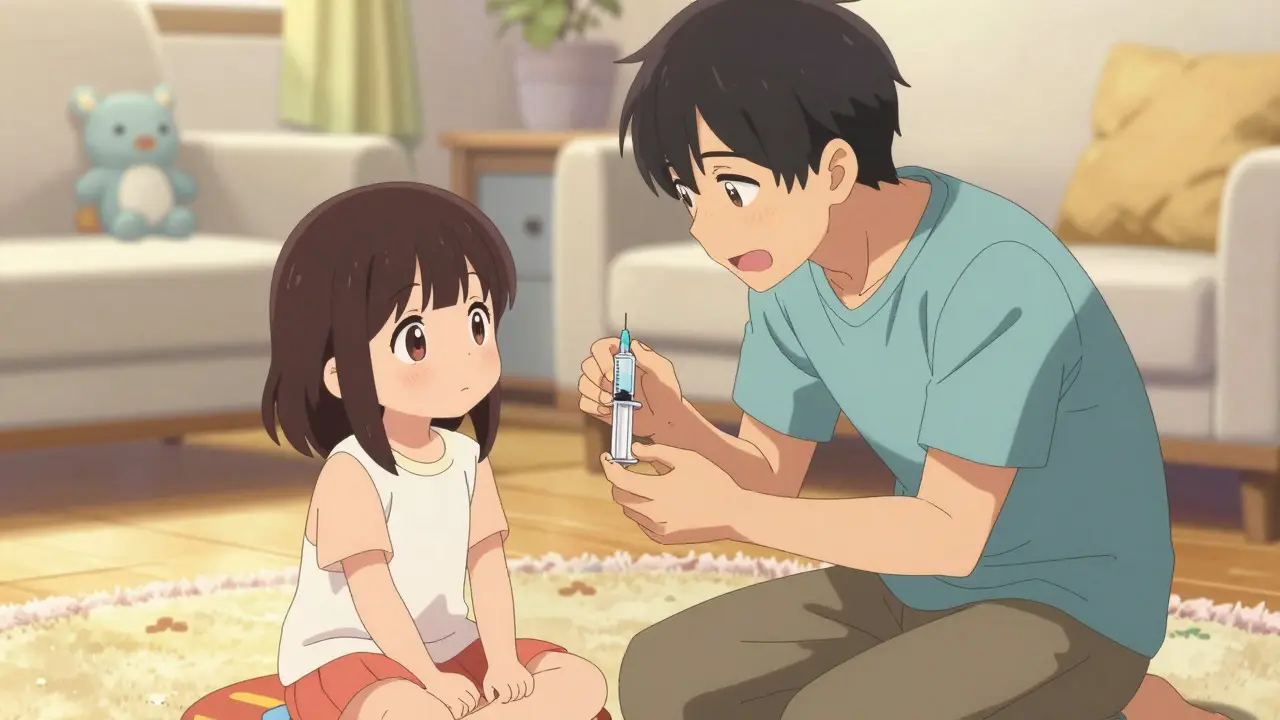
Always use the dosing device that comes with the medication. If it doesn’t come with one, buy a oral syringe or measuring cup marked clearly in milliliters. Avoid devices marked in teaspoons or tablespoons, as conversions lead to confusion. HealthyChildren.org notes that 40% of dosing errors happen when parents try to convert between measurement systems.
Be especially careful with acetaminophen and ibuprofen. Infant formulations are much more concentrated than adult versions. Using an adult spoon for infant drops, or vice versa, can result in a dose that is 300-400% off target. Read the label every single time. Write down clear instructions for other caregivers: what medicine, how many mL, and when to give it. Communication errors account for 18% of pediatric medication incidents.
Talk to Your Kids About Medicine
Physical barriers are essential, but education reinforces them. Start talking about medication safety early. AGC Pediatrics recommends beginning conversations around age two, when children start understanding simple instructions.
Avoid calling medicine "candy." This common phrase increases accidental ingestion risk by 40%. Instead, use clear language. Tell your child: "Medicine is not candy. It helps us feel better when we are sick, but only grown-ups know how to take it safely." Scripts like this improve children’s understanding by 58% in controlled studies.
Research from the American Academy of Pediatrics shows that children who receive consistent safety education from age three demonstrate 65% better recognition of medication dangers by age five. Make it a game: "If you see a bottle, tell Mom or Dad. Don’t touch it." Empower them to be partners in safety, not just passive victims of curiosity.
Disposing of Unused Medications Safely
An overflowing medicine cabinet is a hazard. Expired antibiotics, leftover painkillers, and old allergy meds should not sit on a shelf waiting for a rainy day that never comes. Proper disposal is the final step in childproofing.
If you have access to a drug take-back program, use it. However, 68% of rural households lack convenient access to these programs. In those cases, follow the FDA’s disposal guidelines:
- Mix solid medications with an unappealing substance like coffee grounds, kitty litter, or dirt.
- Place the mixture in a sealable plastic bag.
- Remove any personal information from the prescription label.
- Throw the sealed bag in the trash.
This method is 95% effective at preventing child access during disposal. For liquids, pour them into the toilet only if recommended by the pharmacist or package insert, as some medications are harmful to water supplies. Proper disposal of unused opioids alone reduces accidental access incidents by 74% in households where these drugs were previously present.
Weekly Safety Sweeps
Childproofing isn’t a one-time task. It’s a habit. Set a reminder on your phone to conduct a "safety sweep" once a week. Walk through each room and ask yourself:
- Are there any pills on the floor?
- Is there medicine left on counters or tables?
- Are all cabinet locks engaged?
- Have I disposed of expired items?
This quick check takes five minutes but catches the slip-ups that lead to emergencies. Combine this with proper storage, clear communication, and safe disposal, and you’ll create a home where your child can explore safely, knowing that medicine stays where it belongs: out of reach.
Where is the safest place to store medicine in the house?
The safest place is a locked cabinet or medication safe located high up, such as the top shelf of a linen closet or a high kitchen cabinet with a lock. The key is to ensure it is at least 48 inches off the ground and completely out of sight. Avoid bathrooms and kitchens unless the storage is specifically locked and elevated.
Are child-resistant caps enough to keep my child safe?
No. While child-resistant caps reduce access by 50%, they are not foolproof. Toddlers can learn to open them. Experts recommend combining caps with additional barriers like locked cabinets or magnetic latches, which increase safety effectiveness to 89%.
How should I dispose of unused medications if there is no take-back program?
Mix solid medications with an unappealing substance like coffee grounds or kitty litter, place them in a sealable plastic bag, remove personal info from labels, and throw the bag in the trash. This prevents children from retrieving and ingesting the pills.
Why shouldn't I call medicine "candy" to my child?
Calling medicine candy increases the risk of accidental ingestion by 40%. It creates a false association that makes medicine seem desirable and safe to eat. Instead, explain that medicine is for helping when sick and is only used under adult supervision.
Can I use a kitchen spoon to measure liquid medicine?
No. Kitchen spoons vary significantly in size, holding anywhere from 2.5 mL to 7.3 mL. This variation can lead to dosing errors of up to 250%. Always use the oral syringe or measuring cup provided with the medication, marked in milliliters.
