Grapefruit and Grapefruit Juice: Which Medications Are Affected and Why
 Jan, 7 2026
Grapefruit Medication Interaction Checker
Check Your Medication
Enter your medication name to see if it interacts with grapefruit juice
One small glass of grapefruit juice can turn a safe medication into a dangerous one. It’s not a myth. It’s not a rumor. It’s science - and it’s happening to thousands of people every year, often without them even realizing it.
What’s Actually in Grapefruit That Makes This Happen?
Grapefruit doesn’t just taste tangy - it’s packed with chemicals called furanocoumarins, mainly bergamottin and 6’,7’-dihydroxybergamottin. These aren’t toxins. They’re not even harmful on their own. But when they meet certain medications in your gut, they shut down a critical enzyme: CYP3A4.
This enzyme normally acts like a gatekeeper. It breaks down drugs as they pass through your intestines before they enter your bloodstream. That’s called first-pass metabolism. It keeps drug levels in check. Grapefruit juice doesn’t just slow this down - it breaks the enzyme for good. Once it’s inhibited, your body can’t rebuild it quickly. The effect lasts 24 to 72 hours. That means even if you drink grapefruit juice at breakfast and take your pill at night, you’re still at risk.
Which Medications Are Most at Risk?
Over 85 medications are known to interact with grapefruit. Not all of them are dangerous, but 43 can cause life-threatening side effects. Here are the big ones:
- Statins - These cholesterol-lowering drugs are the most common culprits. Simvastatin (Zocor) is the worst offender. Just 200 milliliters (about 7 ounces) of grapefruit juice a day for three days can triple your blood levels of simvastatin. That raises your risk of rhabdomyolysis - a condition where muscle tissue breaks down, flooding your kidneys with toxic proteins. Atorvastatin (Lipitor) and lovastatin (Mevacor) also spike in concentration. But pravastatin (Pravachol) and rosuvastatin (Crestor)? They’re safe. Why? They don’t rely on CYP3A4 to be processed.
- Calcium Channel Blockers - Used for high blood pressure and angina. Felodipine (Plendil) can see blood levels jump by 355%. Nifedipine (Procardia) increases by 274%. Amlodipine (Norvasc) goes up by 150%. These spikes can cause dangerously low blood pressure, dizziness, fainting, or even heart failure.
- Immunosuppressants - These are the most dangerous. Cyclosporine (Sandimmune), tacrolimus (Prograf), and sirolimus (Rapamune) are used after organ transplants. Grapefruit can make their levels spike by 300% to over 1000%. That means severe kidney damage, high blood pressure, infections, and even death.
- Anti-anxiety and Sedatives - Buspirone (Buspar) and midazolam (Versed) can cause extreme drowsiness, slowed breathing, or coma when combined with grapefruit.
- Antiarrhythmics - Drugs like amiodarone and dronedarone can cause irregular heart rhythms that turn deadly.
- Some Antidepressants and Antipsychotics - Sertraline, quetiapine, and risperidone can build up to toxic levels.
The FDA has mandated warning labels on 17 prescription drugs because of this. Many others carry warnings in their prescribing info. If your pill bottle says “avoid grapefruit,” it’s not a suggestion - it’s a safety rule.
Why Does This Happen More in Older Adults?
People over 65 are the most at risk - not because grapefruit is more dangerous for them, but because they’re more likely to be taking multiple medications. In fact, over half of Americans in this age group take five or more prescriptions daily, according to the CDC. Many of those are statins, blood pressure drugs, or immunosuppressants - the exact types that react badly with grapefruit.
And they’re more likely to drink grapefruit juice. The National Health and Nutrition Examination Survey found that 42.7% of older adults consume grapefruit products at least once a week. They’re not trying to be risky. They’re just trying to stay healthy - grapefruit is full of vitamin C and antioxidants. But they don’t know the hidden danger.
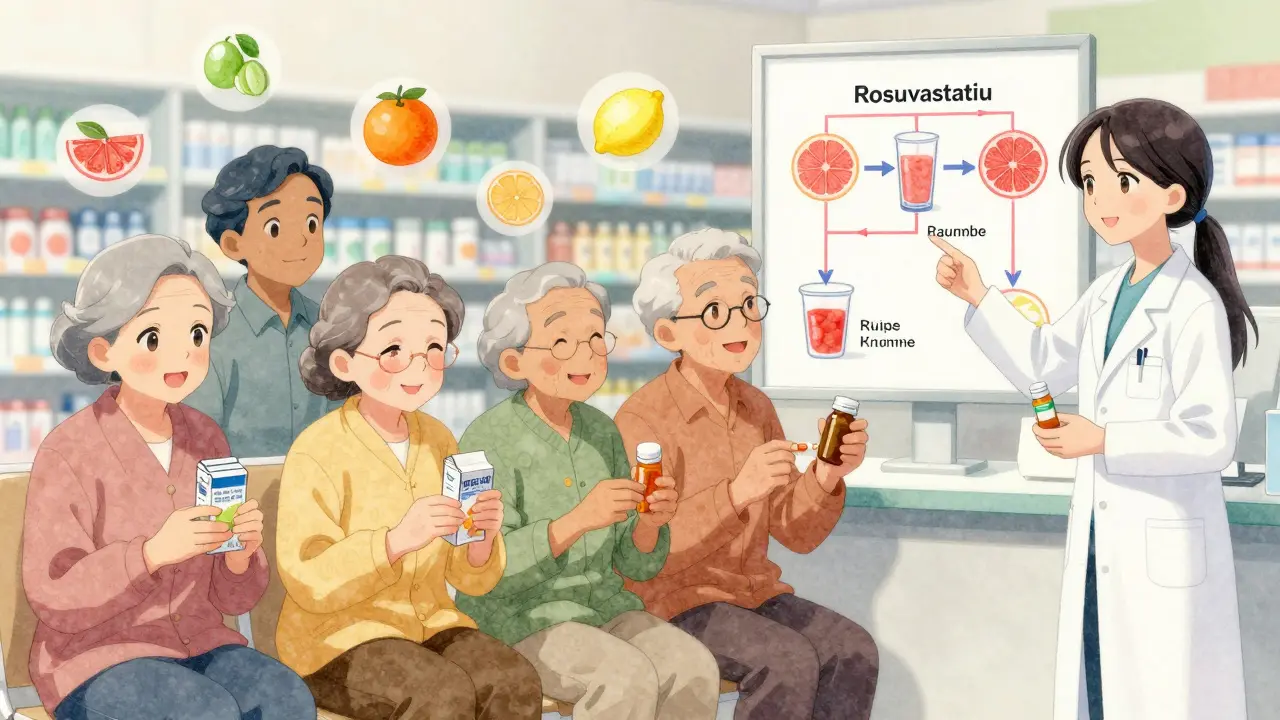
Is It Just Grapefruit? What About Other Citrus?
No. Seville oranges - the kind used in traditional marmalade - have the same furanocoumarins. Pomelos? Same problem. Even limes can have enough to cause issues, especially in concentrated forms like juice.
Regular oranges and tangerines? Safe. They don’t contain these compounds. Same with lemons and sweet oranges. But if you’re unsure, check the label. “100% grapefruit juice” is obvious. “Citrus blend” or “tropical fruit juice” might not be.
And yes - pomegranate juice has shown similar effects in at least one case report. It’s not as well studied, but if you’re on a high-risk medication, it’s better to skip it too.
Can I Just Space Out My Juice and My Pill?
No. This is the biggest myth. You can’t wait four hours. Or six. Or even 24. The enzyme inhibition is irreversible. Your body has to grow new enzymes to replace the ones grapefruit destroyed. That takes days. So even if you drink grapefruit juice in the morning and take your pill at night, you’re still at risk.
There’s no safe window. The only reliable way to avoid the interaction is to stop drinking grapefruit juice - and all grapefruit products - for as long as you’re on the medication.
What Can You Do Instead?
You don’t have to give up your health goals. There are safe alternatives for almost every affected drug.
- If you’re on simvastatin, ask your doctor about switching to rosuvastatin or pravastatin.
- If you’re on felodipine or nifedipine, diltiazem or verapamil might work just as well - and won’t react with grapefruit.
- If you’re on cyclosporine or tacrolimus, your transplant team can adjust your dose or switch to a non-interacting immunosuppressant.
- For blood thinners, warfarin is fine with grapefruit. But newer options like apixaban (Eliquis) and rivaroxaban (Xarelto) are also safe.
Don’t switch on your own. But do ask. Pharmacists are trained to catch these interactions. In fact, 78.4% of community pharmacists in the U.S. now screen for grapefruit-drug interactions during routine medication reviews.

What Should You Ask Your Doctor or Pharmacist?
Don’t assume your provider knows you drink grapefruit juice. Many patients don’t mention it - they think it’s just fruit. But here are three simple questions to ask:
- Does my specific medication interact with grapefruit?
- How much grapefruit, if any, can I safely consume?
- Are there other fruits, juices, or supplements I should avoid?
Write these down. Bring them to your next appointment. If your provider doesn’t know the answer, ask them to check the FDA’s updated list or the CMAJ’s 2012 review - the same resource most hospitals use today.
What About New Research? Is There Hope for Safe Grapefruit?
Scientists are working on it. Researchers are developing grapefruit varieties with 85-90% less furanocoumarin using selective breeding and growing techniques. Early trials look promising. But until those are widely available and proven safe in large studies, the American Heart Association and FDA both say: avoid it completely.
Some genetic studies show that people with a specific CYP3A4 gene variant (CYP3A4*22) are even more sensitive to grapefruit. Their drug levels rise 40% higher than others. That means even “small” amounts can be dangerous. So even if you’ve had grapefruit juice with your meds for years without problems - that doesn’t mean it’s safe for you.
Bottom Line: Don’t Guess. Ask.
Grapefruit isn’t the enemy. Medications aren’t the enemy. But when they meet without warning, the results can be deadly. The good news? This interaction is preventable. You don’t need to be a scientist to protect yourself. Just be informed.
If you’re on any prescription drug - especially if you’re over 45 - take five minutes today. Check your pill bottles. Ask your pharmacist. Look up your meds online using the FDA’s list. If grapefruit is on the warning label, stop drinking it. If you’re not sure, ask. It’s that simple. And it could save your life.
Can I drink grapefruit juice if I take my medication at a different time of day?
No. Grapefruit doesn’t just slow down how your body processes the drug - it permanently disables the enzyme (CYP3A4) in your gut for up to three days. Even if you drink grapefruit juice in the morning and take your pill at night, the enzyme is still blocked. Timing doesn’t help. The only safe option is to avoid grapefruit completely while on the medication.
Are all citrus fruits dangerous with medications?
No. Only grapefruit, Seville oranges (used in marmalade), pomelos, and possibly limes contain the furanocoumarins that cause these interactions. Sweet oranges, tangerines, lemons, and clementines are safe. But if a juice blend says “citrus” without listing the exact fruits, it’s safer to avoid it.
Why do some statins interact with grapefruit and others don’t?
It depends on how the drug is broken down in the body. Simvastatin, lovastatin, and atorvastatin rely heavily on the CYP3A4 enzyme to be processed. When grapefruit blocks that enzyme, the drug builds up to dangerous levels. Pravastatin and rosuvastatin use different pathways - they’re not affected by CYP3A4 inhibition. That’s why they’re safer choices if you want to keep eating grapefruit.
What should I do if I accidentally drank grapefruit juice with my medication?
If you took a single small amount and feel fine, you likely won’t have immediate problems. But watch for symptoms like muscle pain, weakness, dizziness, irregular heartbeat, or extreme fatigue. Call your doctor or pharmacist right away. If you’re on a high-risk drug like cyclosporine or simvastatin, don’t wait. It’s better to get checked than to risk serious side effects like kidney damage or rhabdomyolysis.
Can I switch to a different medication to keep drinking grapefruit juice?
Yes - for most affected drugs, there are safe alternatives. For example, if you’re on simvastatin, you can switch to rosuvastatin or pravastatin. If you’re on felodipine, diltiazem might work instead. Always talk to your doctor before switching. But if you love grapefruit, asking about alternatives is one of the smartest things you can do for your long-term health.

Johanna Baxter
January 8, 2026 AT 01:27I took my statin with grapefruit juice for 3 years and never had a problem so now I’m just gonna keep doing it because science is just a suggestion anyway
Kiruthiga Udayakumar
January 10, 2026 AT 00:34Wow this is terrifying. I drink grapefruit juice every morning with my blood pressure meds. I thought it was healthy. My mom died of kidney failure and now I’m wondering if this was why. I’m cutting it out today. No excuses.
Patty Walters
January 10, 2026 AT 19:44Just a heads up - if you’re on anything with 'statin' in the name, check the label. Pravachol and Crestor are safe. Lipitor? Not so much. Also, if you’re confused, call your pharmacist. They don’t charge for this. I’ve saved like 12 people just by asking them if they drink grapefruit juice during med reviews.
Pooja Kumari
January 10, 2026 AT 20:07Okay but like… why is this even a thing? Like, grapefruit is literally the only fruit that does this? It’s not like we’re talking about mangoes or kiwis or even oranges - nope, just this one sour little fruit that somehow became the villain of modern medicine. And now we’re supposed to just… give it up? Like, I get it, science, I do. But I love the way it tastes first thing in the morning, the way the juice hits your tongue like a little citrus bomb. I’ve been drinking it since I was 12. I’m 57 now. I’ve had heart issues, I’ve had high cholesterol, I’ve had my blood pressure monitored every six months. And I’ve never had a single side effect. So now you’re telling me I have to stop because of some enzyme that I can’t even see? What if I just drink half a glass? Or only on weekends? Or maybe I just… take my meds at night and juice in the morning? I know the post says it doesn’t matter but… I just need someone to tell me it’s okay to still have this one thing that makes me feel alive.
And don’t get me started on how people treat this like it’s a moral failing. Like if you drink grapefruit juice you’re just being irresponsible. No, I’m just a person who likes fruit and trusts my body. Maybe my enzymes are different. Maybe I’m one of those lucky ones. Or maybe - just maybe - the science isn’t as black and white as they make it sound.
I’m not trying to be reckless. I’m trying to be human. And sometimes, being human means holding onto small pleasures even when the world says you shouldn’t.
Phil Kemling
January 12, 2026 AT 02:52It’s not about grapefruit. It’s about how we’ve outsourced our biological autonomy to pharmaceuticals and then blamed the fruit when things go wrong. We don’t ask why the enzyme exists. We don’t ask why the drug needs to be broken down at all. We just swallow the pill and avoid the fruit like it’s a curse. But what if the real problem is that we’re medicating too much, too early, too blindly? Grapefruit didn’t create this danger - it just exposed how fragile our systems are when we treat biology like a machine with one button to press.
Maybe the solution isn’t avoiding grapefruit. Maybe it’s rethinking why we need so many drugs that interact with fruit in the first place.
tali murah
January 12, 2026 AT 15:58Oh my god. I just realized my 78-year-old mother has been drinking grapefruit juice with her cyclosporine for 11 years. She’s a ‘natural health’ fanatic. Swears by ‘detox juices.’ I’m calling her right now. This is the kind of thing that kills people quietly. And no one talks about it. Because it’s easier to blame the fruit than the system that lets this happen.
Diana Stoyanova
January 14, 2026 AT 08:57Okay but I just switched from simvastatin to rosuvastatin because of this and I’m so happy. I still drink grapefruit juice and I don’t feel guilty. It’s not about giving up joy - it’s about swapping out the dangerous stuff for the safe stuff. You can have your citrus and live too. Just pick the right one. Also, I started doing a weekly med review with my pharmacist and now I ask about EVERYTHING - even turmeric and green tea. It’s wild how many things interact. But knowledge is power. And power means you get to keep your juice.
Jenci Spradlin
January 15, 2026 AT 11:27just fyi - pomegranate juice can do the same thing. i found out the hard way. my dr didnt even mention it. now i avoid all dark red juices. also, dont trust ‘natural’ brands - they sometimes mix in grapefruit without saying. check the ingred list like a detective.
Jerian Lewis
January 16, 2026 AT 19:13People keep saying ‘just ask your doctor.’ But most doctors don’t know. I’ve had three different cardiologists tell me grapefruit was fine. One even said it ‘helped with absorption.’ I had to bring the FDA’s official list to my last appointment. They were embarrassed. So don’t assume your provider knows. Bring the facts. Or don’t drink it. Either way, stop being passive.