Gallstones: Biliary Colic, Cholecystitis, and Surgical Choices
 Jul, 19 2026
That sudden, crushing pain in your upper right abdomen that hits you out of nowhere is not just indigestion. It is likely a gallstone, a hardened deposit in your gallbladder that can block bile flow and cause severe complications if left untreated. While many people live with these stones without ever knowing it, once symptoms start, the clock begins ticking. The difference between a manageable episode and a life-threatening emergency often comes down to understanding the progression from simple pain to inflammation.
You are not alone in this struggle. Approximately 10-15% of adults in developed countries have gallstones. However, about 80% of those people never experience symptoms. For the remaining 20%, the journey typically starts with biliary colic, moves potentially into acute cholecystitis, and usually ends with a surgical decision. This guide breaks down exactly what happens inside your body, how doctors distinguish between pain types, and why modern surgical options have changed the game for recovery times.
Understanding Biliary Colic vs. Acute Cholecystitis
The first step in managing gallstone disease is recognizing the type of attack you are having. These two conditions look similar on the surface but require different levels of urgency.
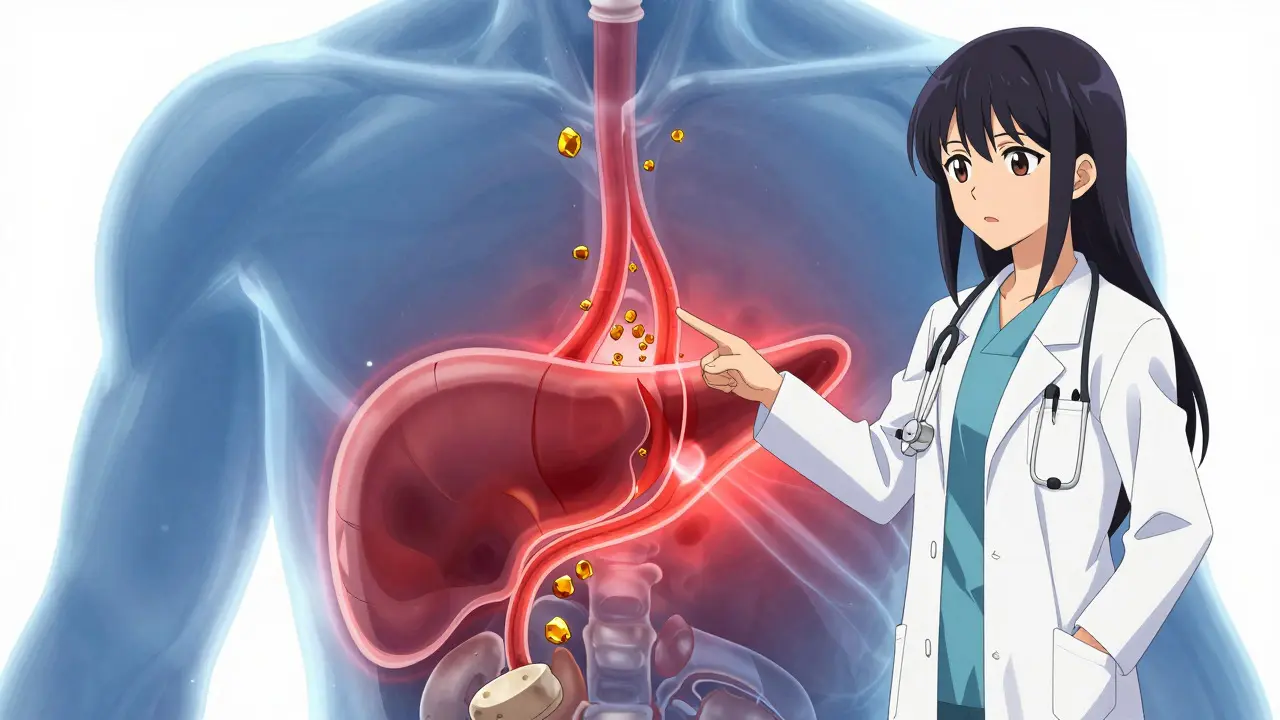
Biliary colic occurs when a stone temporarily blocks the cystic duct, causing intense stomach pain that lasts 1-5 hours before the stone dislodges. This pain is characteristically steady, moderate to severe, and localized to the right upper quadrant or epigastrium. It does not fluctuate like gas pain; it ramps up quickly, peaks within an hour, and stays there until the obstruction clears. Crucially, passing gas, vomiting, or using the bathroom will not relieve this pain. According to the American Academy of Family Physicians (AAFP), more than 90% of patients who experience one episode of biliary colic will have another within 10 years. In fact, two-thirds face recurrence within just two years.
If that blockage persists for several hours, the condition escalates to acute cholecystitis, which is inflammation of the gallbladder caused by prolonged obstruction, leading to infection risk and requiring immediate medical intervention. This affects about 20% of biliary colic cases. Symptoms worsen, often including fever, persistent pain lasting more than six hours, and tenderness when pressing on the abdomen. If ignored, this can lead to gangrene or perforation of the gallbladder. The National Health Service (NHS) reports that untreated symptomatic gallstones lead to emergency hospitalization in 20-30% of cases within five years of initial diagnosis.
| Feature | Biliary Colic | Acute Cholecystitis |
|---|---|---|
| Pain Duration | 1-5 hours | >6 hours, persistent |
| Fever | Rare | Common |
| Inflammation | No | Yes (Gallbladder wall thickening) |
| Treatment Urgency | Scheduled surgery recommended | Immediate hospitalization required |
Why Do Gallstones Form?
To understand the treatment, you need to know the enemy. Gallstones form due to chemical imbalances in bile or infrequent emptying of the gallbladder. There are two main types:
- Cholesterol Stones: These make up 80% of cases in Western populations. They form when bile contains too much cholesterol relative to bile salts.
- Pigment Stones: Composed of bilirubin, these account for the remaining 20% and are often associated with liver disease or blood disorders.
Risk factors are well-documented. Women are affected 2-3 times more frequently than men, largely due to estrogen’s effect on cholesterol levels in bile. Age also plays a role, as does obesity. The CDC reported in 2022 that 39.8% of US adults are classified as obese, driving up incidence rates. Additionally, rapid weight loss can trigger stone formation because it increases cholesterol secretion into bile while reducing gallbladder contraction.
Surgical Choices: Laparoscopic vs. Open Cholecystectomy
When medication fails or symptoms recur, surgery becomes the standard path. The primary procedure is cholecystectomy, the surgical removal of the gallbladder, which is the definitive cure for symptomatic gallstone disease. You might wonder if you can keep your gallbladder. While non-surgical options exist, they are rarely permanent solutions.
Laparoscopic cholecystectomy is now the gold standard, representing 90% of procedures performed in the United States. This minimally invasive technique involves four small incisions. A camera and instruments are inserted to detach the gallbladder from the liver and bile ducts. The benefits are stark compared to traditional open surgery:
- Hospital Stay: Average 1.2 days for laparoscopic vs. 4.7 days for open surgery.
- Recovery Time: Median 7 days return to normal activity vs. 30 days for open surgery.
- Pain Management: Significantly reduced postoperative pain.
Open cholecystectomy is reserved for complex cases where inflammation obscures vision or anatomy is distorted. Conversion from laparoscopic to open surgery occurs in 5-10% of cases, often due to severe scarring or bleeding risks. However, even in these scenarios, the overall complication rate remains below 2% in experienced hands, according to Dr. David Flum, professor of surgery at the University of Washington.
Non-Surgical Alternatives and Their Limits
Some patients seek to avoid surgery entirely. Two main alternatives exist, but both have significant drawbacks regarding efficacy and recurrence.
Ursodeoxycholic acid therapy is a medication that dissolves small cholesterol stones over 6-24 months, though it only succeeds in 30-50% of cases with high recurrence rates. This oral medication works by reducing the amount of cholesterol your liver secretes into your bile. However, it only works for small, pure cholesterol stones. More importantly, once you stop taking the drug, 50% of patients see their stones return within five years. It is generally reserved for patients who are poor surgical candidates.
Shock-wave lithotripsy uses sound waves to break gallstones into smaller pieces, which are then passed naturally, but has largely fallen out of favor due to high recurrence rates. Combined with dissolution therapy, it shows success rates of 70-90% for solitary stones under 20mm. Yet, Harvard Health’s 2022 review notes its decline in popularity because the broken fragments can migrate and cause pancreatitis or bile duct obstruction later. Most surgeons view this as a temporary fix rather than a cure.
Timing the Surgery: Elective vs. Emergency
One of the most critical decisions is when to operate. The Society of American Gastrointestinal and Endoscopic Surgeons (SAGES) guidelines emphasize that cholecystectomy should be performed within 72 hours of diagnosing acute cholecystitis. Why? Because early surgery reduces the conversion rate from laparoscopic to open surgery from 25% to just 7%. Waiting allows inflammation to worsen, making the tissue fragile and harder to dissect safely.
For biliary colic without inflammation, elective scheduling is preferred. Data shows that 64% of patients managed expectantly (waiting and watching) eventually require surgery within 5.6 years. Since the risk of complications like pancreatitis or jaundice rises with each episode, many experts recommend prophylactic cholecystectomy after the first or second attack. A 2023 Cleveland Clinic case study highlighted a patient who endured 17 episodes over 18 months before opting for surgery, resulting in complete symptom resolution within 10 days.

Risks, Recovery, and Long-Term Outlook
Like any surgery, cholecystectomy carries risks. Common minor issues include diarrhea (reported by 12% of patients) and temporary digestive adjustments as your body learns to process fat without a storage reservoir. Serious complications, such as bile duct injury, occur in less than 0.5% of cases. Post-cholecystectomy syndrome, where pain persists after surgery, affects about 6% of patients, often due to retained stones or sphincter of Oddi dysfunction.
Age and comorbidities significantly impact risk. Dr. Emily Finlayson from UCSF notes that for patients over 75 with multiple health issues, the 30-day mortality rate jumps from 0.1% in healthy individuals to 2.8% in those with three or more comorbidities. Preoperative optimization, including diabetes control and weight management over 6-8 weeks, is crucial for high-risk patients.
Recovery protocols have improved dramatically with Enhanced Recovery After Surgery (ERAS) pathways. These standardized approaches encourage early ambulation within 4 hours and liquid diet initiation within 6 hours. As a result, most patients are discharged within 24 hours. A 2024 SAGES roadmap highlights that ERAS protocols have reduced hospital stays by 30% and 30-day readmissions by 25% across participating hospitals.
FAQ
Can I dissolve gallstones without surgery?
Yes, but with limitations. Ursodeoxycholic acid can dissolve small cholesterol stones in 30-50% of cases over 6-24 months. However, recurrence rates are high (50% within five years) after stopping treatment. It is typically reserved for patients who cannot undergo surgery.
How long does it take to recover from laparoscopic gallbladder surgery?
Most patients return to normal activities within 7 days. Hospital stays average 1.2 days. Full recovery, including lifting heavy objects, may take 2-4 weeks depending on individual healing and job demands.
What is the difference between biliary colic and cholecystitis?
Biliary colic is temporary pain from a blocked cystic duct lasting 1-5 hours without inflammation. Cholecystitis is persistent inflammation of the gallbladder lasting more than 6 hours, often accompanied by fever and requiring urgent medical care.
Is it safe to wait for gallstone symptoms to go away?
Waiting carries risks. Over 90% of patients with biliary colic will have recurrent pain within 10 years. Untreated symptomatic gallstones lead to emergency hospitalization in 20-30% of cases within five years due to complications like pancreatitis or severe infection.
What are the risks of gallbladder surgery for older adults?
Risk increases with age and comorbidities. For patients over 75 with multiple health issues, 30-day mortality can rise to 2.8%. Preoperative optimization of conditions like diabetes and heart disease is essential to mitigate these risks.
