Essential Questions to Ask Your Pharmacist About Drug Interactions
 Mar, 30 2026
You might think your prescription history is safe because every doctor you see runs through your file. But that file rarely includes that bottle of ibuprofen you keep for headaches or the magnesium gummies you take before bed. Drug interactions often hide in these gaps, and they account for thousands of emergency room visits every single year. As a patient navigating modern healthcare, simply trusting that everything works together isn't enough. You need to know exactly what to ask when you walk into that pharmacy counter.
What Exactly Is a Drug Interaction?
We tend to picture two pills colliding inside our stomachs and canceling each other out, but reality is more complex. According to the U.S. Food and Drug Administration, there are three primary categories of interactions you need to watch for. First, there are drug-drug interactions where two prescriptions fight for dominance in your bloodstream. Second, drug-food interactions happen when something on your dinner plate changes how a pill gets absorbed. Finally, drug-condition interactions occur when a specific health issue, like high blood pressure or kidney disease, makes a standard dose dangerous.
The risk increases dramatically when you are taking multiple medicines. This situation, known as polypharmacy, affects over 40% of adults over the age of 65 today. It's not just about having five different bottles; it's about the cumulative effect on your liver and kidneys, which do the heavy lifting of clearing these substances from your system. If those organs get overwhelmed, side effects can spike unexpectedly.
Why Your Pharmacist Holds the Key
While doctors diagnose and prescribe, pharmacists specialize in the chemical mechanics of those prescriptions. Under the systematic framework established by the American Society of Health-System Pharmacists, your local community pharmacist is trained to review your entire medication profile against their database and clinical knowledge. They look at demographics, diagnosis lists, organ function, and concurrent usage.
This role has shifted from merely dispensing boxes to conducting active medication therapy management. A study published in the Journal of the American Pharmacists Association found that pharmacist-conducted reviews reduced incident rates of harmful interactions by nearly 24% in Medicare patients. That is a significant safety net, but it only works if you provide the full picture.
Preparing Your Medication List
Before you even step up to the counter, you need to gather the intelligence. Pharmacists operate on what we call the "known unknown"-they can only screen for what you tell them exists. Your list shouldn't just include the blue bottles prescribed by your GP. It needs to encompass everything:
- Over-the-counter pain relievers and cold medicines.
- Vitamins, minerals, and botanical supplements.
- Energy drinks or herbal teas with active ingredients.
- Frequent alcohol consumption habits.
- Past medical history relevant to organ function.
Rita Shane, a Chief Pharmacy Officer at Cedars-Sinai, specifically warns that patients often forget to mention dietary supplements because they view them as harmless "wellness aids." However, products like St. John's wort or high-dose fish oil can alter how enzymes process other life-saving drugs. Bring the actual bottles if possible so dosages are clear.
Five Critical Questions to Ask
Most consultations end with a "Call us if you have questions," but you should be proactive. Here are the specific queries recommended by the FDA and major health authorities to uncover hidden risks.
1. Can I Take This With My Current Medications?
This sounds obvious, but be precise. Don't ask, "Is it okay?" Ask, "Will this change how my heart medication works?" For instance, adding a new anti-inflammatory drug might increase bleeding risk if you are already on blood thinners. Specificity triggers better screening.
2. Are There Foods or Drinks I Need to Avoid?
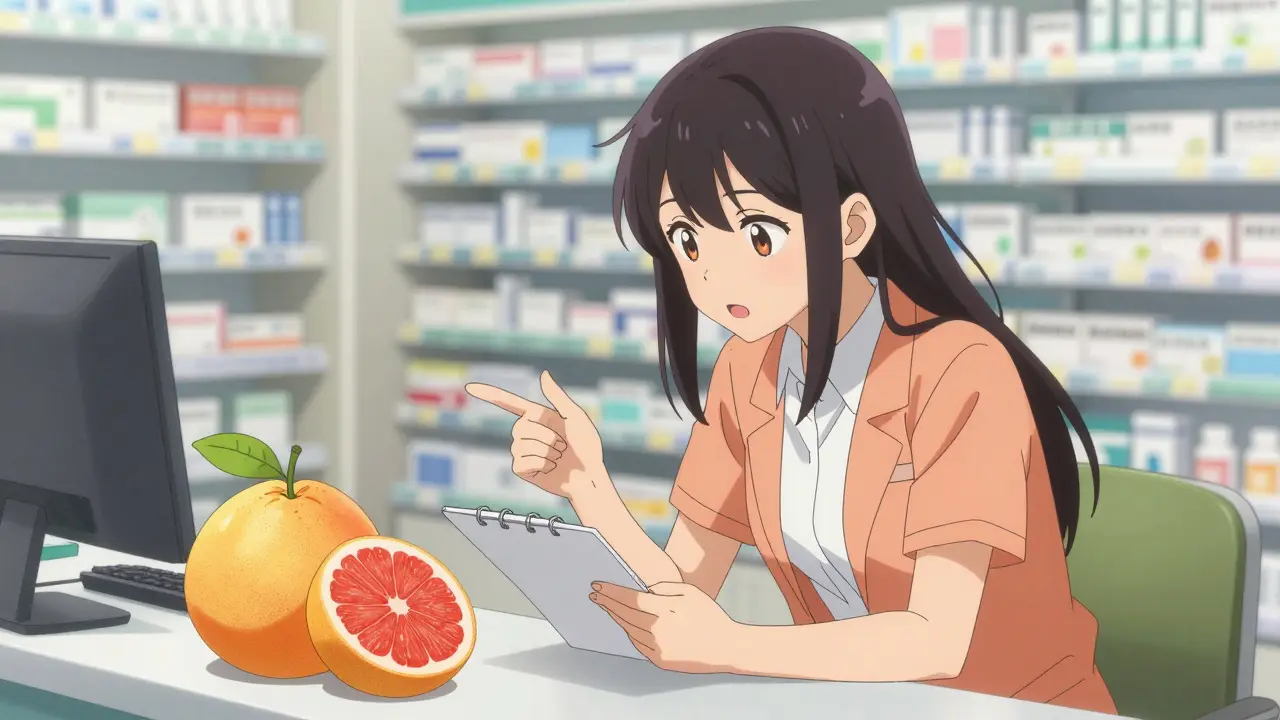
Many people don't realize that common foods act like bioactive chemicals. A classic example involves grapefruit juice. It inhibits an enzyme called CYP3A4, which breaks down certain statins and calcium channel blockers. Drinking a glass of orange juice won't hurt, but swapping it for grapefruit could double the amount of active drug entering your blood.
| Item | Potential Conflict | Medication Class Example |
|---|---|---|
| Grapefruit | Inhibits CYP3A4 metabolism | Statins, Calcium Channel Blockers |
| Aged Cheese | Tyramine content spikes BP | MAO Inhibitors (Antidepressants) |
| Dairy Products | Binds to antibiotic absorption | Tetracyclines, Fluoroquinolones |
| Alcohol | Additive CNS depression | Opioids, Benzodiazepines |
3. Does My Medical Condition Change How I Should Dose?
Express Scripts Pharmacy guidelines note that asking "Will this interfere with my condition?" is vital. For example, some decongestants used for allergies contain stimulants that raise blood pressure. If you have hypertension, taking a standard cold remedy could be risky. Always tie your medication question back to your personal health history.
4. What Signs of Interaction Should I Watch For?
Sometimes an interaction doesn't cause immediate vomiting or hives. Instead, it causes subtle shifts. Ask your pharmacist what specific symptoms constitute a red flag for your combination. Are you suddenly more dizzy? Is your bruising easier? If you know what to look for, you can catch problems early.
5. Is There a Timing Strategy We Can Use?
Often, two drugs interact primarily because they compete for absorption sites at the same time. A common solution is staggering doses. One might go in the morning and another at night. Asking "How long should I wait between these two?" allows the pharmacist to optimize your schedule to minimize overlap.
High-Risk Situations You Must Know
Certain scenarios carry higher stakes than others. The most notorious involves warfarin, a blood thinner. It has a narrow therapeutic index, meaning the difference between a helpful dose and a bleeding risk is tiny. Patients on warfarin must manage Vitamin K intake strictly, as leafy greens can counteract the drug. Without consistent monitoring, a sudden change in diet could lead to a clot or hemorrhage.
Another critical area is the cytochrome P450 system. This group of enzymes processes many drugs. Inducers (like rifampin) speed up metabolism, potentially making drugs ineffective, while inhibitors (like azole antifungals) slow it down, causing toxic buildup. Knowing if your regimen hits these pathways helps you understand why your pharmacist insists on blood tests.
Digital Alerts vs. Professional Judgment
You might wonder if pharmacy software does all the checking for you. Major chains like CVS and Walgreens use electronic records with real-time alerts. However, a 2022 JAMA Internal Medicine study revealed these systems still miss about 18% of clinically significant interactions. Why? Usually because the patient hasn't added the vitamins or home remedies to the official record. Technology is a safety net, but the human element-the conversation-is the filter that catches the leaks.
In 2026, pharmacogenomic testing is becoming more accessible, allowing us to predict how genetic factors influence drug processing. Even then, the baseline requirement remains communication. The technology tells the pharmacist what to ask; you tell them what you are actually taking.
Keeping Your History Up to Date
Interactions aren't static; they evolve as your body changes and your regimen adjusts. Rita Shane recommends discussing medication lists with your pharmacist at least quarterly. Anytime a new drug enters the picture, treat it as a potential trigger event. Ask the specific question: "Does this new addition affect anything else I'm taking?" The newest prescription is often the culprit in newly diagnosed interaction issues.
Summary
Making the most of your pharmacy visit requires moving beyond the transactional exchange. By disclosing every substance you put into your body and asking targeted questions about timing, food, and specific symptoms, you actively participate in your own safety. The tools are there, the experts are ready, but the bridge of communication is built by your willingness to ask.
Can over-the-counter medicines cause interactions?
Yes, non-prescription drugs like ibuprofen or antacids can significantly interact with prescription medications, such as blood thinners or antibiotics.
Do herbal supplements count as medications for interaction checks?
Absolutely. Herbs like St. John's wort contain active compounds that affect liver enzymes and can dangerously alter prescription drug levels.
How often should I update my medication list with my pharmacist?
It is best practice to review your list every quarter, or immediately whenever a new medication is prescribed by a specialist or general practitioner.
Why is grapefruit juice specifically warned against?
Grapefruit contains furanocoumarins which inhibit the CYP3A4 enzyme, preventing the breakdown of certain drugs and leading to overdose symptoms.
Can drug interactions happen instantly?
Some interactions are immediate, like allergic reactions, while others develop over weeks as drug concentrations build up or deplete within the body.

Amber Armstrong
March 30, 2026 AT 11:27My cousin Sarah took a headache pill with her heart meds last winter and she nearly lost her sight for days. The doctor blamed the pharmacy but honestly nobody told him about the aspirin she bought at the store. We thought supplements were safe because they sat on the shelf next to candy bars but enzymes care deeply about those things. It turns out that liver function slows down when you introduce too many chemical compounds at once during a week. I remember watching her wait in the triage unit while nurses checked her pupils with a tiny flashlight beam. She looked so pale sitting there with that grey sweatshirt wrapped tight around her shoulders. Nobody wants to be the person who caused a hospital admission over a vitamin gummy bear. It makes you feel incredibly small knowing how easily your body breaks down under pressure from modern medicine. We spend thousands on insurance premiums hoping that coverage saves us from preventable mistakes like this scenario. The pharmacist actually knew what was wrong before any machine printed out a diagnosis sheet for us. You cannot trust the algorithm to catch the bottle you hid in your purse before you left the house. Humans are terrible at remembering every single thing they put into their stomachs throughout the day. It is scary how fast things change when you add a new prescription to your existing routine of habits. We need to stop treating medication as just another item on the grocery list without checking labels first. Talking directly to the person mixing the bag is the only true safety net remaining for us today.
emma ruth rodriguez
March 30, 2026 AT 15:52Indeed; the aforementioned point regarding polypharmacy is crucial! Furthermore, patients must understand; safety is paramount! One cannot simply guess! The FDA guidelines exist! Ignorance is not bliss! We must act! Now! Today! Tomorrow too! Knowledge saves lives! Do not neglect this! Please read!
Jonathan Sanders
April 1, 2026 AT 04:18Oh sure just go into debt to ask a stranger about your vitamins. Healthcare is a joke anyway. They care more about insurance codes. My grandma died asking the wrong questions. But sure keep trying. At least you feel better knowing you asked. It is all placebo therapy. The real problem is too many drugs. But hey good luck with that. Don't come crying when they still mess up. I'm just saying.
Rick Jackson
April 2, 2026 AT 00:06Communication bridges the gap between intent and outcome.
Beccy Smart
April 3, 2026 AT 13:23You will end up dead from grapefruit juice eventually 🍇🙄💀
Jonathan Alexander
April 3, 2026 AT 21:40I almost ended up in the ER because of my morning tea. The pharmacist barely looked at me. But he did save me later. It was terrifying to see blood in the sink. I cried in the waiting room. They laughed about my anxiety. I won't let that happen again. Safety is non-negotiable. I am terrified of side effects now. I check every label three times. You can never be too careful. I sleep with the bottle on my nightstand. Please prioritize your health. My peace of mind depends on it. I refuse to take risks. Trust the professionals here.
Vikash Ranjan
April 4, 2026 AT 13:53Actually the data suggests patients lie about usage anyway. Software handles it better than humans usually. You are overthinking the risk. Most interactions are theoretical. Real harm is rare statistically. Panic over grapefruit is unnecessary. Doctors miss diagnoses constantly. Focus on lifestyle not micro-management. This advice creates anxiety. People suffer from stress more than pills. Stop listening to fear mongering. Trust the system. Ignore the minor warnings.
Adryan Brown
April 4, 2026 AT 13:58We all want the best outcome for our loved ones. It starts with preparation. Gathering the list takes effort. But the reward is safety. Many families benefit from this simple habit. Older adults struggle most with memory. They rely on caregivers. Pharmacists appreciate the organization. It speeds up the process too. We should respect their time. And they respect our health goals. Cooperation leads to better results. Every interaction counts toward wellness. Small changes create big impacts. Keep working on communication.
Charles Rogers
April 5, 2026 AT 04:50Most of you don't know what you're doing. You take random supplements without research. It's a health crisis in waiting. You need discipline. I study the ingredients daily. Ignorance kills slowly. You think vitamins are snacks. They interact with enzymes. You need to educate yourself first. Then you can talk to the pharmacist properly. Otherwise you waste their time. Respect the science. Live correctly.
Christopher Curcio
April 5, 2026 AT 09:27Pharmacokinetics play a massive role in therapeutic outcomes. Bioavailability is compromised by certain dietary sources. Enzyme inhibition pathways are critical to monitor. CYP450 systems dictate clearance rates significantly. Hepatic metabolism varies among populations. Renal excretion thresholds are often overlooked. Therapeutic indices require constant vigilance. Adverse event reporting is insufficient currently. Polypharmacy management protocols are essential. Clinicians must review profiles systematically. Patient education remains the primary intervention strategy. Compliance issues undermine efficacy. Safety monitoring prevents morbidity. Genetic polymorphisms influence response. Clinical trials validate these interventions.
Angel Ahumada
April 5, 2026 AT 18:30people who rely on internet posts are doomed to fail real world application is far more complex and nuanced you cannot grasp the subtleties of biochemistry without years of training there is no reason to bother asking such basic questions if you lack the foundational knowledge to understand metabolic pathways society suffers from this ignorance because everyone acts like an expert without evidence i suggest reading actual journals before posting nonsense online.
dPhanen DhrubRaaj
April 7, 2026 AT 10:12in my country we use herbs naturally but now doctors mix western meds it is confusing sometimes we trust the old ways but new science says check everything i tell my family to show all bottles to the guy in the shop even the powders nothing should be hidden so no bad things happen to us health is precious we protect it well