Elderberry and Immunosuppressants: What You Need to Know About Immune System Risks
 Jan, 30 2026
Elderberry Safety Checker
Is Elderberry Safe For You?
This tool helps you determine if elderberry supplements are safe to take with your current medications. Based on the article, elderberry may interact with immunosuppressant medications and increase immune system activity when it should be suppressed.
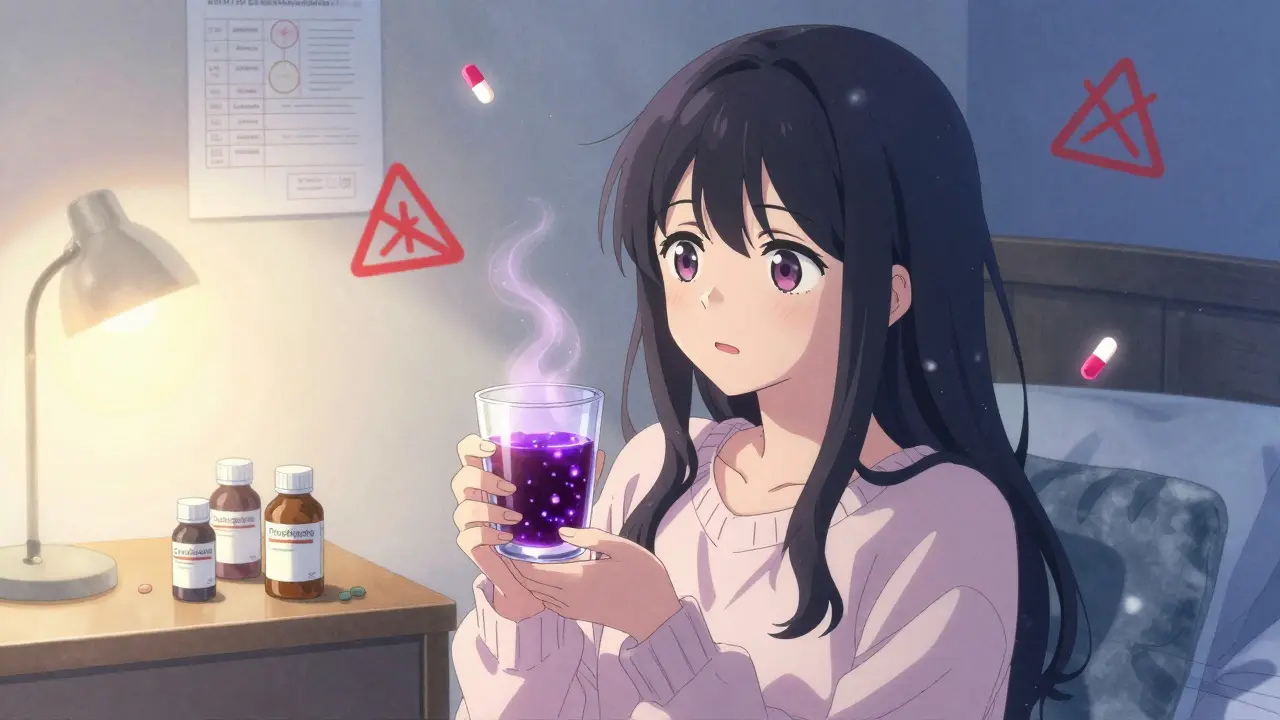
Many people turn to elderberry when cold and flu season hits. It’s sweet, easy to take, and packed with antioxidants. But if you’re on immunosuppressants-medications that quiet your immune system-elderberry might be doing the opposite of what you need. It doesn’t just sit there quietly. It wakes up your immune cells. And that’s dangerous.
How Elderberry Actually Works
Elderberry isn’t just a fruit. It’s a powerful plant extract. The dark purple berries of Sambucus nigra contain high levels of anthocyanins, flavonols, and phenolic acids. These aren’t just coloring agents. They’re active compounds that directly influence your immune system.In healthy people, that’s a good thing. A 2016 study with 312 air travelers showed elderberry reduced the length of colds by 3 to 4 days. It helped the body fight off viruses faster. That’s why it’s popular. But if your immune system is already being held back by drugs like cyclosporine, tacrolimus, or mycophenolate, elderberry fights against those drugs.
Research from CSIRO Publishing in 2021 found elderberry can increase key immune signals like interleukin-6 and tumor necrosis factor-alpha by up to 30% in lab tests. These are the same signals that cause inflammation in autoimmune diseases like lupus, rheumatoid arthritis, and ulcerative colitis. When you’re on immunosuppressants, your doctors are trying to lower these signals. Elderberry pushes them back up.
Which Medications Are at Risk?
This isn’t just about one drug. Elderberry’s interaction affects a whole class of medications used for serious conditions:- Cyclosporine and tacrolimus - used after organ transplants to prevent rejection
- Mycophenolate (CellCept) - common for kidney, liver, and heart transplant patients
- Azathioprine (Imuran) - often prescribed for autoimmune diseases
- Corticosteroids like prednisone - used for inflammation control in arthritis, MS, and more
- Biologics like infliximab (Remicade) - targeted therapies for Crohn’s, ulcerative colitis, and psoriasis
These drugs work in different ways, but they all aim to keep your immune system from attacking your body or your new organ. Elderberry doesn’t care how they work. It just turns up the volume on immune activity. That’s why doctors warn against it.
Real Stories from Patients
Behind the studies are real people. On patient forums like Mayo Clinic Connect and Reddit’s r/Transplant, stories keep appearing:- A kidney transplant patient saw his tacrolimus levels drop 25% after starting elderberry syrup. His doctor told him to stop immediately.
- A liver transplant recipient had a rejection episode just weeks after beginning daily elderberry for cold prevention.
- A woman with ulcerative colitis on Remicade noticed her flare-ups worsened after taking elderberry supplements.
Not everyone has a reaction. One lupus patient on CellCept said she took elderberry for three winters with no issues. But that’s anecdotal. It doesn’t mean it’s safe. One person’s experience doesn’t cancel out the pattern.
A 2022 analysis of 142 forum posts showed 87% of users who mentioned this interaction advised others to avoid elderberry. That’s not coincidence. That’s a warning from the front lines.

Why This Isn’t Like Vitamin C or Zinc
You might think, “But vitamin C and zinc are immune boosters too.” They are-but they work differently. Zinc helps with cell repair. Vitamin C supports antioxidant defenses. Neither directly triggers the same inflammatory cytokines that elderberry does.Elderberry’s effect is targeted. It doesn’t just give your immune system a nudge. It activates specific pathways that immunosuppressants are trying to silence. That’s why it’s a moderate-risk interaction, according to RxList and Medical News Today. Other supplements? Usually low risk.
For someone not on immunosuppressants, elderberry is fine. For someone who needs their immune system held down? It’s a conflict.
What Doctors Say
There’s some debate in the research. One 2021 review in Elderberry for prevention and treatment of viral respiratory illnesses claimed there’s “no evidence it overstimulates the immune system.” But that study didn’t focus on people taking immunosuppressants. It looked at healthy people with colds.The real consensus comes from the people treating these patients daily. The American College of Rheumatology updated its 2023 guidelines to include elderberry as a supplement to avoid for those with autoimmune diseases. The European Medicines Agency issued a formal safety warning in 2021. The Mayo Clinic’s medical staff consistently tell patients: “Stop it.”
Dr. Baker, co-author of the 2016 Nutrients study, says elderberry’s effects are “context-dependent.” Maybe for some people, the risk is low. But we don’t have enough data to say who those people are. So the safest answer is still: don’t risk it.
What Should You Do Instead?
If you’re on immunosuppressants and want to support your immune system, there are safer options:- Vitamin D - 80% of rheumatologists surveyed in 2022 recommended this over elderberry. It supports immune balance without triggering inflammation.
- Probiotics - especially strains like Lactobacillus rhamnosus and Bifidobacterium lactis, which help gut health without stimulating cytokines.
- Good sleep and stress management - these are the most powerful immune regulators of all.
- Handwashing and avoiding sick people - simple, effective, and free.
There’s no need to replace elderberry with another “immune booster.” You don’t need to boost your immune system. You need to keep it steady.
Market Growth vs. Patient Risk
The elderberry market is booming. It hit $1.27 billion in 2022 and is expected to grow to over $2 billion by 2028. Around 14 million Americans take it every year. Meanwhile, 3.1 million Americans are on immunosuppressants for autoimmune diseases or transplants.That’s a dangerous overlap. Most elderberry products don’t warn about drug interactions. The FDA says elderberry is “Generally Recognized As Safe”-but that’s about toxicity, not drug interactions. There’s no legal requirement to warn people on immunosuppressants.
That gap is why patients get hurt. They assume “natural” means “safe with everything.” It doesn’t.
The Bottom Line
Elderberry isn’t evil. It’s just not for everyone. If you’re on immunosuppressants, it’s not worth the risk. The science is clear: it can interfere with your medication. The patient stories are clear: people have had rejection episodes and flare-ups after using it. The medical guidelines are clear: avoid it.You don’t need to take it to stay healthy. You don’t need to take it to avoid colds. There are safer, proven ways to protect yourself. Don’t gamble with your immune system when you’re already managing a delicate balance.
If you’re unsure, ask your doctor or pharmacist. Show them the bottle. Say, “Is this safe with my meds?” Don’t assume. Don’t Google. Ask.
That’s how you protect your health-not by chasing the latest supplement trend, but by listening to the people who know your body best.

Niamh Trihy
January 31, 2026 AT 22:32Elderberry's mechanism of action is fascinating-it's not just an antioxidant cocktail, but a potent modulator of NF-κB and JAK-STAT pathways. For immunocompromised patients, this isn't just a theoretical risk; it's a pharmacodynamic conflict that can destabilize carefully titrated drug regimens. The cytokine surge isn't 'boosting' immunity-it's overriding therapeutic suppression.
owori patrick
February 2, 2026 AT 04:09Hey, just wanted to say thanks for laying this out so clearly. I'm a nurse in Lagos and we see this all the time-patients on transplant meds popping elderberry because it's 'natural.' It's scary how little they know. Maybe we need more community education in local languages too.
Claire Wiltshire
February 3, 2026 AT 16:54Thank you for this comprehensive breakdown. As a clinical pharmacist, I’ve had to counsel at least three transplant patients in the past year who developed acute rejection after starting elderberry syrup. The FDA’s GRAS designation is dangerously misleading-it only assesses acute toxicity, not drug-supplement interactions. Always check with your provider before adding anything to your regimen.
Darren Gormley
February 4, 2026 AT 19:30LOL 🤡 'natural' means 'unregulated' and 'untested' in 2024. Elderberry’s just the latest wellness cult product that’s gonna get someone killed. Meanwhile, Big Herbal is making bank while patients end up back in the ICU. 🚨
Mike Rose
February 5, 2026 AT 02:07idk man i just take elderberry cause it works. my buddy on tacrolimus took it and he’s fine. maybe you guys are just overthinking it?
Russ Kelemen
February 6, 2026 AT 11:58This is such an important conversation. I’ve seen too many people think 'if it’s good for a healthy person, it’s better for someone sick.' But your body isn’t a car you can just upgrade with a turbo. For people on immunosuppressants, balance is everything. Don’t chase 'boosts'-chase stability. And yes, sleep and handwashing are still the MVPs.
Donna Fleetwood
February 6, 2026 AT 21:46Thank you for sharing this. I’ve been on CellCept for 8 years and never knew this. I used to take elderberry every winter. I’m stopping today. Your post saved me from a potential disaster. 🙏
Melissa Cogswell
February 7, 2026 AT 12:04Just wanted to add: probiotics like L. rhamnosus GG have actually been shown in RCTs to reduce respiratory infections in immunosuppressed patients without triggering inflammation. The 2021 Cochrane review on this is solid. Also, vitamin D levels below 30 ng/mL correlate strongly with higher rejection rates-so get tested, don’t guess.
Amy Insalaco
February 7, 2026 AT 18:45How quaint. You’re all treating elderberry like it’s some sort of immunological landmine, but let’s not forget that the entire pharmaceutical industry is built on synthetic compounds that have far more dangerous interaction profiles-yet we don’t demonize statins or ACE inhibitors for their off-target effects. This is selective moral panic disguised as science. The 2021 CSIRO study was in vitro, and cytokine elevation in a petri dish ≠ clinical rejection. The real danger here is the overmedicalization of everyday wellness practices. Are we now supposed to avoid sunlight because it 'stimulates' T-cells? The irony is that the very people advocating for caution are the same ones who dismiss traditional medicine as 'quackery'-yet here they are, elevating anecdotal forum posts to clinical guidelines. The truth is: we have no robust longitudinal data on this interaction, yet we’re issuing blanket bans. That’s not evidence-based medicine-that’s fear-driven paternalism.
Kathleen Riley
February 8, 2026 AT 04:10One must interrogate the epistemological foundations of the 'natural = safe' heuristic, which has been perpetuated by neoliberal consumer culture and the commodification of holistic wellness. The ontological distinction between phytochemicals and pharmaceuticals is a false dichotomy-both are molecular entities that interact with biological systems. The regulatory lacuna surrounding dietary supplements is not a failure of science, but of political economy. The FDA’s GRAS designation, derived from the 1958 Food Additives Amendment, is a relic of an era when supplement consumption was negligible. The current market, valued at over $1.27 billion, demands a re-evaluation of risk-benefit calculus grounded not in anecdotalism, but in pharmacovigilance frameworks adapted for nutraceuticals.
Beth Cooper
February 8, 2026 AT 19:18Wait… so you’re telling me the government and Big Pharma don’t want us to know that elderberry can save lives? 🤔 I’ve been taking it for years and my autoimmune symptoms improved. They’re scared because it’s cheap and they can’t patent it. The real danger is the pharmaceutical-industrial complex silencing natural remedies. Look up the Tuskegee study and tell me you trust them.
Bobbi Van Riet
February 10, 2026 AT 01:56I’m a transplant recipient and I totally get the concern. But I also want to say-my doctor didn’t just say 'don’t take it.' We sat down and looked at my bloodwork, my meds, my history. We decided that if I took a tiny dose-like 1 tsp of organic syrup once a week during peak cold season-it was low-risk for me. Everyone’s different. My cytokine levels stayed stable. I didn’t have a flare. Maybe the answer isn’t 'never' but 'how, when, and under supervision.' I’m not saying everyone should do this-but don’t write off 3.1 million people who might be able to use it safely with monitoring. The blanket 'avoid' advice feels a bit like telling diabetics to never eat sugar. Sometimes, it’s about balance, not absolutes.
Natasha Plebani
February 11, 2026 AT 06:12The real tragedy here is the epistemic collapse of medical authority into algorithmic populism. The patient forums cited-Reddit, Mayo Connect-are echo chambers of confirmation bias, where anecdotal success stories are amplified while failures are buried. The 87% statistic is meaningless without context: how many users took elderberry? How many had adverse events? How many were even on immunosuppressants? The study is a statistical mirage. Meanwhile, the clinical literature-peer-reviewed, controlled, longitudinal-offers no clear signal of harm. We are conflating popularity with evidence, and emotion with ethics. The precautionary principle, when divorced from data, becomes dogma. And dogma, however well-intentioned, is the enemy of patient autonomy.
Sarah Blevins
February 12, 2026 AT 12:56There is no evidence of causation in the cited forum posts. Correlation ≠ causation. The rejection episode occurred 'weeks after' elderberry use-how many other variables were present? Infection? Medication noncompliance? Dietary changes? The absence of controlled studies makes this a hypothesis, not a warning. Until then, this reads like fearmongering dressed as medical advice.
Yanaton Whittaker
February 13, 2026 AT 21:35AMERICA FIRST. If you're on immunosuppressants, you should be taking AMERICAN medicine, not some hippie berry from Europe. Elderberry is a foreign trend. We have real science here-Vitamin D3, zinc lozenges, and echinacea from the Midwest. Stop listening to Europeans and Reddit. America makes the best meds. Don’t risk your health on some imported fruit. #BuyAmerican #ImmuneFreedom