Corticosteroids: When Short-Term Relief Outweighs Long-Term Risks
 Mar, 15 2026
Corticosteroids work fast-sometimes too fast. If you’ve ever taken prednisone for a sudden flare-up of arthritis, asthma, or an allergic reaction, you know what I mean. Within a day or two, pain fades, swelling drops, and breathing clears. It feels like magic. But that magic comes with a price tag you can’t see until it’s too late. For many, the short-term relief is worth it. For others, the long-term damage lingers long after the pills are gone.
How Corticosteroids Work-and Why They’re So Tempting
Corticosteroids are synthetic versions of cortisol, the hormone your body makes naturally to handle stress and inflammation. When you’re sick or injured, your immune system goes into overdrive. Corticosteroids calm that storm. They don’t cure anything. They just shut down the noise so your body can heal.
That’s why doctors reach for them. For acute problems-like a lupus flare, a severe asthma attack, or a sudden rheumatoid arthritis flare-they’re the fastest tool in the box. Unlike DMARDs or biologics, which take weeks to work, corticosteroids can knock down inflammation in 24 to 48 hours. A 2021 study in Arthritis & Rheumatology found that prednisone cut disease activity scores by 2.1 points in just one week. NSAIDs? Half that. Placebo? Barely any change.
That speed is why 22.4 million corticosteroid prescriptions are written every year in the U.S. alone. But here’s the problem: nearly half of those prescriptions are for conditions where they don’t belong. Acute bronchitis? Nonspecific back pain? Common colds? The evidence says no. Yet they’re still prescribed. A 2020 analysis showed 21% of U.S. adults got at least one short-term steroid course over three years-and 47% of those were for conditions with no proven benefit.
The Hidden Cost of Quick Relief
Short-term doesn’t mean harmless. Even a 7-day course of prednisone carries risks. A 2019 analysis of 1.5 million patient records found that within just 5 to 30 days of starting corticosteroids:
- Sepsis risk jumped by 430%
- Venous thromboembolism (blood clots) risk rose by 230%
- Fracture risk increased by 90%
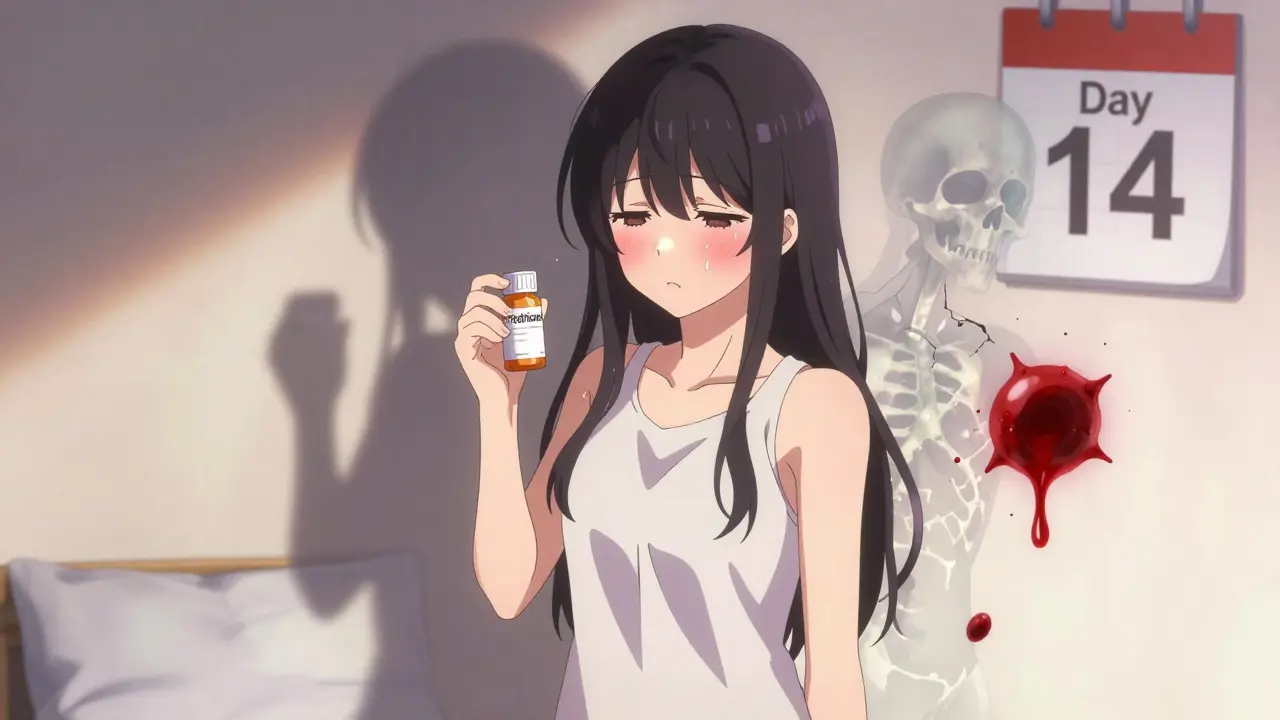
These aren’t rare side effects. They’re predictable. And they happen fast. One patient I spoke with started 10mg of prednisone for a skin rash. Two weeks later, she couldn’t walk without pain. Her bone density scan showed a 4% drop in hip density-enough to qualify as early osteoporosis. She’d been on steroids for 14 days.
Then there’s the metabolic toll. Weight gain isn’t just about appetite. Corticosteroids change how your body stores fat and processes sugar. A 2023 survey of 1,200 users found 87% gained weight-on average 12.4 pounds in just eight weeks. Blood sugar spikes? 41% needed new diabetes meds. Insomnia? 63% couldn’t sleep through the night.
And then there’s the face. Moon face. That round, puffy look isn’t just cosmetic. It’s a sign your body is flooded with synthetic cortisol. Reddit users call it "prednisone face." HealthUnlocked forums have threads where people post photos taken 14 days after starting treatment. It’s real. And for some, it doesn’t fully go away.
Long-Term Use: When Relief Turns to Damage
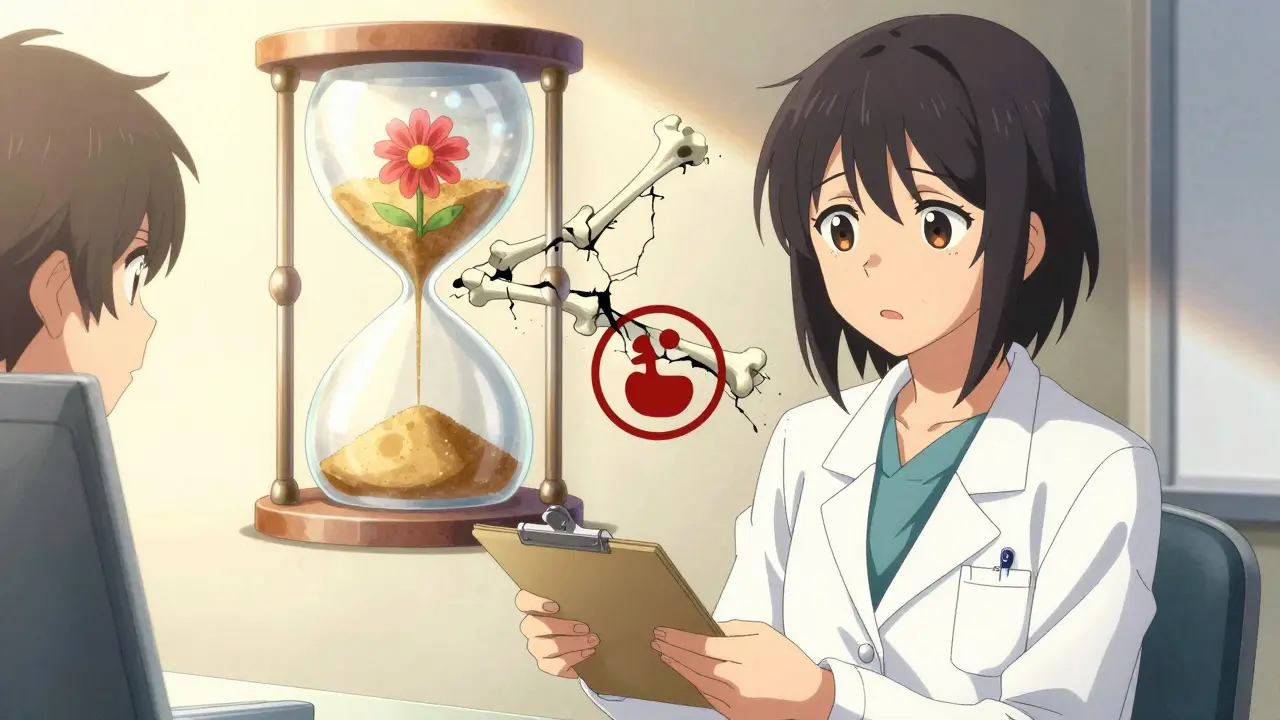
When corticosteroids become a regular part of your life, the damage piles up. The American College of Rheumatology says no one should stay on systemic steroids longer than 12 weeks unless absolutely necessary. Yet many do-sometimes for years.
After three months, bone loss starts. At 3% to 5% per month. That’s faster than menopause. By six months, 8% of users develop osteoporosis. By a year, many need monthly calcium, vitamin D, and annual IV zoledronic acid just to slow the decay.
Cataracts? 12% of long-term users develop them. Diabetes? 7% end up with steroid-induced diabetes-even if they never had it before. And here’s the kicker: once you stop, some damage sticks. You can’t undo a cataract. You can’t reverse bone loss without years of treatment. And once your adrenal glands shut down from long-term suppression, you may need lifelong hormone replacement.
Dr. Susan Baker, former president of the American College of Rheumatology, calls corticosteroids the "fire extinguisher of rheumatology." Useful in emergencies. Deadly if left running.
Who’s Most at Risk?
It’s not just about dosage. It’s about who you are.
- People over 65 are 2.3 times more likely to get corticosteroid prescriptions than those under 45.
- Rural patients get inappropriate prescriptions 1.7 times more often than urban ones.
- Those with diabetes, high blood pressure, or a history of fractures are at highest risk for complications.
And yet, only 42% of primary care providers follow full monitoring guidelines. No DEXA scan? No blood sugar checks? No eye exams? That’s not negligence-it’s systemic. The system is overloaded. Doctors are rushed. Patients don’t ask. And the side effects? They show up months later, often under a different doctor’s care.
How to Use Them Safely
If you need corticosteroids, here’s how to minimize the harm:
- Use the lowest dose possible. 5mg of prednisone daily is often enough. Higher doses don’t work better-they just cause more damage.
- Keep it short. Never go beyond 14 days without a clear plan. If you need more, you need a different treatment.
- Taper slowly. Stopping abruptly can trigger adrenal crisis. A 7-day taper is the minimum. For longer courses, taper over weeks.
- Monitor. If you’re on more than 7.5mg daily for over 3 months, you need: a baseline DEXA scan, monthly glucose checks, and annual eye exams.
- Protect your bones. Calcium 1200mg + vitamin D 800IU daily. Consider annual zoledronic acid if you’re on high-dose steroids for more than 4 weeks.
And if your doctor prescribes corticosteroids for a cold, sinus infection, or back pain? Ask: "Is this backed by guidelines?" The American College of Physicians launched "Steroids Smart" in January 2024 to block inappropriate prescriptions in Medicare plans. If your provider doesn’t know the rules, it’s time to find someone who does.
The Future: Better Alternatives
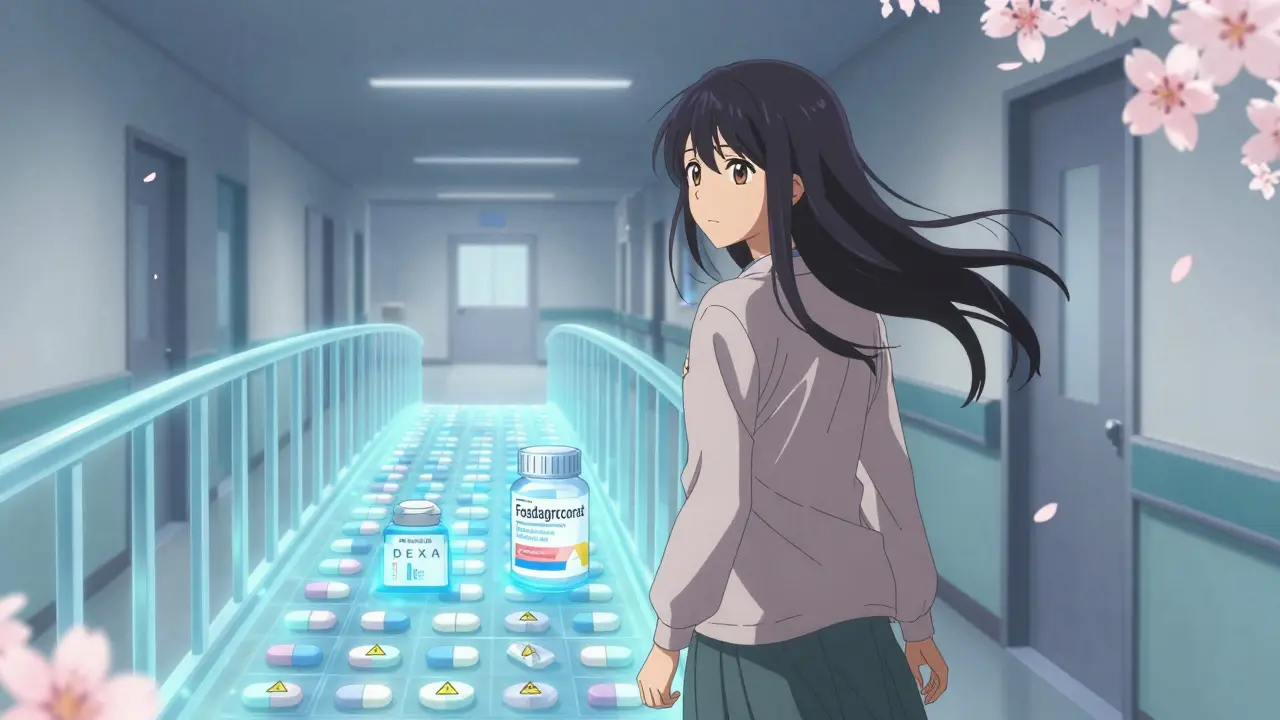
There’s hope. In December 2023, the FDA approved fosdagrocorat-the first selective glucocorticoid receptor modulator (SGRM). It works like prednisone but with 63% less blood sugar disruption. It’s not a cure-all, but it’s a step toward safer inflammation control.
Electronic health records now auto-flag inappropriate steroid prescriptions in 87% of U.S. hospitals. That’s cut misuse by 31% in early adopters. And the message from EULAR is clear: "No patient should receive continuous systemic corticosteroids beyond 6 months without trying at least two advanced biologics first."
For now, corticosteroids remain the most powerful tool we have for acute inflammation. But they’re not a long-term fix. They’re a bridge. And bridges aren’t meant to be lived on.
Can I stop prednisone cold turkey if I feel better?
No. Stopping suddenly can cause adrenal insufficiency-your body stops making cortisol because it’s been relying on the drug. Symptoms include fatigue, dizziness, nausea, and even life-threatening shock. Always taper under medical supervision. Even a 7-day taper is required after 14 days of use.
Are corticosteroid injections safer than pills?
Not necessarily. Injections like cortisone shots deliver a high dose directly to one area, which reduces systemic exposure. But if you get multiple shots in a year, the steroids still enter your bloodstream. One study found that patients receiving more than three joint injections annually had the same bone loss and blood sugar risks as those on daily pills. Limit injections to two or three per year per joint.
Do corticosteroids cause weight gain even at low doses?
Yes. Even 5mg of prednisone daily can trigger fluid retention and increased appetite. A 2023 patient survey found 87% of users gained weight, even on low doses. The average gain was 12.4 pounds in eight weeks. It’s not laziness-it’s biology. Managing diet and activity during treatment helps, but doesn’t fully prevent it.
How long do side effects last after stopping steroids?
Some fade quickly-like mood swings or insomnia-within days or weeks. Others stick: cataracts, osteoporosis, and steroid-induced diabetes can be permanent. Bone density doesn’t fully recover in many cases. That’s why monitoring during treatment is critical. Once damage is done, reversal is hard.
Is it true corticosteroids are overprescribed for colds and bronchitis?
Yes. A 2020 analysis found 22.1% of all corticosteroid prescriptions were for acute bronchitis-a viral infection where steroids provide no benefit. The same goes for most upper respiratory infections. Yet they’re still given. This isn’t just wasteful-it’s dangerous. These prescriptions expose patients to serious risks for zero gain.

Kathy Leslie
March 16, 2026 AT 09:24I’ve been on prednisone twice-once for a bad allergic reaction, once for a flare-up. Both times, I felt like a superhero for a few days. Then came the moon face, the insomnia, the weird hunger that made me eat cereal at 2 a.m. It’s not just the weight gain-it’s the emotional rollercoaster. I cried over a commercial once. I didn’t even like the ad.
My doctor didn’t warn me about any of this. Just said, ‘Take it for two weeks.’ Two weeks. That’s all it took to mess with my sleep, my mood, and my self-image. I’m not mad, just… surprised. Why isn’t this more common knowledge?
Amisha Patel
March 17, 2026 AT 13:49Interesting read. I’m from India and we see steroid use everywhere-skin creams, injections for fever, even for mild coughs. No one questions it. My aunt got a steroid shot for a cold last year. She gained 10kg in three weeks. No one connected the dots.
It’s not just a US problem. It’s a global blind spot. Doctors here don’t have time to explain. Patients don’t know to ask. The system is broken everywhere.
Elsa Rodriguez
March 17, 2026 AT 16:08OMG I’m so glad someone finally said this. I thought I was the only one who looked like a balloon after prednisone. My husband said I looked like a ‘cute potato.’ Cute. POTATO. I cried for three days. Then I started posting selfies on Reddit with the caption ‘This is what 10mg looks like.’
People thought it was a joke. It wasn’t. I lost 8 pounds after stopping, but my skin still feels thin. Like I’m made of tissue paper. And the diabetes? I’m pre-diabetic now. All because I had a rash. I’m not mad. I’m devastated.
Serena Petrie
March 18, 2026 AT 22:45Don’t take steroids unless you have to.
Buddy Nataatmadja
March 20, 2026 AT 19:08As someone who’s lived in both the US and Indonesia, I’ve seen how differently steroids are treated. Here, it’s ‘use with caution.’ Back home, it’s ‘here, take two.’ No questions. No follow-ups. Just a prescription and a smile.
It’s not just ignorance-it’s cultural. In places where healthcare access is limited, steroids are the only fast fix. But that doesn’t make it right. We need better education on both sides.
mir yasir
March 21, 2026 AT 14:37The author demonstrates a commendable grasp of clinical pharmacology, yet the tone remains alarmist. The 2021 Arthritis & Rheumatology study cited does not establish causality, only correlation. Moreover, the assertion that ‘nearly half’ of prescriptions are inappropriate lacks rigorous peer-reviewed validation. One must question whether the data has been cherry-picked to suit a narrative of pharmaceutical overreach.
Stephanie Paluch
March 23, 2026 AT 03:28Yessss this. 😭 I started 5mg for a rash. Two weeks later, I couldn’t fit into my jeans. My mom said, ‘You look healthy!’ I cried. I gained 14 lbs. I slept 3 hours a night. I felt like a zombie with anxiety. 😵💫
My doctor didn’t say a word about side effects. Just handed me the script. I had to Google everything. Why isn’t this on the bottle? Why isn’t this in the pamphlet? 😔
And the moon face? I took a photo. Posted it. Strangers messaged me saying ‘I thought I was alone.’ We’re not alone. We’re just unheard.
tynece roberts
March 23, 2026 AT 08:31so i took prednisone for like 10 days for a bad eczema flare and honestly? it was a game changer. my skin looked normal for the first time in years. BUT. then i got this weird puffiness in my face and i felt like i was constantly drunk. no energy. i’d nap at 3pm. i started craving chips like my life depended on it. and when i stopped? i felt like i was dying. like, physically. dizzy. nauseous. had to go back to the doc because i thought i was having a stroke.
turns out i was in adrenal withdrawal. they gave me a taper. took 3 weeks. i’m fine now. but i’ll never take it again unless i’m dying. and even then? i’m gonna make them write it on my arm in Sharpie: TAPER OR DIE.
Hugh Breen
March 23, 2026 AT 20:42This is one of the most important public health conversations we’re NOT having. 🙌
I’m a nurse in London. I’ve seen elderly patients on prednisone for YEARS because ‘it’s easier than changing their meds.’ One woman, 82, had three hip fractures in two years-all from steroid-induced osteoporosis. She was on 10mg daily for her ‘chronic inflammation.’ No one checked her bone density. No one asked if she’d tried a biologic.
We’re not just overprescribing-we’re abandoning our duty. And the worst part? Patients feel guilty for asking questions. They think, ‘If the doctor said it, it must be fine.’
Let’s stop normalizing this. Let’s demand better. 💪🩺
Byron Boror
March 24, 2026 AT 05:33These articles are why America’s falling apart. You want to scare people out of using a life-saving tool because of a few side effects? I’ve seen people in pain who couldn’t walk. Steroids got them back on their feet. You think we should let them suffer while we wait for some fancy new drug that’ll cost $20k a year? That’s not healthcare-that’s elitist nonsense.
Rex Regum
March 24, 2026 AT 08:10Oh wow, a 22.4 million prescription number? That’s just proof that doctors are lazy. No wonder we’re all dying from ‘preventable’ causes. If you can’t handle a real diagnosis, maybe you shouldn’t be a doctor. I’ve been on prednisone for 3 years. I’m fine. My doctor says I’m ‘in a special category.’ I’m not a guinea pig. I’m a warrior. And I’m not sorry.
Tim Schulz
March 25, 2026 AT 11:39Oh look, another ‘woke’ medical article that thinks patients are too stupid to read the side effects. 🙄
So what if I gained 12 pounds? I gained 12 pounds of confidence. I looked like a goddess. My skin glowed. My mood? Electric. I didn’t need ‘balance.’ I needed to feel alive.
And if you’re too weak to handle a little moon face? Maybe you shouldn’t be in charge of your own body. 🤷♂️
PS: I’m still on it. And I’m not tapering. I’ve earned this.
Jinesh Jain
March 26, 2026 AT 03:42Interesting data. In India, we have a different challenge: access to alternatives. Many patients can’t afford biologics. Steroids are the only affordable option. The issue isn’t just overprescribing-it’s under-resourcing. Without better infrastructure, we’re forced into the least-bad choice. Awareness helps, but funding helps more.