Child Medication Switches: What Parents Need to Know About Generic Drugs
 Jan, 26 2026
When your child has been on the same asthma inhaler or seizure medicine for months-or even years-it’s easy to assume that a switch to a cheaper generic version is harmless. After all, the label says the same active ingredient. But for kids, that small change can have big consequences. Unlike adults, children aren’t just small versions of grown-ups. Their bodies process drugs differently, and even tiny differences in how a medicine is made can affect how well it works-or if it causes side effects.
Why Generic Switches Are Riskier for Kids
The FDA requires generic drugs to be bioequivalent to brand-name versions. That means they must deliver the same active ingredient at roughly the same rate and amount in the bloodstream. The acceptable range? 80% to 125% of the brand’s performance. Sounds close enough, right? But for kids, especially those on medications with a narrow therapeutic index (NTI), that range is too wide. Drugs like phenytoin for seizures, tacrolimus for transplant patients, or warfarin for clotting disorders need to stay within a very tight window. Too little, and the drug doesn’t work. Too much, and it becomes toxic. A 2015 study of pediatric heart transplant patients found that switching from brand-name Prograf to generic tacrolimus led to an average 14% drop in blood levels. That’s not a small fluctuation-it’s the difference between preventing rejection and risking organ failure. These aren’t theoretical risks. They’re documented in hospital records. Even common medications like omeprazole (used for reflux in infants) behave differently in babies under 3 months. Their liver enzymes aren’t mature yet. The same dose that works for an adult might be absorbed too slowly-or too quickly-in a newborn. And because most bioequivalence studies are done on adults, we’re often guessing when we switch a baby’s medicine.It’s Not Just About the Active Ingredient
Generic drugs have the same active ingredient, but they can contain different fillers, dyes, flavors, or binders. These inactive ingredients are usually harmless. But in children, especially those with allergies or sensitive digestive systems, they can cause reactions. One child might tolerate the red capsule version of amoxicillin just fine. Switch them to a white tablet with a different coating, and suddenly they’re vomiting or breaking out in hives. Why? Maybe it’s the food dye. Maybe it’s the flavoring. Maybe it’s the way the tablet breaks down in the stomach. The brand-name version didn’t have that problem. The generic did. This is especially true for kids who take liquid medicines. A change in flavor or texture can make a child refuse to take it. For a child with epilepsy or asthma, missing a dose because the medicine tastes “weird” can be dangerous.How Switches Hurt Asthma Control
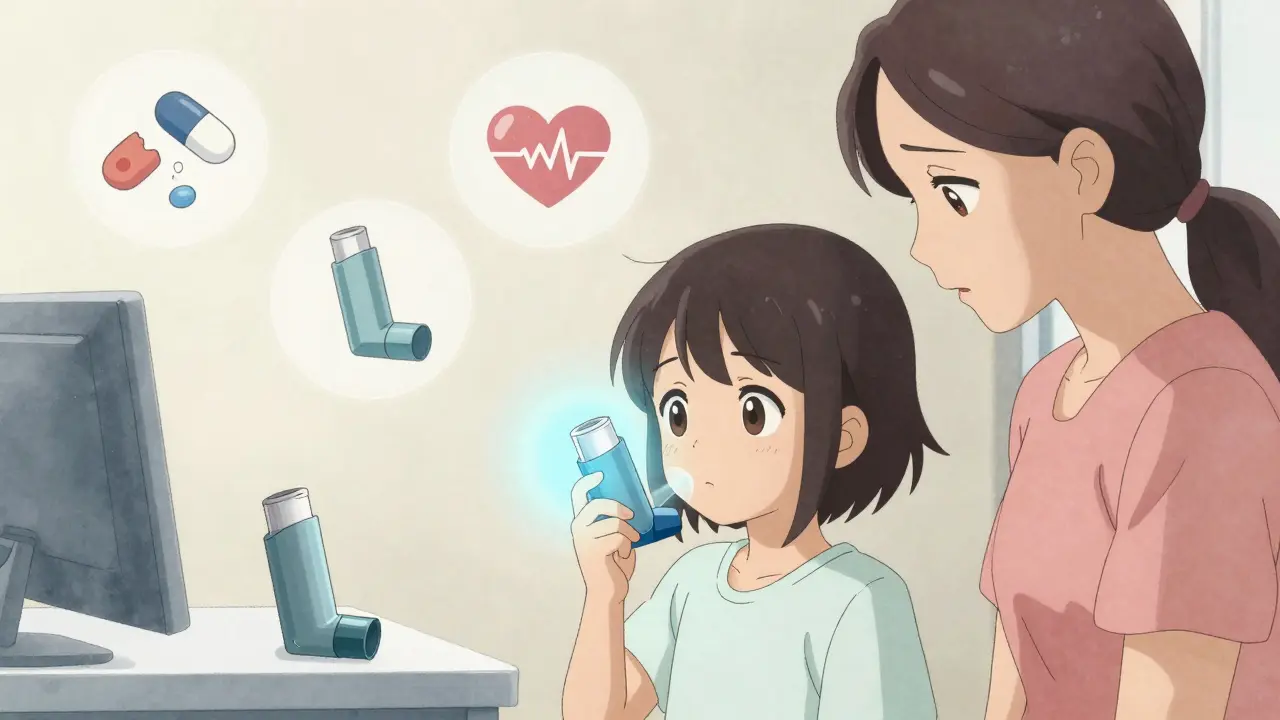
Asthma affects 6.2 million children in the U.S. alone. Many rely on daily controller inhalers to stay out of the ER. But when insurers switch their inhaler from brand-name to generic, it’s not just the medication that changes-it’s the device. A generic albuterol inhaler might look almost identical to the brand. But the spray pattern, the puff force, the way it mixes with air-these details matter. A child who’s been using a specific inhaler for years has learned how to coordinate their breath with the spray. Switch the device, and their technique falls apart. Studies show that technique errors can reduce drug delivery by 50% to 80%. Parents don’t always notice. They think, “My child took the medicine.” But if the medicine didn’t reach the lungs, the asthma isn’t controlled. And that leads to more coughing, more school absences, more hospital visits. PolicyLab at Children’s Hospital of Philadelphia found that after formulary switches, adherence drops by 15% to 20%. Why? Caregivers get confused. The pill color changed. The bottle looks different. The instructions are on a new leaflet. The child refuses the new version. All of it adds up to missed doses.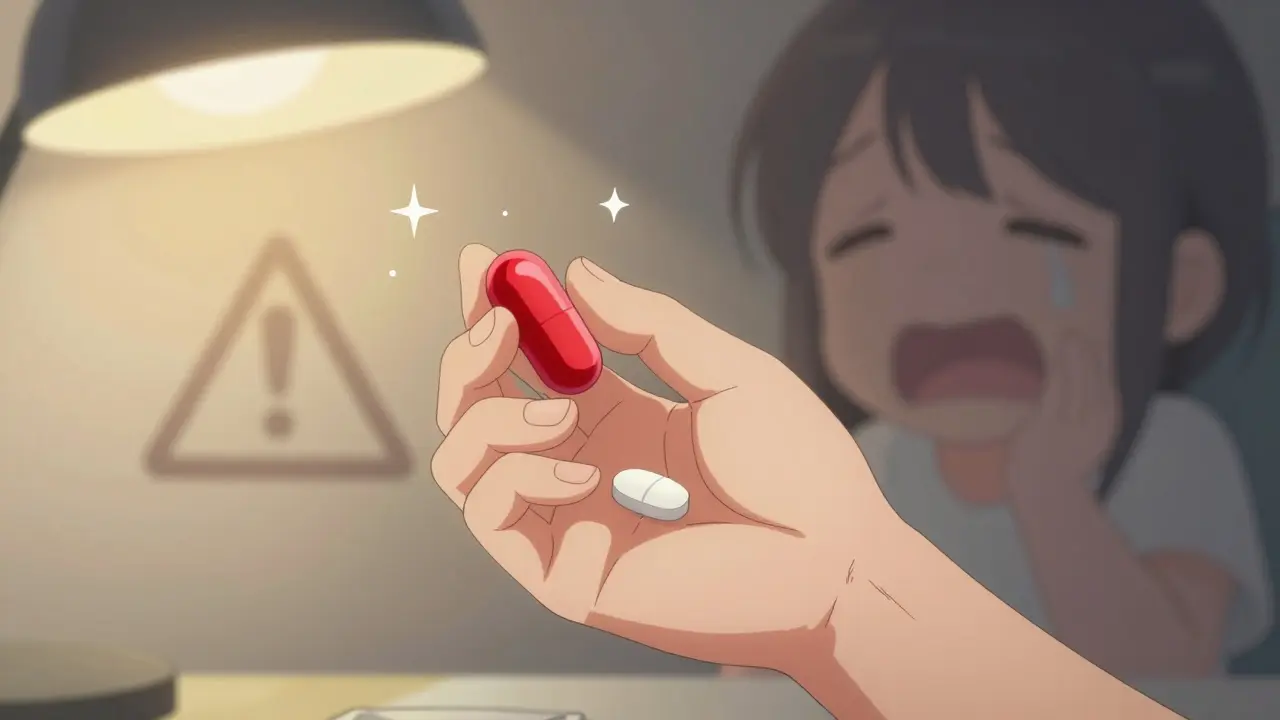
State Laws Don’t Protect Kids Enough
In 19 states, pharmacists are required to substitute generics without telling the parent. In 7 states and Washington, D.C., they must get consent first. The rest fall somewhere in between. This patchwork of rules means a child in New York might get a new inhaler without warning, while a child in California gets a phone call from the pharmacy. That inconsistency creates chaos for families who move, travel, or see multiple providers. A 2009 study showed that states requiring consent had 25% fewer generic switches. That tells us something: when parents are involved, fewer risky switches happen. And here’s the kicker: many pharmacists don’t even know to ask. A 2018 survey found only 37% of pharmacists routinely discussed switching risks with caregivers of children on chronic meds. That’s not negligence-it’s a system failure. No one trained them. No one gave them tools.What You Can Do as a Parent
You don’t have to accept a switch blindly. Here’s what works:- Ask your pediatrician before any switch: “Is this safe for my child’s condition?” If they’re unsure, ask for a referral to a pediatric pharmacist.
- Check the pill or liquid every time you refill. If it looks different-color, shape, size, smell-ask why. Don’t assume it’s the same.
- Watch for changes in your child’s symptoms after a switch. Increased coughing? More seizures? Trouble sleeping? Mood swings? These could be signs the new version isn’t working right.
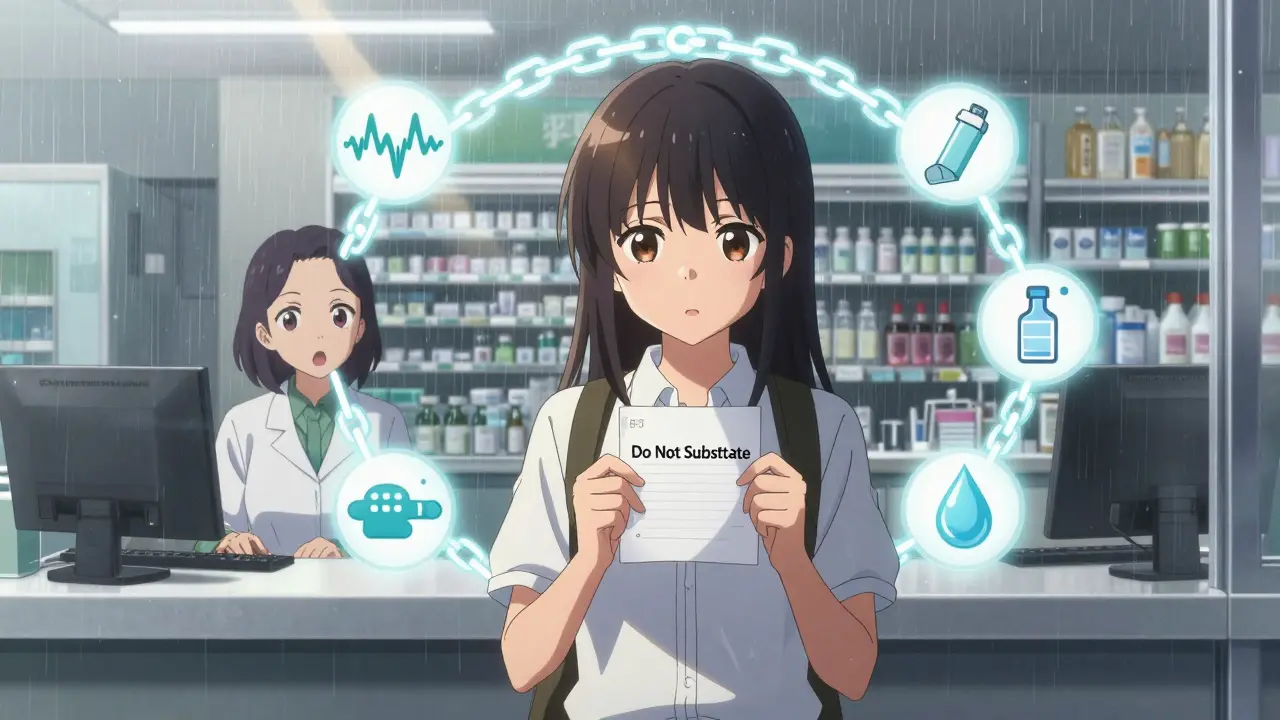
- Request a prescription for the brand if your child has had a bad reaction. Write “Dispense as written” or “Do not substitute” on the prescription. It’s legal.
- Call your insurance and ask if they can make an exception. Many insurers have hardship exceptions for kids with chronic conditions.
Why Doctors Are Stuck
Pediatricians aren’t ignoring the risks. They’re often caught in the middle. Insurers push for generics because they save money. Hospitals need to meet budget targets. Pharmacists follow state rules. And parents? They want the cheapest option. But here’s the truth: saving $10 on a month’s supply of medicine can cost $10,000 in ER visits if the switch triggers a seizure or asthma attack. The real cost isn’t on the pharmacy receipt-it’s in missed school days, sleepless nights, and emergency room bills. The American Academy of Pediatrics has been calling for better guidelines since 2019. They’re working on new recommendations expected in late 2024. Until then, the burden falls on parents to ask the right questions.The Bigger Picture: Why This Isn’t Getting Fixed
Between 2010 and 2020, only 12% of generic drug approvals included any pediatric-specific testing. The FDA admits it doesn’t have enough data to know if most generics are truly safe for kids. But changing the rules takes time-and money. The generic drug industry saved U.S. healthcare $2.2 trillion between 2009 and 2019. That’s huge. But that savings came from adult prescriptions. Pediatric studies are expensive. Few companies want to pay for them when they can just copy the adult formula. California passed a law in 2022 requiring Medicaid plans to have special review committees for kids’ meds. That’s a start. More states will follow. But right now, we’re playing catch-up.What’s Next?
The FDA’s 2022 Pediatric Formulation Initiative is trying to fix this. They’re pushing for better liquid forms, easier-to-use inhalers, and more child-friendly dosing. But until we require bioequivalence testing specifically for children, especially for high-risk drugs, we’re still guessing. The truth is simple: children deserve better. Their medicines shouldn’t be treated like commodities. A switch that’s safe for a 40-year-old might be dangerous for a 4-year-old. We need to stop pretending otherwise. If your child is on a long-term medication, don’t let a change in pill color go unchallenged. Ask. Document. Advocate. Because when it comes to your child’s health, the cheapest option isn’t always the safest one.Are generic medications for children as safe as brand-name ones?
Generic medications contain the same active ingredient as brand-name drugs, but they may differ in inactive ingredients, shape, size, or how they’re absorbed. For most children, generics are safe. But for kids on narrow therapeutic index drugs-like those for seizures, transplants, or heart conditions-even small changes can affect how well the medicine works. Always check with your pediatrician before switching.
Why does my child’s asthma seem worse after switching inhalers?
Generic inhalers may look similar, but the spray pattern, puff force, or device design can differ. These changes affect how much medicine reaches the lungs. Studies show technique errors can cut delivery by up to 80%. If your child’s symptoms worsen after a switch, ask your doctor for the original device or a demonstration on how to use the new one.
Can a change in pill color cause side effects in kids?
Yes. Some children react to food dyes, flavorings, or coatings used in generics. These aren’t the active ingredients, but they can cause vomiting, rashes, or refusal to take the medicine. If your child suddenly stops taking their medication after a switch, the new formulation may be the cause-not the illness.
What should I do if my insurance forces a generic switch?
Ask your pediatrician to write “Dispense as written” or “Do not substitute” on the prescription. You can also request a medical exception from your insurer. Many plans allow exceptions for children with chronic conditions if there’s documented risk. Keep records of any changes in your child’s health after the switch.
Are there any medications that should never be switched in children?
Yes. Medications with a narrow therapeutic index-such as tacrolimus, phenytoin, warfarin, levothyroxine, and some anti-seizure drugs-carry higher risks when switched. The FDA and the American Academy of Pediatrics flag these as areas of concern. If your child is on one of these, avoid switching unless your doctor confirms it’s safe and monitors levels closely.
How can I tell if my child’s generic medicine isn’t working?
Watch for changes in symptoms: increased seizures, more asthma attacks, trouble sleeping, mood swings, or refusal to take the medicine. If your child was stable on the brand-name version and started having problems after switching, the change may be the cause. Talk to your doctor and consider testing blood levels if appropriate (like for tacrolimus or phenytoin).
Is it legal to ask for the brand-name drug instead of the generic?
Yes. You have the right to request the brand-name version. Your doctor can write “Do not substitute” or “Dispense as written” on the prescription. Some insurance plans will still cover it with a prior authorization. It’s worth asking, especially if your child has had a bad reaction to a generic.

Irebami Soyinka
January 27, 2026 AT 20:29doug b
January 29, 2026 AT 13:43Katie Mccreary
January 30, 2026 AT 03:20SRI GUNTORO
January 30, 2026 AT 13:42Lance Long
January 31, 2026 AT 05:48Timothy Davis
January 31, 2026 AT 07:52fiona vaz
February 1, 2026 AT 00:22Sue Latham
February 2, 2026 AT 15:13John Rose
February 4, 2026 AT 12:16Brittany Fiddes
February 5, 2026 AT 22:31Phil Davis
February 7, 2026 AT 08:48Bryan Fracchia
February 7, 2026 AT 16:10Colin Pierce
February 8, 2026 AT 19:08Ambrose Curtis
February 9, 2026 AT 00:27Linda O'neil
February 9, 2026 AT 19:45