Bioequivalence and Patient Safety: Why Generic Drug Testing Matters
 Aug, 29 2026
You pick up a prescription at the pharmacy counter. The pharmacist hands you a box labeled with a generic name instead of the brand name you know. It’s cheaper, often significantly so. But a nagging thought creeps in: Is this pill actually doing the same thing as the one my doctor prescribed?
This isn’t just consumer paranoia; it’s a legitimate question about how our healthcare system works. The answer lies in a rigorous scientific process called bioequivalence. It sounds technical, but it is the invisible guardrail that keeps millions of patients safe while saving billions of dollars. If you’ve ever wondered why your generic blood pressure medication works just as well as the expensive brand-name version, or if there are risks when switching between them, you’re asking the right questions.
What Exactly Is Bioequivalence?
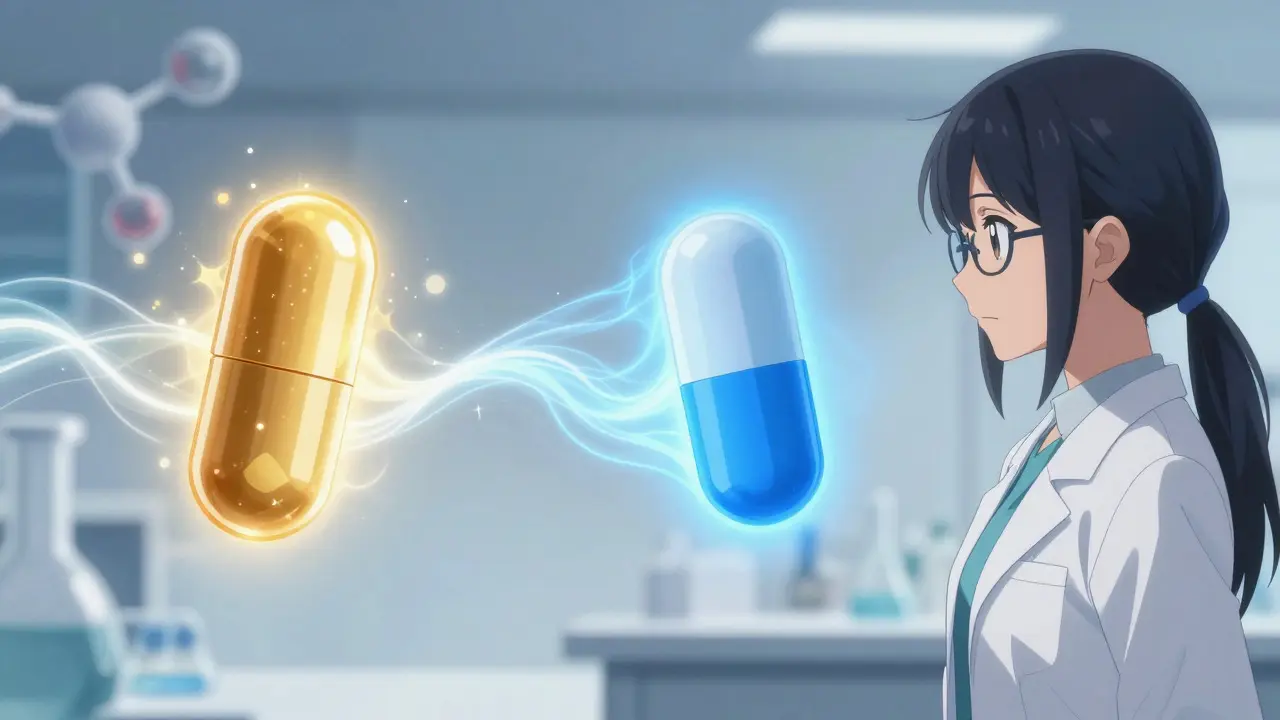
At its core, bioequivalence is about proving two things happen at the same rate and to the same extent. When you swallow a tablet, the active ingredient must dissolve, pass through your gut wall, enter your bloodstream, and reach the site where it does its job (like a receptor in your brain or heart). Bioequivalence testing verifies that a test product (usually a generic) delivers the active drug into the body at the same speed and amount as the reference product (the original brand).
It’s not enough for the pills to have the same ingredients. They could look identical on paper-same milligrams, same chemical formula-but if the generic dissolves too slowly, the drug might peak in your blood hours later than intended. Or if it dissolves too fast, you might get a dangerous spike in concentration before it drops off. Regulatory bodies like the U.S. Food and Drug Administration (FDA) and the European Medicines Agency (EMA) don’t guess. They measure.
The standard metric used is the 90% confidence interval. For a generic to be approved, the statistical range for key markers-specifically the Area Under the Curve (AUC), which measures total exposure, and Cmax, which measures peak concentration-must fall within 80% to 125% of the brand-name drug’s values. This doesn’t mean the generic can be 25% less effective. It means the average effect across a population falls within a tight, scientifically accepted window of difference that has no clinical impact.
The Science Behind the Switch
How do scientists prove this? They run pharmacokinetic studies. Typically, healthy volunteers take the brand drug in one period and the generic in another, with a washout period in between to clear the system. Blood samples are drawn frequently over several hours to map exactly how much drug is in the system at any given moment.
For most common medications, this single-dose crossover study is sufficient. But it gets trickier for complex cases. Consider levothyroxine, a thyroid hormone replacement. Because the therapeutic window is narrow-meaning a small change in dose can cause serious side effects or lack of efficacy-the FDA tightened standards here. In 2012, they required tighter bioequivalence limits for levothyroxine generics, moving away from the standard 80-125% rule to ensure patients didn’t experience fluctuations in their thyroid levels when switching brands.
Then there are drugs like warfarin, a blood thinner. Here, even slight variations in absorption can lead to bleeding risks or clots. While the general framework applies, clinicians monitor these patients more closely during switches, acknowledging that individual physiology plays a role beyond population averages.
Biosimilars vs. Generics: A Critical Distinction
Not all copycat drugs are created equal. You’ll hear terms like "generic" and "biosimilar" used interchangeably by some, but scientifically, they are different beasts. Traditional generics are copies of small-molecule drugs-simple chemicals that are easy to replicate exactly. Think aspirin or ibuprofen. If you synthesize aspirin, you get pure aspirin every time.
Biosimilars, however, are copies of biologic drugs-large, complex molecules made from living cells. These aren’t chemically identical to the original because living systems vary slightly. Instead of simple bioequivalence, biosimilars require a "totality of evidence" approach. Manufacturers must show structural similarity, functional equivalence, and comparable clinical outcomes. This process is far more expensive and time-consuming than standard bioequivalence testing, which is why biosimilars are generally more costly than traditional generics.
| Feature | Generic Drugs | Biosimilars |
|---|---|---|
| Molecule Type | Small molecule (chemical) | Large molecule (biological) |
| Approval Standard | Bioequivalence (PK data) | Totality of Evidence (structural, functional, clinical) |
| Complexity | Low; exact replication possible | High; similar but not identical |
| Cost Savings | High (often 80-90% less) | Moderate (often 15-35% less) |
Why Does This Matter for Your Wallet and Health?
The economic argument is massive. According to the Association for Accessible Medicines, generic drugs saved the U.S. healthcare system approximately $313 billion in 2020 alone. Globally, generics account for about 90% of prescriptions dispensed but only a fraction of total drug spending. Without bioequivalence testing, we couldn’t trust this system. We’d be paying premium prices for peace of mind, or worse, taking unproven risks for savings.
But does it work in the real world? Data suggests yes. The FDA’s Adverse Event Reporting System (FAERS) shows that confirmed adverse events linked specifically to bioequivalence failures in generics are rare-hovering around 0.07% of reports. Compare that to brand-name drugs, which account for a higher percentage of reported issues, partly due to higher usage volumes and sometimes older safety profiles.
Patient satisfaction surveys back this up. A 2022 survey by the National Community Pharmacists Association found that 87% of patients reported equal effectiveness between generic and brand-name medications. Of course, anecdotes abound. Online forums light up with stories of people feeling "different" after a switch. Sometimes this is the nocebo effect-if you expect the cheap pill to fail, your brain might convince you it did. Other times, it’s genuine sensitivity to inactive ingredients (fillers, dyes) that differ between manufacturers, even if the active drug is equivalent.

Regulatory Rigor and Global Standards
Who watches the watchers? Agencies like the FDA and EMA set strict guidelines. The Hatch-Waxman Act of 1984 in the U.S. established the modern pathway for generic approval, balancing innovation incentives for brand companies with access to affordable medicines. Today, requirements are harmonized globally through groups like the International Council for Harmonisation (ICH).
However, nuances exist. For highly variable drugs-those where natural biological differences between people cause wide swings in drug levels-regulators use scaled average bioequivalence approaches. This widens the acceptance range slightly but adds constraints to prevent poor products from slipping through. New Zealand, where I live, follows similar robust standards, ensuring that the tablets in my local pharmacy meet international benchmarks.
Emerging technologies are changing the game. Physiologically-based pharmacokinetic (PBPK) modeling uses computer simulations to predict how a drug behaves in the body, potentially reducing the need for large human trials in some complex cases. The FDA accepted 17 PBPK submissions for complex generics in 2022, up from just three in 2018. This efficiency helps bring safer, cheaper alternatives to market faster.
Practical Tips for Patients
If you’re concerned about switching to a generic, here’s how to handle it:
- Talk to your pharmacist: They can tell you if a specific generic has had recent recalls or quality issues. They also know which fillers might trigger allergies.
- Monitor your symptoms: For critical meds like warfarin or levothyroxine, keep a log. If you feel different, report it. Don’t just assume it’s "in your head."
- Check the manufacturer: Some brands are consistently reliable. If you find one that works, ask your pharmacy to stick with it if possible.
- Don’t panic about price: Lower cost is driven by competition and manufacturing scale, not necessarily lower quality. The testing costs are baked in, but the R&D costs of the original brand are gone.
Bioequivalence isn’t perfect science-it’s applied statistics and biology. But it’s a system built on decades of data, designed to protect you while keeping healthcare affordable. The next time you pop a generic pill, you can rest easier knowing it’s been vetted to do its job just as well as the expensive alternative.
Are generic drugs less effective than brand-name drugs?
No, regulatory agencies like the FDA require generic drugs to demonstrate bioequivalence, meaning they deliver the same amount of active ingredient into the bloodstream at the same rate as the brand-name drug. Clinical studies and post-market surveillance confirm that generics provide the same therapeutic outcomes for the vast majority of patients.
Why do generic pills look different from brand-name pills?
Trademark laws prevent generic manufacturers from copying the unique shape, color, or logo of the brand-name pill. However, the active ingredient remains the same. Differences in appearance are due to inactive ingredients (excipients) like binders, fillers, and dyes, which do not affect the drug's medical efficacy but may influence taste or swallowing ease.
What is the 80-125% rule in bioequivalence?
This is the statistical standard used to approve generic drugs. It requires that the 90% confidence interval for the ratio of key pharmacokinetic parameters (like AUC and Cmax) between the generic and brand-name drug falls within 80% to 125%. This ensures that any difference in drug absorption is clinically insignificant.
Can I switch between different generic manufacturers?
Generally, yes. All approved generics meet the same bioequivalence standards. However, for narrow therapeutic index drugs (like warfarin or levothyroxine), doctors may prefer consistency in the manufacturer to minimize variability. Always consult your healthcare provider before making frequent switches for critical medications.
Do biosimilars go through the same testing as generics?
No. Biosimilars are copies of complex biologic drugs and cannot be proven chemically identical. Instead of simple bioequivalence, they undergo a "totality of evidence" review, including structural comparisons, animal studies, and clinical trials to prove they are highly similar to the reference product with no clinically meaningful differences.

joyce Hogewoning
August 31, 2026 AT 09:56OMG I literally just had this exact panic attack at CVS yesterday because the pharmacist swapped my generic antidepressant for a different manufacturer and now i feel like im losing my mind?? Its not even that its cheaper its that they changed the shape of the pill and now i think its doing NOTHING but also maybe its doing too much?? Like why cant they just keep it consistent??? My brain is foggy or is it the medication??? Im spiraling here guys help me understand if im crazy or if bioequivalence is actually a lie invented by big pharma to save money on R&D so they can buy yachts!!! 🙄🙄🙄
Thhomas Fox
September 1, 2026 AT 01:47You're not crazy, Joyce. The active ingredient is identical, but inactive fillers can sometimes affect absorption rates in sensitive individuals. It's worth monitoring your symptoms closely and chatting with your prescriber if the shift feels significant. You've got this! 💪
Owen John
September 2, 2026 AT 21:26The FDA allows an 80-125% variance window which is frankly absurd when you consider narrow therapeutic index drugs. We are trusting statistical averages over individual physiology. Big Pharma pushes generics not out of altruism but to extend patent cliffs while keeping margins fat. Don't let the 'science' narrative blind you to the economic incentives driving these switches.
Maneesh kv
September 3, 2026 AT 10:52Dude stop spreading fear!! 😤 The science is solid man. If it wasn't working millions would be dead from blood thinners already. You Americans worry too much about pills looking pretty. In India we trust the chemistry not the marketing. 🧪💊 Keep calm and take your meds. Your paranoia is costing you more than the drug savings.
John Park
September 4, 2026 AT 12:46Actually the premise is flawed bc it assumes linear pharmacokinetics for all compounds which is simply untrue for saturable metabolism pathways. The article glosses over the critical distinction between population bioequivalence and individual therapeutic equivalence. It’s a classic case of conflating statistical significance with clinical relevance. Typical reductionist approach.
Kathleen McGrath
September 4, 2026 AT 22:08This is such a helpful breakdown! I always wondered about the difference between biosimilars and generics. It makes me feel much better knowing there are strict rules in place. Thanks for sharing this info! 😊
Lemuel Gomez
September 5, 2026 AT 23:19I... I agree with most of this... mostly... but the point about PBPK modeling is fascinating... really... it changes everything... almost... I think? ... Yes... definitely...
Emmanuel Umana
September 6, 2026 AT 19:53Access to affordable medicine is a human right. Bioequivalence testing bridges the gap between innovation and accessibility. Without it, healthcare remains a privilege for the few. This system, though imperfect, saves lives globally.
Lilian Binda
September 8, 2026 AT 07:08Naija dey produce quality drugs o! Why dem dey look down on us?? Our generics pass WHO standards no wahala. Stop believing foreign propaganda that only Western brands are safe. We have smart scientists here too! 🇳🇬👏