Antihistamines: First-Generation vs. Second-Generation Compared
 Jan, 28 2026
When your nose starts running, your eyes itch, or your throat feels tight from allergies, you probably reach for an antihistamine. But not all antihistamines are the same. Two main types exist-first-generation and second-generation-and choosing the wrong one can leave you drowsy at work, confused at the grocery store, or still sneezing despite taking your pill.
What Makes First-Generation Antihistamines Different?
First-generation antihistamines like Benadryl (diphenhydramine), Chlor-Trimeton (chlorpheniramine), and Phenergan (promethazine) were developed in the 1940s. They work fast-often within 30 minutes-and they’re cheap. A bottle of 100 generic diphenhydramine tablets costs about $5. That’s why you still see them in multi-symptom cold medicines and sleep aids.But here’s the catch: they cross the blood-brain barrier easily. That’s why they make you sleepy. In fact, 50-60% of people who take them feel drowsy, even at normal doses. That’s not just a side effect-it’s the reason they’re used as sleep aids. But if you’re driving, working, or caring for kids, that sleepiness turns into a safety risk. Studies show users have 25% slower reaction times in driving simulators.
They also cause dry mouth, blurred vision, trouble urinating (especially in older men), and even memory problems over time. A 2022 study in JAMA Internal Medicine warned that long-term use in seniors is similar to taking low-dose benzodiazepines-increasing dementia risk. These drugs are metabolized by the liver in ways that can interfere with other medications, like antidepressants or heart pills.
Second-Generation Antihistamines: The Modern Alternative
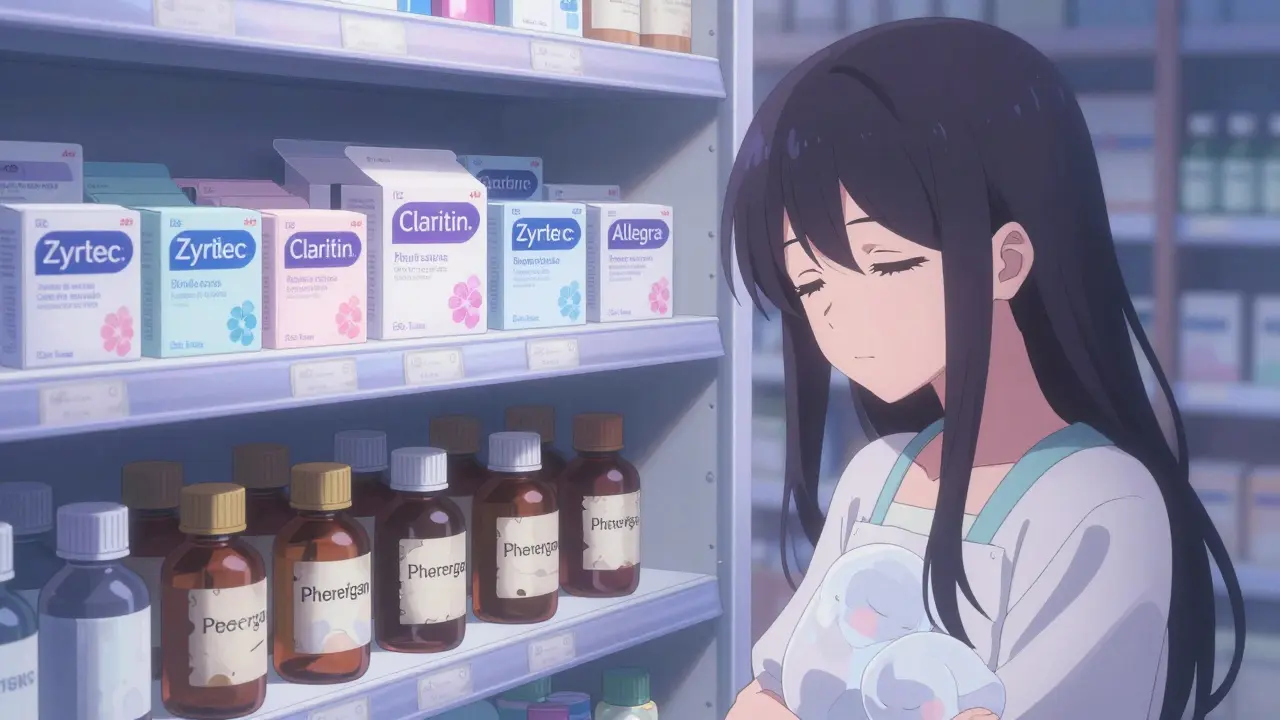
Second-generation antihistamines-like Zyrtec (cetirizine), Claritin (loratadine), and Allegra (fexofenadine)-came out in the 1980s to fix the problems of the old ones. They’re designed to stay out of the brain. That’s why they’re called “non-drowsy.”They don’t eliminate drowsiness completely-about 10-15% of users still feel a little tired-but it’s far less common. In a 2023 survey by the American Academy of Allergy, Asthma & Immunology, 85% of people taking second-gen antihistamines stuck with their daily dose because they didn’t feel foggy. That’s a big deal when you’re managing allergies all year.
They last longer, too. One pill covers you for 12 to 24 hours. That means no midday dosing. No forgetting your second tablet. No groggy afternoons. They’re also less likely to interact with other meds because they’re processed more cleanly by the liver.
But they’re not perfect. They take longer to kick in-1 to 3 hours instead of 30 minutes. So if you’re suddenly exposed to pollen or pet dander, you won’t feel instant relief. That’s why experts recommend taking them before exposure, not after. And while they’re great for runny nose and itching, they’re weaker on nasal congestion. About 40% of users still need a decongestant like pseudoephedrine to get full relief.

Which One Works Better?
You might think “more modern = better,” but effectiveness isn’t always about age. For allergic rhinitis, second-gen antihistamines reduce symptoms by 60-70%, compared to 50-60% for first-gen. That’s a real difference in daily comfort.But some people swear by first-gen. On Drugs.com, over half of users who took diphenhydramine for nighttime allergy symptoms said it helped them sleep better than melatonin. And Reddit users in r/Allergies often say: “Benadryl saves me during sudden flare-ups.” That’s because it hits fast. If you’re caught off guard by a bee sting or a sudden pollen spike, first-gen can be the right tool.
Among second-gen options, there are subtle differences. Cetirizine (Zyrtec) works better for itchy eyes and skin. Fexofenadine (Allegra) is gentler on the stomach. Loratadine (Claritin) is the mildest but sometimes less effective for moderate-to-severe allergies. A 2022 study found cetirizine delivered 15-20% more symptom relief than loratadine in people with worse allergies.
Cost and Accessibility
Price matters. Generic diphenhydramine is dirt cheap-$4-$6 for 100 tablets. Generic cetirizine or loratadine? Around $10-$15 for 30 tablets. Brand names like Zyrtec or Claritin can cost $25+ a month without insurance.That’s why first-gen still dominates over-the-counter sales. They’re bundled into nighttime cold remedies, motion sickness pills, and emergency allergy kits. But in prescriptions, second-gen now makes up over 70% of all antihistamine fills. Doctors know the trade-off: pay a little more upfront, save on lost productivity and fall risks later.
Who Should Take What?
There’s no one-size-fits-all answer. Here’s how to decide:- Take second-gen if: You have seasonal or year-round allergies, work or drive during the day, need daily relief, or are over 65. Zyrtec or Allegra are top picks.
- Consider first-gen if: You need fast relief during a sudden reaction, have trouble sleeping because of allergies, or can’t afford second-gen. Use it only at night and avoid mixing with alcohol or other sedatives.
- Avoid first-gen if: You’re elderly, have glaucoma, enlarged prostate, or take other meds that affect your liver or heart.
Many people use both. Take Zyrtec during the day. Take Benadryl at night if allergies keep them awake. That’s not wrong-it’s strategic. But always talk to your pharmacist. They see what works and what doesn’t.
What’s New in 2026?
The market is shifting. Third-gen antihistamines like desloratadine and levocetirizine are gaining ground-they’re even cleaner and longer-lasting. New combo pills like fexofenadine + pseudoephedrine now tackle congestion without needing two separate pills.And while no new first-gen drugs are being developed, they’re not disappearing. They’re just being used smarter. Hospitals still keep promethazine on hand for nausea. Camp counselors still hand out Benadryl for bug bites. But for daily allergy management? Second-gen is the standard.
By 2028, the global antihistamine market will hit $7.1 billion. Most of that growth comes from second-gen. But first-gen will still be in medicine cabinets everywhere-for emergencies, for sleep, for when nothing else works fast enough.
Can I take first-generation antihistamines every day?
It’s not recommended. While they work, daily use increases risks of dry mouth, urinary problems, confusion, and even long-term cognitive decline, especially in people over 65. If you need daily relief, switch to a second-generation antihistamine like cetirizine or loratadine.
Why does Zyrtec make me sleepy if it’s supposed to be non-drowsy?
Even second-generation antihistamines can cause drowsiness in some people-about 1 in 7. Cetirizine (Zyrtec) is more likely to cause sleepiness than loratadine or fexofenadine. If you feel tired, try switching to Allegra or taking Zyrtec at night instead. Also, avoid alcohol and other sedatives when using it.
Is Benadryl better than Zyrtec for allergies?
Benadryl works faster and can be more effective for sudden reactions, but Zyrtec is better for daily use. Zyrtec reduces symptoms more consistently over time and doesn’t impair your ability to focus. For most people, Zyrtec is the safer, more practical choice.
Can I take second-generation antihistamines with other medications?
Generally yes, but not always. Fexofenadine (Allegra) is the safest-it has the fewest interactions. Cetirizine and loratadine can interact with some antibiotics, antifungals, or heart meds. Always check with your pharmacist before mixing antihistamines with other drugs.
Do antihistamines help with colds?
They can help with runny nose and sneezing from colds, since those symptoms mimic allergies. But they don’t shorten the cold or help with sore throat or cough. First-gen antihistamines are often in cold medicines because they cause drowsiness-which some people like at night. But they won’t fix the virus.
Are there any natural alternatives to antihistamines?
Some people try quercetin, butterbur, or stinging nettle, but the evidence is weak. These aren’t regulated like medications, and their safety and effectiveness vary widely. For reliable, fast relief, FDA-approved antihistamines still outperform natural options.

Laura Arnal
January 30, 2026 AT 08:30Benadryl at night? Yes. Benadryl at 9 AM before a Zoom call? No. 😅 I switched to Zyrtec after nearly falling asleep in the shower. Life-changing. Also, my cat noticed I wasn’t stumbling around anymore. She’s impressed.
Ryan Pagan
January 30, 2026 AT 18:57Let’s be real-first-gen antihistamines are the opioid of allergy meds. Cheap, fast, and dangerously addictive if you’re not careful. I used to take diphenhydramine like candy until I woke up at 3 PM wondering why my brain felt like wet cardboard. Second-gen isn’t sexy, but it’s the adult version of self-care. Also, Allegra doesn’t make you feel like you’re being slowly digested by your own liver. 🙌
Robin Keith
January 30, 2026 AT 19:12It’s not about the drug… it’s about the metaphysics of sedation. When you take Benadryl, you’re not just blocking histamine-you’re surrendering to the entropy of modern life. The brain, a fragile cathedral of neurotransmitters, collapses under the weight of pharmacological compromise. Are we treating allergies… or are we surrendering to the quiet death of cognitive autonomy? I’ve taken Zyrtec for three years. I still dream in slow motion. Is that peace? Or is that just chemical surrender? 🤔
Sheryl Dhlamini
January 31, 2026 AT 18:48Okay but have you ever had a pollen attack at 7 PM and your Zyrtec hasn’t kicked in yet? I’ve resorted to taking half a Benadryl just to stop screaming into my pillow. It’s not ideal. It’s not safe. But it’s real. And if you’ve never woken up with your eyes glued shut because of allergies, you don’t get to judge.
Eli In
February 2, 2026 AT 01:02I’m from India and we use chlorpheniramine like water here-no shame. My grandma swears by it for everything from sneezing to crying over Bollywood movies. 😂 But I switched to cetirizine after my first day at the office when I nodded off during a client call. Now I take it at night. Balance, people. Balance.
Megan Brooks
February 3, 2026 AT 14:36There’s an important nuance missing here: individual pharmacokinetics. Not everyone metabolizes cetirizine the same way. Some people are ultra-rapid metabolizers of CYP enzymes and experience minimal drowsiness; others are poor metabolizers and feel like they’ve been hit by a truck after one tablet. Genetic testing isn’t necessary for most, but it’s worth considering if you’re consistently reacting poorly to ‘non-drowsy’ options. Also, fexofenadine’s renal clearance makes it safer in polypharmacy scenarios. Just saying.
Paul Adler
February 4, 2026 AT 23:31I used to think Benadryl was a miracle cure until I realized I was just trading allergy symptoms for zombie mode. Now I take loratadine every morning, drink water like it’s my job, and use a nasal rinse. It’s not glamorous. But I can actually remember my own name after lunch. Also, my dog stopped looking at me like I’m a ghost. Progress.
Doug Gray
February 6, 2026 AT 04:57second-gen antihistamines are just corporate marketing with a lab coat. they’re not better-they’re just more expensive. and who says drowsiness is bad? maybe society just hates rest. maybe we’re supposed to be tired. maybe benadryl is the only honest drug left. 🤷♂️
ryan Sifontes
February 6, 2026 AT 21:55they’re all controlled by the big pharma cabal to keep you docile. benadryl makes you sleepy so you dont notice the 5g in your food. zyrtec makes you pay 30 bucks a month so you stay distracted. the real cure is avoiding pollen. or maybe the moon. i think the moon causes allergies.
Kacey Yates
February 8, 2026 AT 19:23Why are people still using first-gen? Are you guys 12? Benadryl is for camping trips and bee stings-not your daily 9-to-5. If you're still taking it every day, you're not managing allergies-you're just masochistic. Get your act together.
LOUIS YOUANES
February 9, 2026 AT 02:20I only use third-gen now. Levocetirizine. Because I’m not a peasant. And I don’t drink tap water either. It’s filtered. And organic. And blessed by a shaman. You’re welcome.
Keith Oliver
February 10, 2026 AT 09:45Look I know Zyrtec is supposed to be non-drowsy but I took it and I felt like I was underwater. Like my thoughts were moving through molasses. And I’m not even tired. So what’s the point? Maybe I’m just broken. Or maybe the whole thing is a lie.
Alex Flores Gomez
February 11, 2026 AT 05:56Allegra is the only one that works. I tried Zyrtec and it made me feel like my brain was being slowly eaten by a sloth. Claritin? Barely did anything. But Allegra? Clean. Sharp. Like my thoughts were polished. Also, I don’t like the taste of other pills. Allegra doesn’t taste like regret.
Jasneet Minhas
February 12, 2026 AT 19:39Benadryl for sleep? 😂 I used to do that until I woke up at 4 AM thinking my cat was a government drone. Then I remembered I’d taken two pills. Moral of the story: if your sleep aid makes you hallucinate your pet as a spy, maybe it’s time to upgrade. 🛰️🐱
Kristie Horst
February 13, 2026 AT 10:58Let’s not pretend this is about efficacy. It’s about class. First-gen antihistamines are the Walmart version of relief. Second-gen are the Whole Foods version. And third-gen? That’s the $800 bottle of artisanal, hand-harvested, moonlit pollen blocker you buy on Etsy. We’re not choosing drugs-we’re choosing identities.